Retention strategies must go beyond the annual raise as the job-changer wage gap grows, says researcher

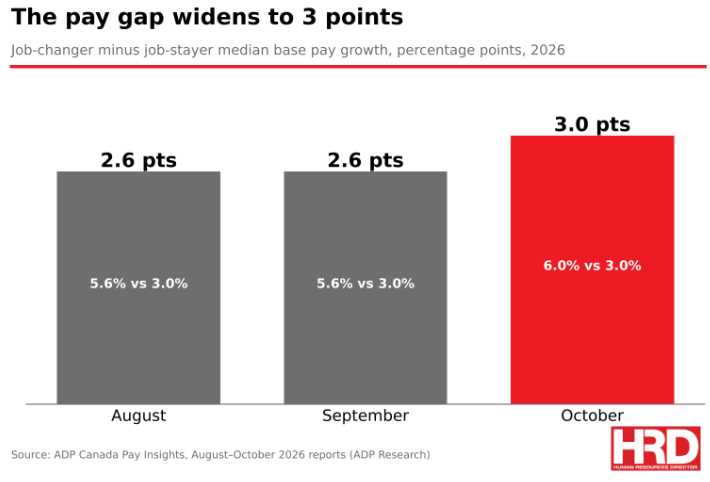
The pay gap between Canadian workers who switch employers and those who stay jumped to three percentage points in October 2026, its widest since tracking began, according to the latest ADP Canada Pay Insights report released Nov. 5, 2026.
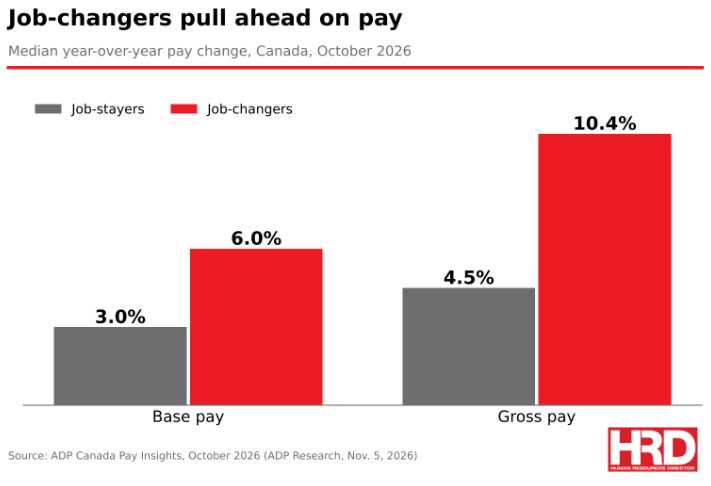
Job-changers saw median base pay rise 6.0% year-over-year, double the 3.0% raise for job-stayers. The gap had held at 2.6 points in August and September.
On a gross pay basis, which includes overtime and bonuses, changers’ pay climbed 10.4% against 4.5% for stayers.
The report draws on anonymized payroll data from approximately 1.6 million private-sector workers in Canada, building on earlier findings that job-switchers are earning more in Canada and the U.S.
What drove the October jump?
Liv Wang, lead data scientist at ADP Research, said the widening premium reflects a more mobile workforce.
“The widening wage premium for job-changers signals stronger labour market mobility and rising incentives for workers to pursue new opportunities. As inflationary pressures persist, many workers continue to look for ways to keep pace with rising costs, and changing jobs can be one path to achieving stronger pay growth,” Wang told HRD Canada.
“In addition to workers seeking stronger pay growth in response to inflationary pressures, we also observed a higher share of workers moving into the leisure and hospitality sector in October. Demand in that sector has remained strong, and it recorded the highest gross pay growth among the industries tracked by the report,” she said.
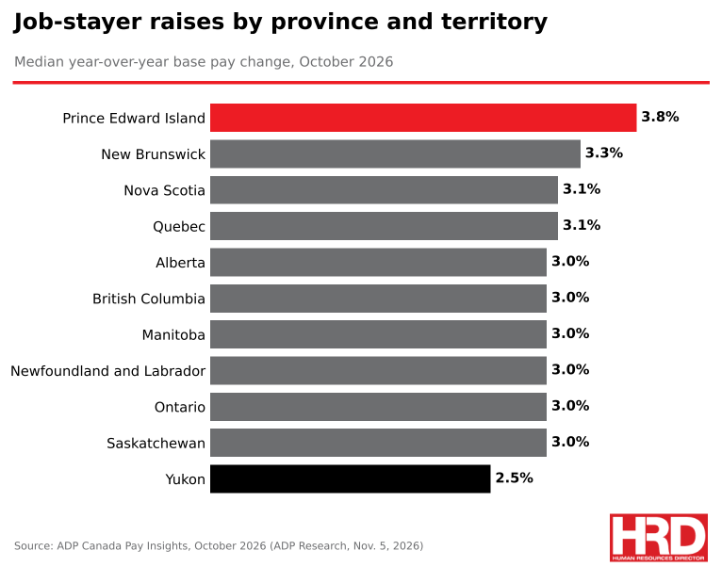
For stayers, the picture was flat. Base pay growth sat at or near 3.0% across all 10 sectors and every firm size, with Prince Edward Island leading the provinces at 3.8%.
Is the gap a retention warning for HR leaders?
Wang said the trend is persistent, not a one-month blip. That matters after survey data showed one in three Canadian workers planned to leave their job in early 2026.
“HR leaders should pay close attention to shifts in labour market conditions and be prepared to respond as those conditions evolve. The trend of stronger pay growth for job-changers has persisted since March, suggesting that workers continue to find opportunities to improve their earnings through job mobility,” she said.
Employer budgets suggest that gap will not close soon. Canadian employers are holding salary budgets at 3.1% for 2027, unchanged from 2026, according to Normandin Beaudry’s survey of more than 800 organizations. A separate Salary.com survey reported by WorldatWork puts Canadian 2027 budgets at 3.4%.
Darcy Clark, senior principal at Normandin Beaudry, said the flat figure hides shifting pressures. “The quantum hasn’t changed, but I think everything around that number has changed,” he told Benefits and Pensions Monitor.
Retention strategy beyond the annual raise
Some employers are already directing extra money where the risk of losing staff is highest. Normandin Beaudry found 46% of organizations set aside an extra 0.9% on average beyond general increases, with 32% using it to keep employees flagged as a retention risk.
Wang said pay is only one lever. “A measured compensation strategy can support retention efforts, but compensation is only one part of a broader talent strategy. In sectors facing skill shortages, employers should also consider investing in training, career development and other initiatives that help attract and retain talent over the long term.”
She added that timing is where many employers fall short.
“Where employers can fall short is waiting until an employee is preparing to leave before having conversations about compensation, advancement or career development. Regular and proactive discussions about growth opportunities can help organizations retain valuable talent in a competitive labor market,” she said.