Director, People and Culture turned a near-absent function into a team tackling retention, culture, and tech transformation
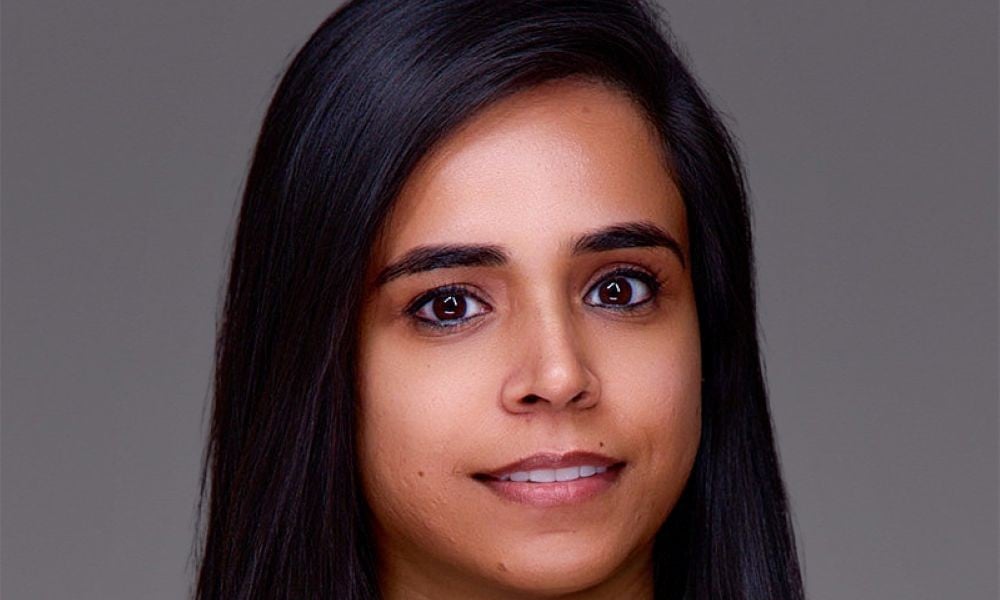
When it comes to building people and culture strategy from the ground up in a rapidly growing organization, Aman Malhi hasn’t just had a front-row seat. She’s been onstage making it happen.
When Malhi joined Burnaby, BC- based Refrigerative Supply Limited (RSL) — a wholesale distributor of heating, ventilation, air conditioning, and refrigeration equipment founded in 1945 — as the Director, People and Culture in August 2020, there was almost no formal people and culture function to speak of, according to her. One part-time person handled basic HR tasks. Recruitment and other core functions were outsourced. The company had no structured talent strategy.
By 2026, RSL had grown to nearly 450 employees. It has a people and culture team of eight, structured around what Malhi calls “circles of excellence”: dedicated clusters for learning and development, recruitment, employee engagement, and payroll, among others. The business has also doubled in size and revenue since she came on board, says Malhi.
“I came in and built the function from scratch,” says Malhi. “I built all the processes, the foundation, the team, and really helped build strategy around how people and culture was going to help the business grow.”
Laying the foundation for a people strategy
Malhi's approach from the outset was deliberate and methodical. Rather than importing a ready-made framework, she says she began with establishing the fundamentals: processes, structures, and a clear people strategy aligned to RSL's operational realities. This is a challenge that many HR leaders face when entering industrial or trades-adjacent businesses, where HR infrastructure has historically been minimal or reactive.
The result, according to Malhi, speaks for itself. “We’ve come a long way and the business has doubled in size and in revenue from when I first started, so clearly it's working,” she says.
A career that spans pharmaceuticals, cannabis, and financial services before RSL gave Malhi a broad perspective on what endures across industries. That cross-sector experience shaped a central conviction: the mechanics of HR may shift from one sector to the next, but what people fundamentally need does not, according to Malhi.
“At the end of the day, it's the same sort of things that people want, and my biggest lesson throughout all these industries has been the same — when people feel like somebody's in their corner and they feel supported, they're unstoppable,” she says. “I always focus on the culture and people, and how that translates to supporting the business — I'm a business leader as well as a people leader, so I can bring the business to the people, people to the business, and make sure that there's an effective and productive intersection.”
That dual orientation is a key thread in how Canada's most effective HR leaders are redefining the function. It’s also what allowed her to build credibility inside a company where HR had previously been peripheral, she says.
Retention in a competitive trades market isn’t a single path
One of the most pressing pressures on RSL's people strategy is retention, says Malhi — a challenge across Canada's trades sector. The labour market for skilled tradespeople remains highly competitive, with multiple employers vying for the same talent pool. According to a recent report by Robert Half, one in three Canadian professionals plan to leave their job within the next few months — a signal of elevated employee mobility that HR leaders across sectors are navigating carefully.
Malhi’s response at RSL has not been to rely on any single retention tool, but to build a multi-layered strategy centred on career clarity and individual development.
“I don't think there's one strategy that a business can implement that will just retain people,” Malhi says. “It's a combination of career development and career progression.”
Recently, RSL implemented a career progression framework — a structured set of career pathways designed to help employees see a clear route forward from their current role to where they want to go, with explicit organizational support along the way, according to Malhi. “We are now building career pathways where people can envision how they will go from where they are today to where they want to be and how the business is going to support them,” she says.
The philosophy is one of mutual investment rather than obligation. “If they choose to stay, great, but if they choose to leave, then I think we’ve equipped them with enough skill set and training that they can be successful anywhere,” says Malhi.
Upgrading the HR tech stack with AI at the centre
On the technology front, Malhi says RSL is in the middle of a significant upgrade to its people and culture infrastructure, replacing its entire human resources information system (HRIS), learning management system (LMS), applicant tracking system (ATS), and payroll platform — and artificial intelligence (AI) capability was the primary selection criterion for every new solution.
“When my team and I were looking for new solutions to replace our current HR tech stack, the number one driving factor was AI,” says Malhi. “How does a new solution leverage AI and how can they demonstrate that it's going to make a significant difference for us?”
The goal is efficiency and elevation of HR’s strategic contribution: letting AI absorb the administrative workload so Malhi and her team can direct their energy toward strategy, culture, and human judgment, she says.
At the broader organizational level, Malhi acknowledges RSL is still early in its AI journey. But the direction is clear, and she understands that transforming people functions with AI-enabled HR platforms is increasingly a strategic imperative rather than an option.
People-centric over program-centric
Perhaps the most defining element of Malhi's leadership philosophy is a deliberate resistance to the pull of programs and processes for their own sake.
“I think HR leaders need to become people-centric and not program-centric,” Malhi says. “A lot of HR leaders or even teams become overly attached to programs and processes and frameworks, but what we need to do is stay responsive to what employees need in real time.”
In practice, that means resisting the urge to mandate uniform participation in training or development initiatives. At RSL, Malhi’s approach is to provide a menu of offerings and let employees choose what fits their situation. "You'll never see me saying everybody needs to take the communication course or everybody needs to sign up for this program,” she says. “It's more like, ‘Here's a list of everything that we offer. Take what works for you.’”
That philosophy extends to a piece of advice Malhi carries from a mentor early in her career: reliability and credibility matter more than brilliance alone. “Being brilliant doesn't save you if no one can count on you,” she says. “I want to be the most dependable, credible person that you ever work with, so you know that if you’ve assigned something to me or if you've asked something of me, I will always deliver.”
For Malhi and anyone building an HR function in an organization where that function has historically been undervalued, that credibility — earned through consistent delivery and genuine advocacy for people — may be the most important foundation of all.
“That has been my role over the last six years, just helping the business have the best talent and strategy, and be the place where employees can do their best work,” says Malhi.