Director of Human Resources is rewriting recruitment, onboarding, and performance management strategies in the food distribution industry
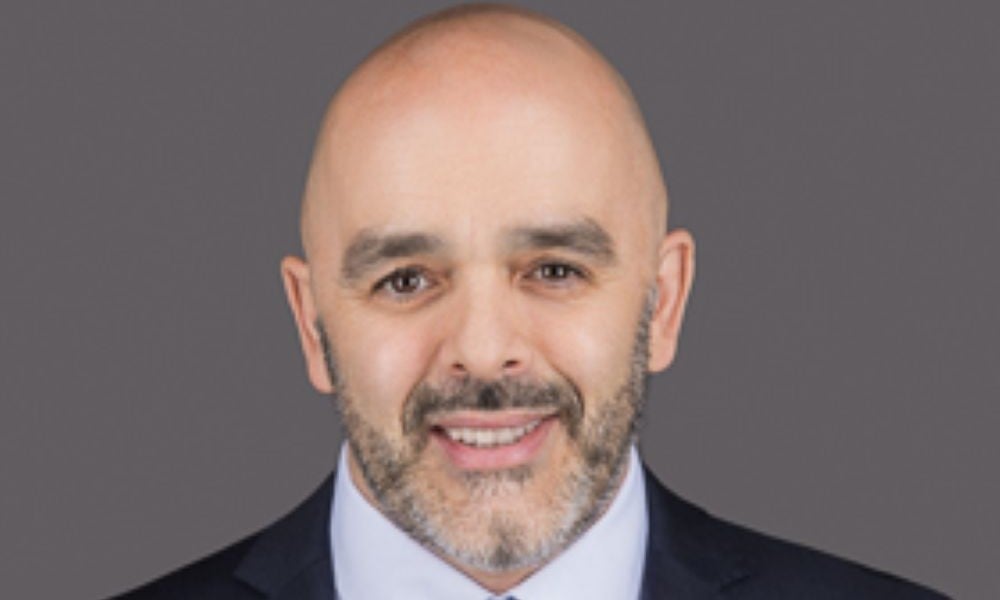
When Lui Lanzillotta, Director of Human Resources at Burnac Produce Limited in Woodbridge, Ont., joined the company in 2024, he walked into a human resources (HR) department that was, by his own assessment, “strictly an administrative department.”
Two years later, Burnac Produce – Canada's largest supplier of fresh conventional and organic fruit and vegetables, with roots stretching back over 80 years and a headcount of around 300 employees – has an HR function that’s actively shaping culture, driving recruitment, redesigning onboarding, and preparing to transform performance management with artificial intelligence (AI). The work Lanzillotta has done in that time earned his team recognition as HRD Canada’s Most Innovative HR Team for 2025.
“We really had to create an HR infrastructure with all the standard foundational elements," Lanzillotta says. “Creating a legally binding offer letter, organizational charts, an employee handbook, job descriptions — starting at that very basic level to create that foundation and then elevating from there.”
Thinking like an entrepreneur within the business
For Lanzillotta, the key distinction between HR in an operations-heavy environment like food distribution compared to a more traditional corporate setting comes down to integration and familiarity with the business operations. “You have to be a people strategist combined with an operational leader,” he says.”
He says that Burnac Produce operates across a complex supply chain, serving large and mid-sized businesses, independent retailers, and quick-service restaurant establishments throughout Canada and the US. The company’s workforce is shaped by logistics, seasonality, and tight operational margins – conditions that demand HR leaders who can speak the language of the warehouse floor as fluently as the boardroom, according to Lanzillotta.
“If you don't understand the nature of the business, if you don't understand seasonality, peak periods and so on, you will not succeed as a true HR partner,” he says. “You need to integrate yourself within the business – you can't just sit in an office and prepare strategies in a silo. You have to have that entrepreneur spirit where you operate a business within the larger business.”
That philosophy drives how he works with other functions. Rather than arriving with ready-made initiatives, Lanzillotta says he embeds himself in departmental realities before building anything. For example, when developing an onboarding program for the category team, he met weekly with key executives within that team for some time, breaking down what the role looked like week-by-week and month-by-month.
“I can create a standard onboarding program — it's simple,” says Lanzillotta. “But meeting with key executives allowed me to understand their business and their language, so that we could truly customize it to an effective onboarding program for that specific area.”
From LinkedIn followers to talent pipeline
One of Lanzillotta's most visible early wins has been in employer branding and recruitment. He says that when he arrived, Burnac Produce's LinkedIn page had approximately 5,000 followers. Today it has grown to more than 14,000 — in under two years — and the majority of candidates being hired are now coming through that channel rather than paid posting platforms.
“We are actually pushing now a long-term initiative to eliminate our reliance on job posting platforms and really utilize our social media such as LinkedIn to source candidates,” he says.
That recruitment shift reflects a broader challenge facing Canada's food and beverage sector. According to a 2023 study titled Canadian Food and Beverage Manufacturing Industry Growth and Outlook by Food Processing Skills Canada, seven in 10 food and beverage manufacturers report recruitment and retention challenges, and 40 per cent don’t have dedicated HR support — a gap that underscores why the infrastructure Lanzillotta has built at Burnac Produce carries significance beyond one company.
The more recent focus for Lanzillotta has been on onboarding depth that’s focused on operations. His team is developing a comprehensive program for warehouse employees that goes well beyond standard compliance training, he says. New hires are walked through practical, role-specific content – including video-based instruction on tasks as specific as stacking a skid – and assigned onboarding champions who support them through the first 90 days and beyond.
“It's not just going through the standard compliance training, but really understanding in practical visuals and practical terminology how to perform in that role,” he says.
Redesigning performance management from scratch
Alongside onboarding, Lanzillotta is in the midst of introducing Burnac Produce's first formal performance management program, and he says the design philosophy reflects hard lessons from watching overly complex processes fail elsewhere.
"I've seen extensive multi-page performance reviews where the employee just gets lost in the administration and the manager doesn't take the time to complete them,” he says. “The administrative burden ends up having a negative impact on the overall conversation.”
His solution is deliberately lean: a one-to-two-page review covering four technical outcomes and two-to-four competency outcomes, alongside space to identify strengths and close gaps. According to Lanzillotta, the program will run on both mid-year and annual cycles, supplemented by monthly scorecards tracked by executive assistants across functions. The goal is to eliminate recency bias and build a fair, documented record of performance over time while assessing people on how they contribute to departmental and company cascaded goals, he says.
“Things happen over the course of even six months and you're not going to remember what the person did in month one or two,” he says. “Our goal is to track patterns so that we can give a fair and objective assessment at each of the performance review touch points.”
Lanzillotta also points to the strategy of using the performance management process at not just the individual level, but also at the company-wide level.
“We look at what are they doing well and how can we leverage that? Can we create standardized operating procedures out of that? Can we use them as knowledge experts to train or mentor across the business to close knowledge gaps?” he says. “We can use that as the basis for creating future people initiatives if we know common themes consistently happening across a multitude of different employees.”
HR as system designer, not service provider
AI sits at the centre of Lanzillotta's vision for where Burnac Produce's HR function is headed. He frames the shift in precise terms: “If I look at HR within the business that we’re in, we're essentially considered a service provider currently,” he says. "Where I'm seeing HR’s future as more of a system designer and strategic advisor — where managers essentially become operators of HR systems.”
In practical terms, that means designing self-service tools for managers to input data directly, automating repeatable tasks, and freeing the HR team to focus on what Lanzillotta calls “judgment escalation and strategy”: complex decisions, misconduct terminations, workforce planning, and compensation design.
He also sees the mandate of senior HR leaders expanding significantly. Drawing on his own experience, he described moving from Director of Human Resources to overseeing HR, information technology, and finance at a previous organization – a consolidation he views as a model for where the profession is heading.
“We understand leadership, we understand judgment escalation strategy – we can apply those same fundamental concepts to all of these key areas and combine them,” he says. “The title for me is not the point, you can name it what you name it, but essentially the rationale of it is you combine all the data centers into one and it’s a consolidation under the HR leader.”