One HR leader on what transformation really means at work, and the burnout risk that can come with it
Many organizations are rolling out new technology, reshaping their structures and working out where AI fits, all at the same time. For the HR teams guiding employees through it, the challenge is helping people keep up without burning out.
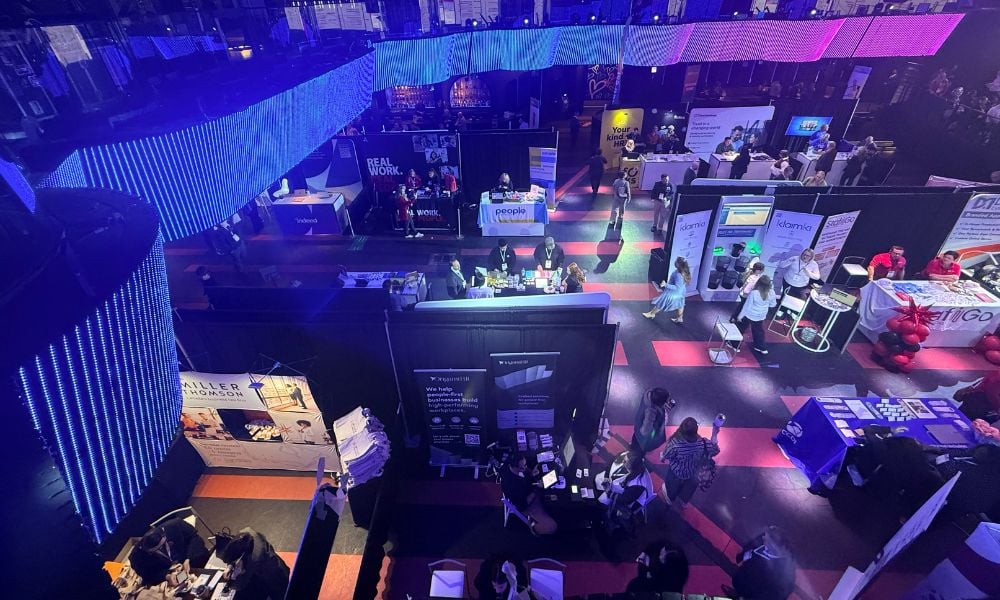
David Gwilliam, director of human resources at the Saskatchewan Workers' Compensation Board, is tackling that challenge at his own organization. He spoke with HRD Canada at HRFest Canada 2026 in Toronto about how his team approaches it.
"Like most organizations today, we're going through a transformation, which is really a code word for a lot of change, basically," Gwilliam said. "As an organization, we are implementing new technology, we're looking at our org structure, we're starting to look at things like AI and saying, how do we handle all this? How do we manage it?"
Helping employees through constant change
Those questions apply to most organizations going through a transformation, but Gwilliam said HR has a second set to answer. On top of deciding how to handle the new technology, the restructuring and AI, the team has to think about the employees living through all of it.
"From an HR point of view, how do we help our employees manage all of this change and all these things that are occurring?" he said.
Managing that change while making sure employees don't burn out has been the organization's biggest challenge, Gwilliam said. The concern is widespread. An Emergn survey of more than 750 business leaders found that half reported transformation fatigue and 45 per cent said burnout from ongoing change was a problem.
As for what helps employees embrace change, Gwilliam pointed to communication and to explaining both the reasons for it and the benefits.
"Part of it is lots and lots of communication," he said. "You need to have a lot of awareness, a lot of understanding of why you are making the change."
"The second part is sort of the what's in it for me," Gwilliam said. "You need to be very transparent with what's driving it and then how it will help them get through the change."
Being that transparent depends on having a plan for communicating change, and many organizations haven't built one. In a Gallagher survey of more than 1,300 communications and HR professionals, 61 per cent of teams reported having no change communication approach in their strategy.
Leading individuals, with AI in the mix
Leading through change also means leading people one at a time, Gwilliam said.
"The workforce is full of individuals now," he said. "How you do recognition, how you do performance management, how you're available for coaching is going to be very individual."
Recognition is also on the Mental Health Commission of Canada's list of 13 workplace factors that can affect employees' mental health.
Recognition and coaching are part of the everyday work of HR, and Gwilliam said AI is now being added to it. Along with retention, succession and training, it's one of his biggest priorities for 2027. Part of the task, he said, is figuring out whether AI will change everything, matter very little or fall somewhere in between.
"How can we get our leaders and our workforce ready to be able to actually use AI effectively?" Gwilliam said. "But then as HR, where can we put it to use? Where can we either be more efficient or help our staff to be able to do their jobs?"
Readiness is on the minds of Canadian job seekers, too, with 79 per cent saying companies need to formally train employees on AI. Statistics Canada reported that 19.2 per cent of businesses used AI to produce goods or deliver services in the second quarter of 2026, up from 12.2 per cent a year earlier.
So far, Gwilliam said, AI has sped up research that once took many phone calls and internet searches, though the sources still need checking. His team is also starting to see value in using it to automate some processes.
"Early days, I would say, still, but that's where we're starting to see some potential," he said.
If you are not in Toronto today
Full coverage of the day's key sessions will be published on the HRD Canada website. Follow @HRD_Canada on LinkedIn for live updates throughout the afternoon.
The day closes with networking drinks and the HRD Rising Stars Trophy Presentation Ceremony from 4:30 to 6 p.m. Day two begins at 10 a.m. on November 11, 2026, at Rebel, with programming across all five stages. Registration remains open at humanresourcesfest.com/canada.