From AI-assisted shortlists to leaner job ads, Indeed says employers are rethinking how they find candidates with potential
A recruiter staring down hundreds of applications has a lot to sort through. AI can help narrow the field, but finding someone who can grow into a role takes more than matching a résumé to a list of requirements. As technology takes on more of the tasks people once handled, employers are having to rethink what they look for in candidates and which skills will matter most.
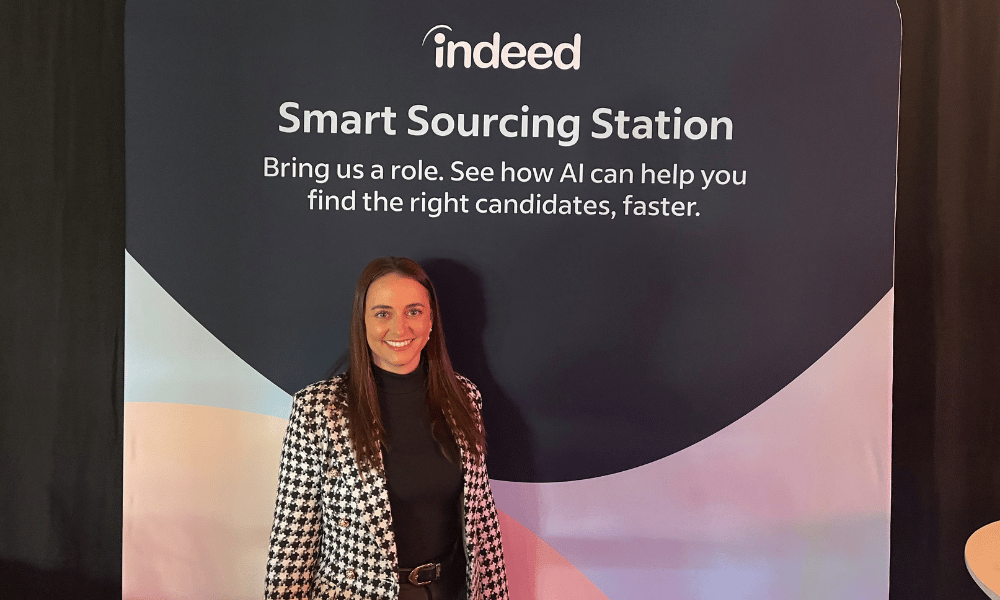
That shift is a big part of the conversation at HRFest Canada 2026 in Toronto, where Indeed is a Platinum Sponsor. Alexandra Tillo, senior talent marketing strategist for country marketing at Indeed, said the move toward skills-based hiring is ultimately about looking beyond someone's experience on paper and recognizing what they could bring to a role.
"Companies are really focusing on skills because they need those specific soft skills that will make a person a leader, for example, will make a person more adaptable to change, going through challenges better," Tillo said, "or even growing with the business and helping with that business performance, which an AI cannot do."
Where AI helps and where people stay involved
Tillo said the companies seeing the strongest results use AI at the start of the recruitment process, when they're working through hundreds of candidates.
"The goal of AI for them is really to alleviate some of that very admin work," she said. The idea is to free hiring managers and recruiters to spend their time interviewing the candidates AI has pre-selected.
"It's very, very important to keep the human element at every single stage and not letting AI make decisions," Tillo said. "The recruiter, the hiring manager always need to take a look at what's happening within the AI system and making sure they can validate the results it's giving to make sure the quality is there."
That emphasis on checking output fits what Canadian employers say they're seeing. In a Robert Half survey of 1,500 hiring managers earlier this year, 61 per cent of HR leaders said reviewing AI-generated applications has slowed hiring.
Skills matching with a person checking the result
That mix of automation and human sign-off shows up in Smart Sourcing, an Indeed tool featured at its HRFest Canada booth. Tillo said it helps companies find quality candidates by focusing on their skills. Employers post a job, and the tool reviews the role and the skills the company lists, searches Indeed's résumé database and presents what she called matched candidates.
"The employer, the human, can have a look at that pre-selection and validate if yes or no they agree with the selection Smart Sourcing has done for them," she said.
Software-driven matching also means employers need to be able to explain how a candidate got selected. A talent acquisition leader at one of Canada's largest employers told HRD Canada why hiring teams must be able to explain how AI scores candidates.
The skills in demand are moving, too. The World Economic Forum's Future of Jobs Report 2025 found that employers expect 39 per cent of workers' core skills to change by 2030. Tillo said job descriptions are evolving because AI can accomplish some of the tasks humans usually did.
Start with the job ad
With job descriptions already changing, Tillo said a realistic first step toward skills-first hiring is the job posting itself, which she prefers to call a job ad. Descriptions often run to 10 or 12 requirements, she said, some of them outdated, and she'd encourage employers to sit down with hiring managers to agree on the essential skills.
"We're not looking for that perfect unicorn of a person," Tillo said. "You want a person to grow with the company. You don't want to have to tick all the boxes. You want someone who is adaptable with change."
Adaptability is one of nine skills in the federal government's Skills for Success framework, which Employment and Social Development Canada says are needed across work, learning and everyday life.
HRD Canada has also reported on employers shifting from bloated job descriptions toward flexible, living documents as skills take priority.
Tillo said her conversations with people in HR, talent acquisition and finance at the festival have left her optimistic about the future of work.
"I have hope because they are still very focusing on a person and not just a number," she said. "I'm seeing that even more so now than before because they really realize with AI you can automate a lot of things, but I want to make sure they take care of their people first."
If you are not in Toronto today
Full coverage of the day's key sessions will be published on the HRD Canada website. Follow @HRD_Canada on LinkedIn for live updates throughout the afternoon.
The day closes with networking drinks and the HRD Rising Stars Trophy Presentation Ceremony from 4:30 to 6 p.m. Day two begins at 10 a.m. on November 11, 2026, at Rebel, with programming across all five stages. Registration remains open at humanresourcesfest.com/canada.