'Workers with lower mental health scores experience greater productivity loss,' says TELUS report

When it comes to mental health, managers in Canada seem to be better off than individual contributors in the workplace – but they are not showing the way to improvement to help other workers, according to a report.
According to TELUS Health’s latest Mental Health Index (MHI) Q1 2026 report, managers post a score of 63.3, compared with 62.9 for non-managers.
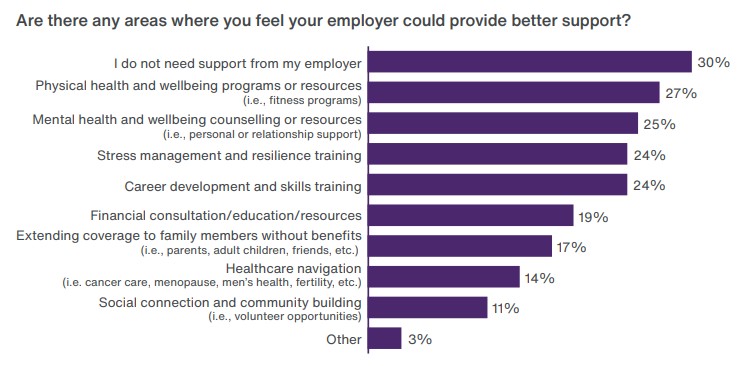
The report highlights a contrast in attitudes to support. TELUS Health notes that “non-managers are 70% more likely than managers to report needing no additional support, though managers are more likely to report concern about the stigma associated with seeking help.” This suggests many leaders feel pressure to appear resilient, despite facing similar or greater stress than their teams.
National mental health scores and productivity risks
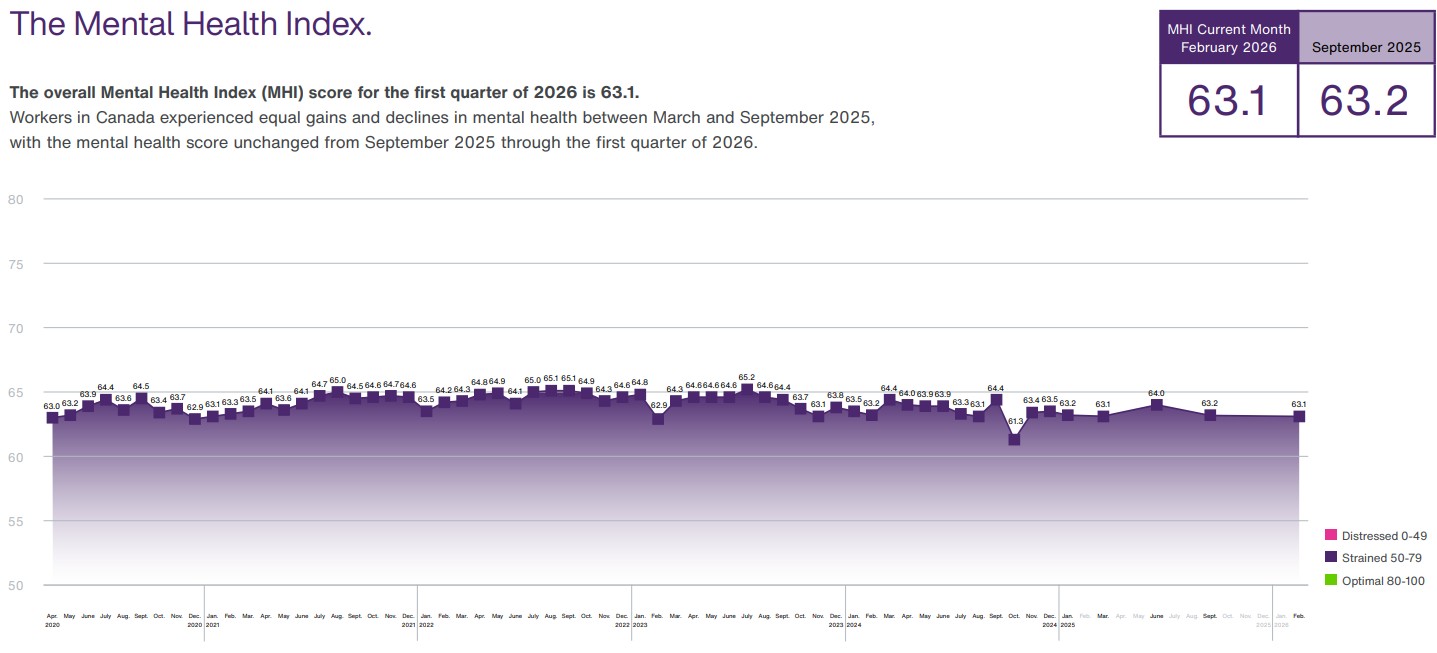
The overall MHI score for Canadian workers in Q1 2026 is 63.1, unchanged from September 2025 and classified by TELUS Health as “strained.” The report says “mental health has plateaued at a persistently low baseline,” indicating that conditions have neither worsened nor meaningfully improved over recent months.
According to TELUS Health, 34% of workers have a high mental health risk, 44% a moderate risk and just 22% a low risk. Anxiety remains the lowest sub-score at 55.5, followed by isolation at 58.8 and work productivity at 60.8. The report finds that 35% of workers feel anxious, 32% feel isolated and 27% feel depressed.
TELUS Health links these scores directly to performance, stating that “workers with lower mental health scores experience greater productivity loss, while those with higher scores experience less productivity loss.” The Index converts responses into estimated workdays lost in a 240‑day year, providing HR leaders with a quantitative basis to connect mental health to absenteeism and presenteeism.
A recent report highlights the rise of mental health claims by young Canadians.
Provincial and demographic disparities
Provincial results show notable variation, according to TELUS Health. Saskatchewan records the highest mental health score at 67.9 after a 0.7‑point rise since September 2025. Ontario and Quebec sit near the national average at 63.2 and 63.3 respectively, both edging up slightly. Alberta records the lowest score at 61.7, down 0.9 points, while Manitoba and British Columbia also decline.
Demographic gaps are also pronounced. Mental health scores rise from 54.4 among workers aged 20–29 to 71.4 among those 60–69.
Workers with at least one child record a score of 59.5 versus 64.8 for those without children, and employees earning under $30,000 a year score 53.8 compared with 69.2 for those earning $150,000 or more.
Financial strain, access barriers and culture
Financial stress and job insecurity weigh heavily. Workers who recently saw their salary reduced have the lowest mental health score at 51.3, followed by those with reduced hours at 54.4. TELUS Health reports that 32% of workers do not have emergency savings for basic needs; those without savings score 49.6, compared with 69.6 for those who have a buffer.
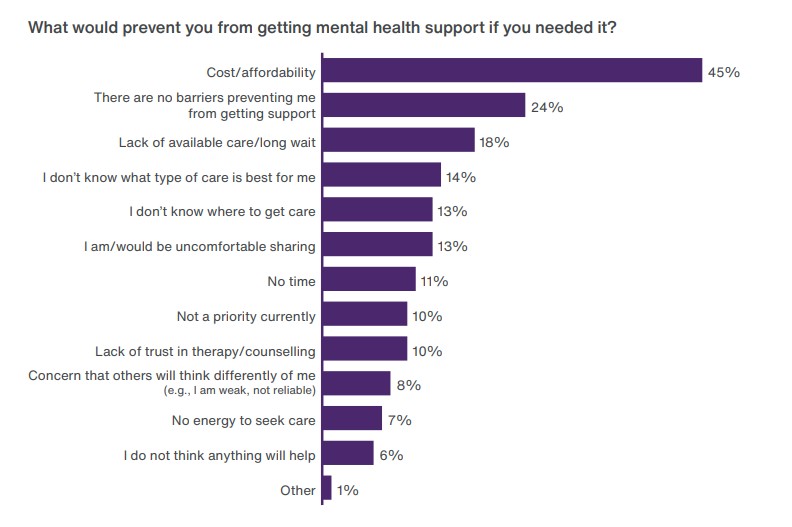
Access to care remains a major hurdle. “45% of workers citing cost as a barrier score 21 points lower on the Mental Health Index and lose 19 more days per year in productivity compared to workers who report no barriers,” TELUS Health finds. Other obstacles include lack of available care or long wait times (18%) and uncertainty about what kind of care to seek (14%).
Workplace culture is closely linked to outcomes. Three in five (60%) of workers agree that “the workplace culture at my organisation supports my personal wellbeing,” and this group records a mental health score of 67.9 with an annual productivity loss of 31.3 days. Among the 12% who disagree, the score drops to 48.0 and productivity loss rises to 59.3 days, underscoring the business impact for HR of building a supportive culture.
How can HR support managers in fighting mental health troubles?
HR plays a critical role in equipping managers to handle mental health concerns, since managers are usually the first line of contact when an employee is struggling. Here are the main ways HR can support them, according to Zach Schmit, head of operations at Covenant Workplace Solutions:
-
Train managers to recognize and address mental health concerns.
-
Promote psychological safety in the workplace.
-
Implement workload management strategies to prevent burnout.
-
Encourage managers to model healthy behaviors.
“Employees with strong managerial support for mental health are more engaged, productive, and loyal. As workplace expectations evolve, the role of managers in mental health will continue to expand, making it imperative for organizations to prioritize this area,” says Schmit.
“By equipping managers with the right tools and resources, companies can foster a culture of psychological safety, reduce burnout, and create workplaces where employees can truly thrive.”
The Economic Cost of Mental Health in Canada – authored by Olga Morawczynski, Kathleen Dobson and William Howatt – estimates that poor mental health costs the country $180 billion annually. Of that, employers absorb about $110 billion through disability claims, wage replacement, benefits, overtime, accommodations, turnover and compliance costs.
But expanding employer‑funded virtual mental health care could reduce the economic impact of mental health challenges in Canada by an estimated $22.2 billion a year, according to a separate analysis.