Many more young people consulting mental health professionals, taking antidepressants

When it comes to mental health, younger Canadian workers are suffering, according to a new report.
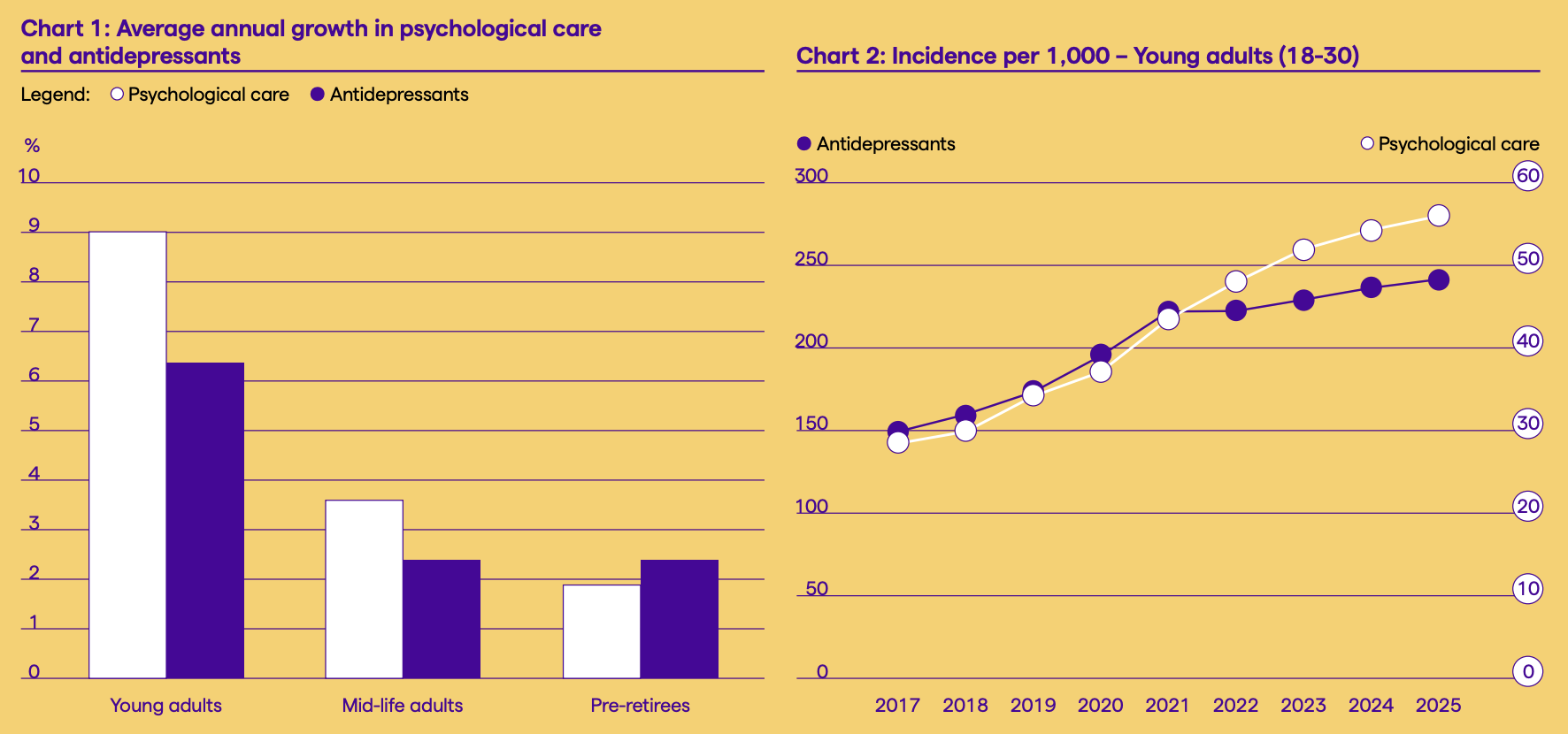
Among employees aged 18–30, Beneva reports sharp growth in mental health usage. From 2017 to 2025, “the number of young insured persons who consulted a mental health professional doubled, translating into an average 9% yearly increase.”
Antidepressant use rose at 2.5 times the rate seen in other age groups over the same period.
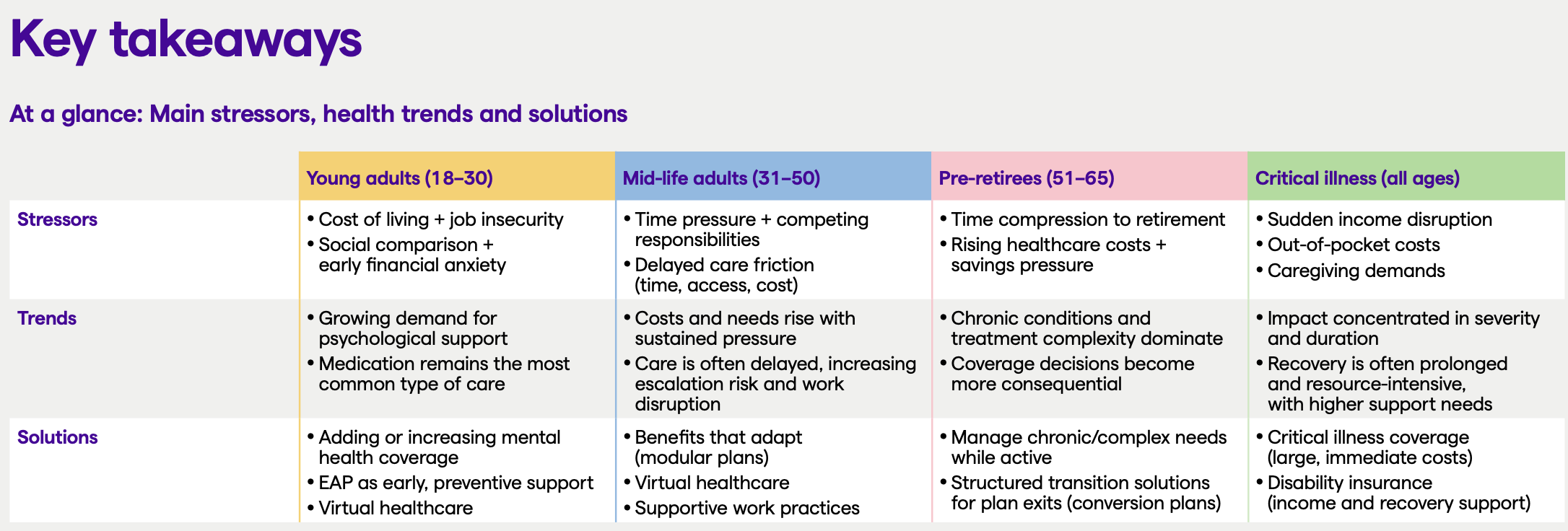
The insurer attributes this to high living costs, uncertain early‑career prospects and social‑media‑fuelled comparison. Many young Canadians are spending half their income on basic necessities and living paycheque‑to‑paycheque, magnifying stress and limiting their ability to absorb shocks.
Despite greater help‑seeking, medication still dominates. Beneva says antidepressants “continue to dominate throughout the period,” in part because therapy is more expensive and harder to access. Psychiatrist Dr. Robitaille warns that for most common disorders, “medication contributes only partially to clinical and functional improvement,” and that psychological care “often plays an essential role alongside the treating physician.”
Canadians are bracing for a tougher financial year in 2026, with large majorities expecting the cost of living, housing affordability and the broader economy to deteriorate, according a previous report.
Mid‑life and pre‑retirees: structural strain and chronic disease
For workers aged 31–50, financial stress is “structural rather than episodic,” Beneva finds, driven by mortgages, child care and support for ageing parents. This cohort shows the highest use of psychological care and has seen an 8% rise since 2019 in the share of short‑term disability claims linked to mental health.
Drug costs per insured jump by just over 50% between young adulthood and mid‑life, reflecting higher rates of conditions such as diabetes and hypertension. Beneva says delayed care, caused by time pressure and out‑of‑pocket costs, allows stress‑related issues to become entrenched and more expensive to treat.
Among pre‑retirees aged 51–65, more than one in four adults live with two or more chronic conditions, rising to 37% for those aged 60–64. Claims data show a 27% increase in medication costs per insured compared with mid‑life workers. Beneva highlights cost‑related non‑adherence, noting research that women have “44% higher odds of reporting cost‑related non‑adherence,” which raises disability risk.
Critical illness and cost management tools
The report treats employees with critical illnesses such as cancer or heart attack as a small group with outsized impact. Beneva cites data showing cancer care costs hit $26.2 billion in 2021, with about 30% paid directly by patients and families, and says this “financial toxicity” is linked to more difficult recoveries and pressure to return to work early.
The compant argues that combining critical illness cover, which provides a lump‑sum payment, with disability insurance delivers better protection and more controlled costs. Disability coverage, it says, “remains one of the most effective ways to manage these costs over time, precisely because it activates structured support as soon as an employee goes on leave.”
On drugs, the insurer points to Product Listing Agreements and biosimilar substitution as central cost‑management levers. Savings from biosimilars typically range from 20% to 40%, it reports.
Rising demand for fertility support among Canadian workers is colliding with minimal workplace coverage, creating a growing pressure point for HR leaders responsible for benefits design, according to data from Manulife Canada.
“Organizations in Canada face rising benefits costs and ever‑growing employee expectations,” says HUB International in its Employee Benefits Outlook 2026 report.
“Affordability may force Canadian companies to make difficult decisions on benefits, but those forging a strong strategy with their benefits specialist will be better positioned to maximize effectiveness and decrease costs. Effective retirement plans and financial well‑being will help decrease employee financial stress and increase productivity, engagement and retention.”