Reversal eases uncertainty for Canada’s aerospace workforce, but steep U.S. tariffs on Canadian goods remain in force
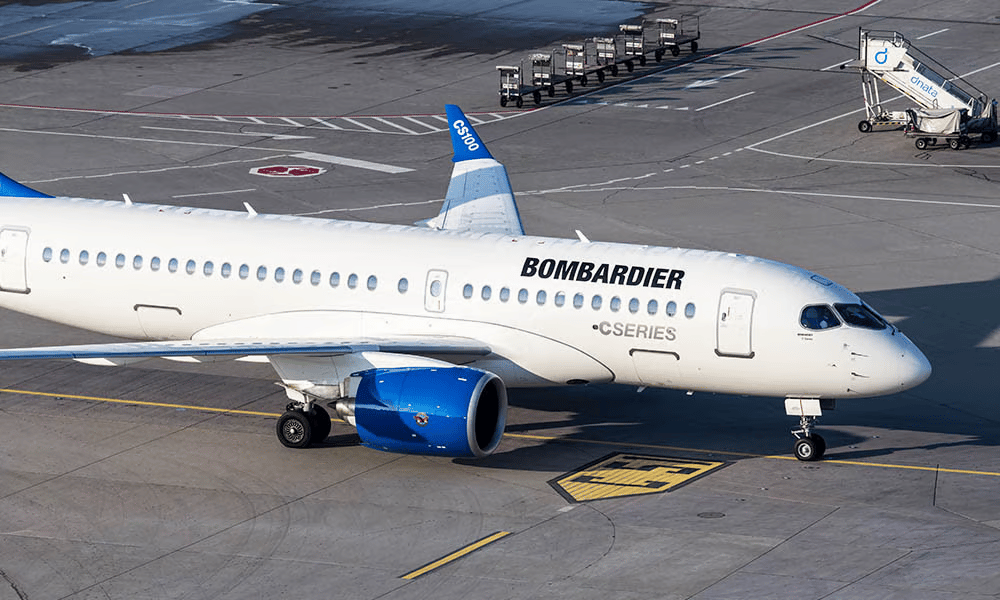
U.S. President Donald Trump has dropped his threat to block Bombardier aircraft sales in the United States, telling a Kansas rally that he had not known the Montreal-based jet maker employed thousands of Americans.
The reversal ends six weeks of uncertainty for one of Canada’s largest aerospace employers, though U.S. tariffs on Canadian goods remain.
Campaigning near Wichita for Republican Senator Roger Marshall of Kansas, Trump did not name the company but said he would be “helping a certain air company get themselves straightened away,” The Canadian Press (CP) reported.
“I always viewed them as a Canadian company ... but now I find out they have a presence here, and we’re not hurting them if they’re in Kansas. So we’ll take care of those people, all right? And the jobs.”
How Bombardier threat unfolded
The dispute began with a Truth Social post on Sept. 7, 2026, a day before Ottawa’s counter-tariffs took effect.
“NO MORE SELLING BOMBARDIER IN THE UNITED STATES! Their products aren’t good enough!” Trump wrote, according to The Associated Press (AP).
No executive order followed, Money.ca reported. The threat came amid 50% Section 338 tariffs that a White House fact sheet says Trump imposed on July 20, 2026, and the September escalation in which Washington fired back with import bans on Canadian alcohol and dairy.
Trump credited a phone call from Marshall, who faces a close race against Democrat Adam Hamilton in the November 2026 midterms, for his change of heart, CP reported.
Workforce spread across two countries
Bombardier has roughly 18,000 employees worldwide, CP reported in September 2026, about 3,500 of them in the U.S. Approximately 1,500 work in Wichita, home to the company’s U.S. headquarters and defence division – a figure reported by CP and cited by Kansas Governor Laura Kelly this month. Marshall’s September figure of more than 1,200 Kansas jobs predates that update.
In Canada, the company completes final assembly of its Challenger and Global jets, while U.S. customers generate more than half of its revenue, according to CP. In September 2026, Bombardier agreed to buy MHI Canada Aerospace’s Mississauga, Ont., plant, a deal that would bring about 750 Mitsubishi employees into its workforce once approved, CP reported.
The International Association of Machinists and Aerospace Workers (IAM Union Canada) warned Prime Minister Mark Carney in a January 2026 letter that Trump’s earlier aircraft threats would harm aerospace workers on both sides of the border.
What the reversal means for HR leaders
Bombardier’s Sept. 7 statement said it works with approximately 2,800 American suppliers across 47 states and spends more than US$2.5 billion with them annually. Analysts told CP that most of its aircraft contain at least 40% U.S. content.
“Our recently announced investments and newly inaugurated North American Learning Center will support high-skilled jobs for many years to come,” a Bombardier spokesperson told CBC News on Tuesday, referring to its new Wichita training centre for technicians and mechanics.
James McGarragle, an analyst at RBC Dominion Securities, said the threat had no tangible effect on U.S. demand. “We view the removal of this regulatory uncertainty as positive for sentiment as it alleviates an important headline overhang for investors,” he said, according to CP.
The reversal came at a rally, not through a written order, and leaves the Section 338 tariffs untouched. Employers in trade-exposed sectors can still draw on Ottawa’s federal measures introduced as Canada’s retaliatory tariffs took effect, while Deloitte Canada’s fall 2026 outlook projecting slower growth into 2027 signals continued pressure on hiring plans.