Deloitte cuts economic forecast as Ontario and Quebec face the sharpest exposure from new U.S. trade measures
Canada's economic growth trajectory is set to diverge from previously expected in 2026 and 2027, creating more planning pressure for HR leaders managing headcount, hiring, and compensation in an increasingly volatile trade environment.
Deloitte Canada's fall 2026 economic outlook, released Tuesday, raised the 2026 national gross domestic product (GDP) growth forecast by 0.2 percentage points to 0.9 per cent, reflecting a stronger-than-expected first half. However, the 2027 projection was cut by 0.4 percentage points to 1.6 per cent as new U.S. tariffs take hold and trade disruption widens.
"The resilience of Canada's economy is being tested once again as the trade tensions between Canada and its largest trading partner, the U.S., widened in late August," wrote Dawn Desjardins, Deloitte Canada's chief economist in Toronto, in the report's foreword.
The forecast, completed Sept. 9, incorporates U.S. Section 338 tariffs imposed August 22 and Canada's retaliatory tariffs that took effect Sept. 8. It doesn’t account for expanded U.S. tariffs effective Sept. 15 or an import ban on certain Canadian goods that came into force Sept. 29 – both flagged by Desjardins as downside risks not yet captured in the modelling. "Further escalation would exert downward pressure on a growing number of sectors and damage business and consumer confidence," she wrote.
Tariff exposure hits exports and investment
The near-term outlook is sharpest for goods-producing and export-dependent industries. Deloitte projects exports to fall 0.9 per cent annualized in the third quarter of 2026 and 5.0 per cent in the fourth, following a 15.1 per cent jump in the second quarter. Full-year export growth in 2027 is forecast at just 0.3 per cent.
Business investment is expected to grow 1.6 per cent this year as many organizations defer expansions amid uncertainty over U.S. market access – a pattern HR leaders in automotive, steel, and manufacturing will recognize from their own hiring cycles. Investment is forecast to recover to 3.5 per cent in 2027 as major projects reach final investment decisions.
A $7.5-billion federal support package for tariff-affected businesses and workers offers some cushion as organizations in exposed sectors examine how Canada's tariff shocks are raising new workforce risks across heavily exposed industries.
Rate hikes ahead add pressure to workforce budgets
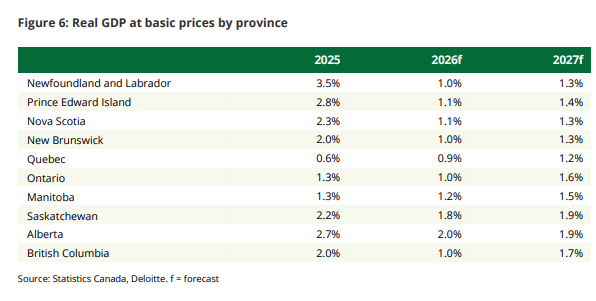
Monetary policy is set to create further complexity for people leaders. Deloitte said it expects the Bank of Canada to hold its policy rate at 2.25 per cent for the remainder of 2026, then raise it four times in 2027 to reach 3.25 per cent. Headline inflation hit three per cent in July 2026 on the war in the Middle East; core inflation excluding energy was running at 2.2 per cent.
"The combination of downside risks to the economy and upside risks to inflation puts the Bank of Canada in a difficult position," Desjardins wrote.
Rising hours worked and resilient consumer spending suggest broader economic activity continued to expand through August, even as directly affected industries face disruption, according to Abbey Xu, an economist at RBC, in RBC’s own economic report released Tuesday. "New tariffs and tighter financial conditions remain important downside risks, while targeted government support should help cushion the impact on affected businesses and workers," Xu wrote.
Consumer spending growth is forecast to ease from 2.1 per cent this year to 1.4 per cent in 2027 as job growth cools, partly reflecting three consecutive quarters of population decline.
Ontario and Quebec face steepest provincial headwinds
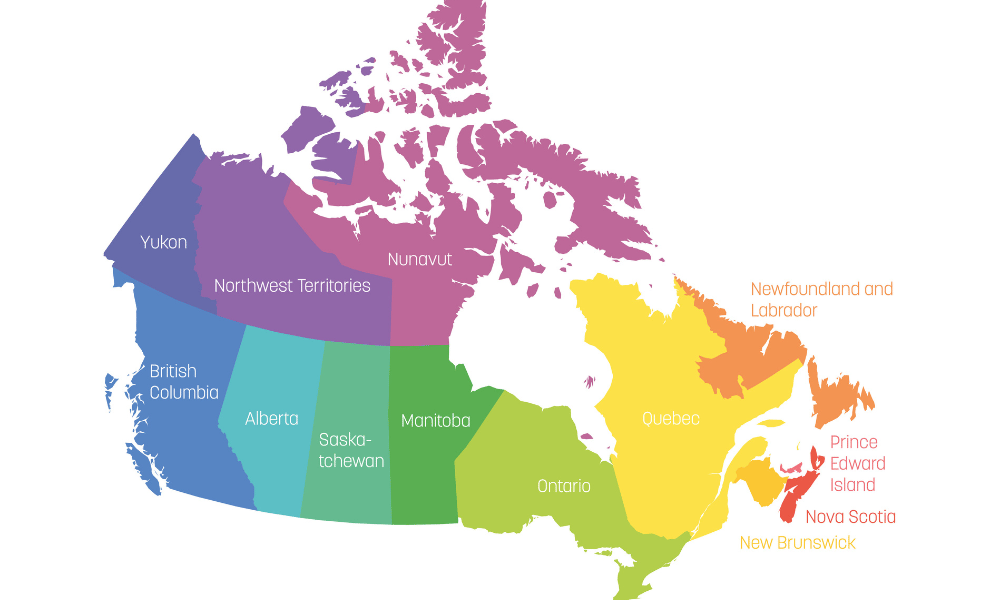
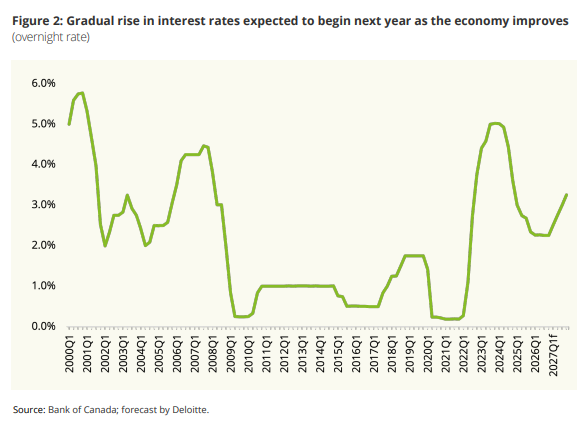
Tariff risk is not evenly distributed. Deloitte identified Ontario as one of the most exposed provincial economies given its concentration of automotive manufacturers and steel producers, with GDP growth forecast at one per cent in 2026 and 1.6 per cent in 2027. Quebec, facing headwinds in aluminum and other manufacturing sectors, is projected to post the weakest provincial growth at 0.9 per cent. Alberta leads all provinces at two per cent, followed by Saskatchewan at 1.8 per cent.
HR executives building regional strategies should consider how federal and provincial governments have pledged to defend Canadian workers from U.S. tariff disruption, including retraining programs targeting workers in steel, lumber, and automotive sectors.
Deloitte's modelling found a U.S. exit from the Canada-United States-Mexico Agreement (CUSMA) could cost Canada's economy $402 billion — equivalent to a real GDP loss of 1.6 per cent compared to baseline. U.S. proposals to raise tariffs on Canadian autos, auto parts, and steel to 50 per cent in January 2027 could put CUSMA itself at risk, the report warned.
Real GDP flat in July: StatCan
Statistics Canada data released Tuesday showed real GDP was essentially unchanged in July 2026. An advance estimate places August 2026 GDP growth at 0.2 per cent, subject to revision on Oct. 30 as the trade war's impact on Canadian jobs and business confidence compounds
Desjardins struck a cautiously hopeful note. "We remain cautiously optimistic that progress toward establishing new trade and supply chain relationships, growing participation by companies in government-initiated projects, and a renewed commitment to addressing impediments to investment will advance, allowing Canada's economy to weather this latest blow," she wrote.