‘Businesses need to understand it to develop new markets and products, invest in productivity-enhancing technology and help their workers gain skills for the future’

Demographic changes will shrink the Canadian workforce and could push up wages in some sectors, according to an explainer from the Bank of Canada, which said an aging population and lower immigration are reducing the number of people working.
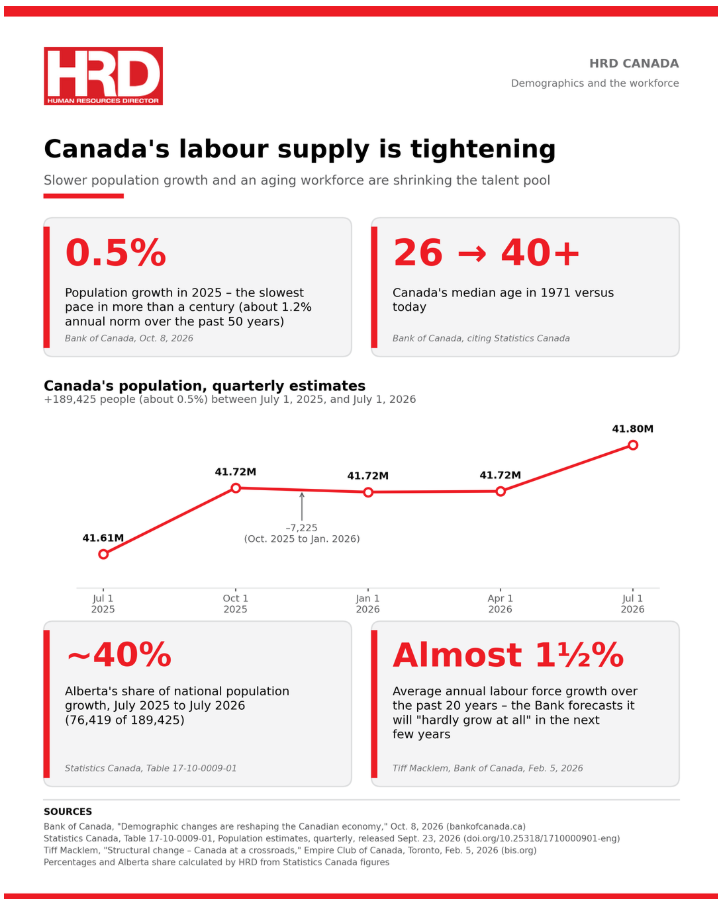
Canada's population grew by only 0.5% in 2025 – the weakest pace in more than a century, according to the bank. For most of the past 50 years, annual growth held at about 1.2%.
Why is Canada's labour supply tightening?
Canada's birth rate has been below replacement level for more than five decades, the Bank said, and immigration – which long filled that gap – has been falling since Ottawa began cutting levels in 2024.
Statistics Canada's quarterly estimates, released Sept. 23, 2026, show the population rose by 189,425 people, or about 0.5%, between July 1, 2025, and July 1, 2026, to 41,798,407. The population fell by 7,225 between Oct. 1, 2025, and Jan. 1, 2026. Alberta accounted for about 40% of the national increase over the year, while Ontario grew by less than 0.3%.
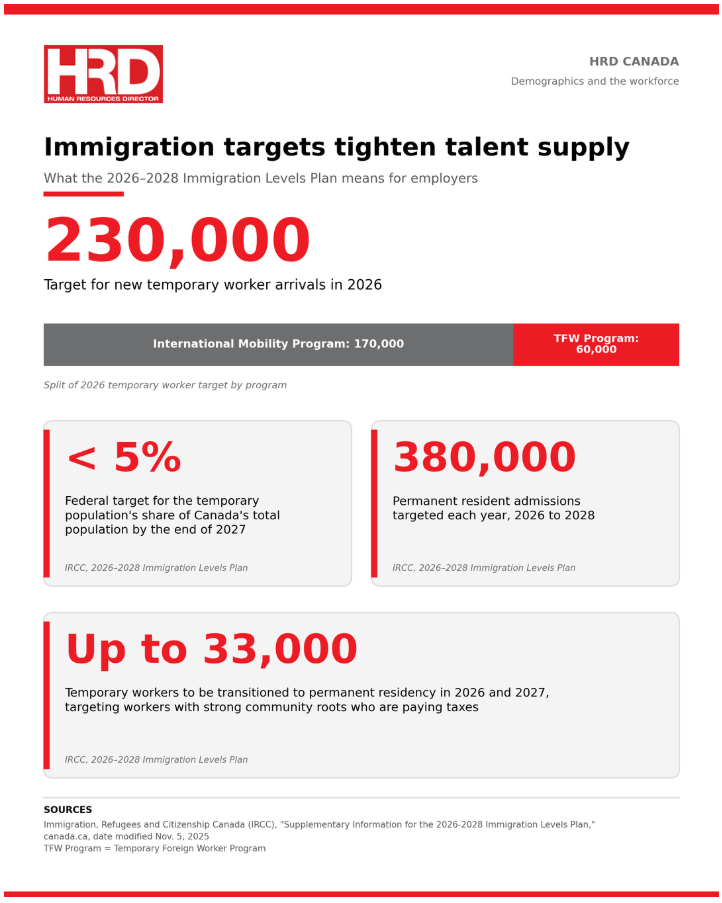
Under the 2026–2028 Immigration Levels Plan from Immigration, Refugees and Citizenship Canada (IRCC), the target for new temporary worker arrivals is 230,000 in 2026, including 60,000 under the Temporary Foreign Worker (TFW) Program. Ottawa aims to cut the temporary population to less than 5% of the total by the end of 2027, while holding permanent resident admissions at 380,000 a year and transitioning up to 33,000 temporary workers to permanent residency in 2026 and 2027.
The Bank noted that temporary workers often fill jobs in sectors with labour shortages, such as restaurants and agriculture, while highly skilled immigrants bring scarce expertise in fields such as computer engineering.
For employers that relied on these workers, the effects are visible. Some Prince Edward Island businesses are cutting staff hours and extending shifts as federal immigration cuts shrink the labour pool, while those still hiring them face heightened immigration law compliance scrutiny and audits.
Aging workforce raises retention and succession stakes
Canada's median age was about 26 in 1971 and is now above 40, according to Statistics Canada data cited by the Bank. Most baby boomers have reached retirement age, and fewer young people are entering the labour market to replace them.
The Bank said labour shortages could raise wages in some sectors, potentially feeding into inflation. Older Canadians also spend more on health care, adding demand in that sector.
For HR leaders, that means sharper competition for talent in sectors such as health care, alongside the loss of institutional knowledge as long-tenured staff retire. Succession planning becomes more pressing, though employers should tread carefully when asking older workers about their retirement plans, given the risk of age discrimination claims.
In the same speech, Macklem pointed to the role of employers as the economy adjusts to structural change. "Businesses need to understand it to develop new markets and products, invest in productivity-enhancing technology and help their workers gain skills for the future," he said.