What are company's plans for Canadian workers?
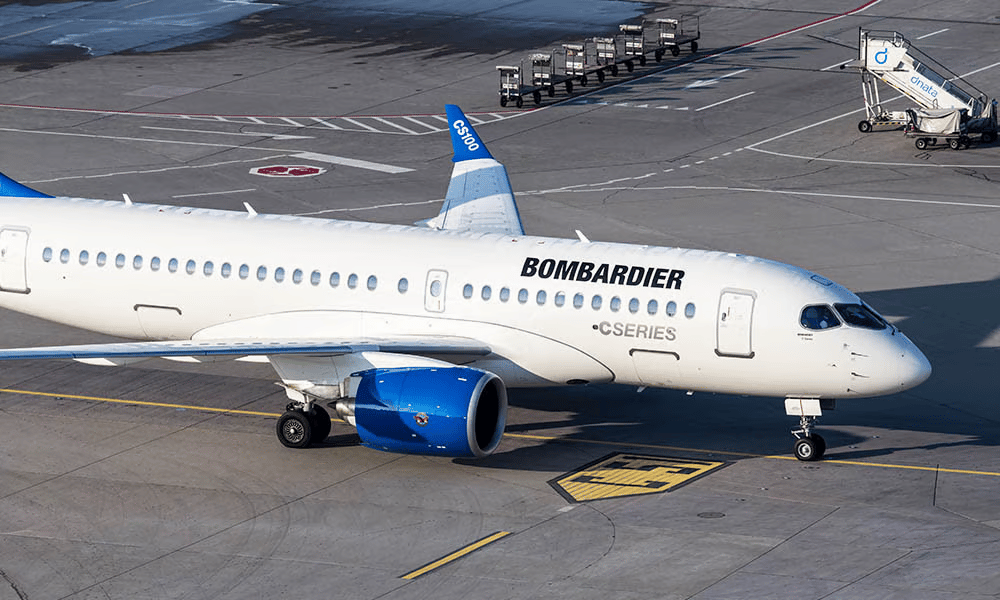
Bombardier will hire 800 workers in the United States and spend about US$270 million on infrastructure, the Montreal-based aircraft maker announced on Oct. 23, 2026 – four days after U.S. President Donald Trump dropped his threat to bar its jets from the American market.
The deal ends a seven-week standoff.
“Based on our constructive conversations with the U.S. administration, we see a bright path forward for our highly skilled aerospace workers as well as a positive environment for Bombardier to continue pursuing direct investments to grow our American footprint,” Eric Martel, president and chief executive officer of Bombardier, said in a company statement.
What Bombardier’s U.S. hiring plan includes
The company is recruiting for 500 positions and plans to hire 300 more in Kansas, Texas, Indiana and Connecticut, with 150 slated for Texas, according to its release.
Much of that hiring depends on training. A new centre in Wichita, Kan., will train newly hired aircraft technicians, CBC News reported.
Kansas Governor Laura Kelly welcomed it at its opening. “Bombardier’s new $50 million investment underscores the enduring strength of the partnership between Bombardier and Kansas, and one that I expect will continue long into our shared future,” Kelly said.
What it means for Bombardier’s Canadian jobs
The release lists no new Canadian roles, and the U.S. plan centres on Bombardier’s service and maintenance network rather than aircraft production. The company says its jets are still built at aerostructure, assembly and completion sites in Canada, the U.S. and Mexico.
Canada remains Bombardier’s industrial base. In January 2026, the company said it employs nearly 10,000 people directly in Quebec and sustained nearly 50,000 Canadian jobs in 2024, citing a PwC study it commissioned. It also announced a $100-million manufacturing centre in Dorval, Que., due by late 2027.
Ontario is growing too. Bombardier’s Global aircraft assembly centre at Toronto Pearson International Airport employs more than 2,200 people, INsauga reported, citing the Ontario government. In September 2026, the company agreed to buy MHI Canada Aerospace’s nearby Mississauga operations, adding about 750 employees once the deal closes.
Stakeholders comments
That Canadian footprint is why the threat landed hard. When Trump announced the ban on Sept. 7, 2026, as covered in HRD Canada’s report on Trump’s warning that Bombardier could no longer operate in the U.S., then-premier Christine Fréchette replied in French: “Bombardier is a source of pride for Quebec, a flagship of our economy, and a major player in our aerospace industry,” according to The Globe and Mail’s translation.
The International Association of Machinists and Aerospace Workers (IAM Union), which represents Bombardier staff in both countries, followed on Sept. 8, 2026: “Anything that undermines the stability and continued growth of these jobs is counterproductive to protecting workers and strengthening the aerospace industry in both the United States and Canada.”
In the end, Kansas jobs moved Trump. At an Oct. 19, 2026, rally in Park City, Kan., he credited a call from Republican Senator Roger Marshall, as detailed in HRD Canada’s coverage of Trump dropping the Bombardier U.S. sales ban threat.
The legal limits of a sales ban
That reversal came in a speech, not a legal order – and no order ever enacted the threat. Under federal law, the Federal Aviation Administration (FAA) issues aircraft type certificates on safety terms, so a presidential post could not ground Bombardier jets.
The real exposure lies in trade law. On July 20, 2026, Trump used Section 338 of the Tariff Act of 1930 to impose 50% duties on Canadian vehicles, alcohol and dairy. The statute also lets the president bar a country’s goods, a power applied to Canadian dairy.
Those measures remain, part of the escalation examined in HRD Canada’s analysis of the trade war escalating with U.S. import bans. For HR leaders at trade-exposed employers, workforce plans still rest on policy that can change with a single post.