‘We will bring back production to Brampton’
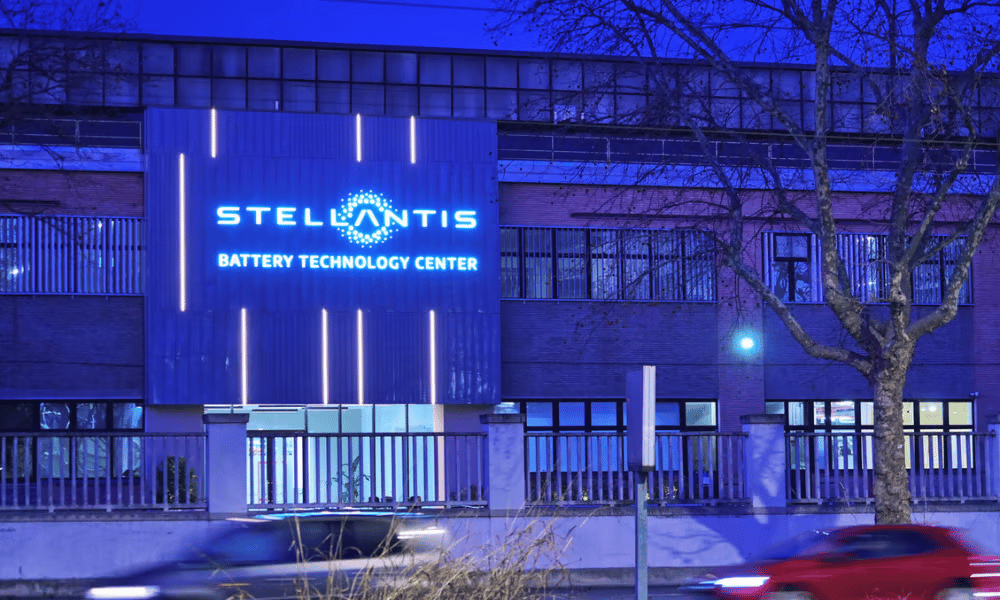
Stellantis faces a possible strike that would halt Chrysler Pacifica and Dodge Charger production in Windsor, Ont., after its roughly 9,000 Unifor-represented workers in Canada handed their union a decisive mandate.
The Stellantis strike vote, held Oct. 17 and 18, 2026, saw 97.3% of members authorize job action if needed, Unifor said on Oct. 19. Neither side has yet requested a “No Board” report, a required step before legal job action, so the mandate is leverage rather than a walkout date.
“Unifor members at Stellantis understand how difficult negotiations with the company have been and gave an overwhelming mandate to support their bargaining committee,” said Lana Payne, national president of Unifor.
Stellantis told Transport Topics it remains committed to good-faith bargaining. On the core issue, Industry Minister Mélanie Joly said on Oct. 16, 2026 that “we will bring back production to Brampton,” Transport Topics reported.
Why does the Brampton plant sit at the centre of the dispute?
That issue is the idled Brampton Assembly Plant. The previous agreement expired Sept. 20, 2026, after talks stalled, according to Unifor. The union said Stellantis told it in August 2026 that the employer was seriously considering closing and selling the plant to defence supplier Roshel.
“Strike action is always a last resort, but we will not back down and accept a deal that weakens Stellantis’ footprint within Canada’s auto industry due to broken commitments that further cause devastation for our members, families and communities that rely on good union auto jobs,” said James Stewart, Unifor’s Stellantis master bargaining chairperson.
The stakes extend to taxpayers. Ottawa has said it will seek to recover $222 million paid to retool Brampton if Stellantis abandons production there, WardsAuto reported.
What strikes cost employers and the Canadian economy
A walkout would add to a costly national trend. Canada lost more than 4.3 million person-days to work stoppages in 2025, up from 3.4 million in 2023, even as the number of stoppages fell, according to a September 2026 Canadian Chamber of Commerce report by University of Calgary economist Trevor Tombe.
Tombe’s modelling found that disruptions in sectors that supply other industries, including some manufacturing, generate the largest spillovers. A 28-day rail disruption alone could cut gross domestic product by about $1.2 billion, mostly outside rail, including in vehicle manufacturing.
Auto strikes show how quickly those costs mount. The 2023 United Auto Workers strike in the U.S. generated an estimated US$7 billion losses within four weeks, including US$2.67 billion for suppliers, Anderson Economic Group estimated. The Canadian Labour Congress counters that nearly 95% of federally regulated disputes end without a stoppage.
What the Ontario labour law says about a strike mandate
The next steps are set by statute. Under Ontario’s Labour Relations Act, 1995, a legal strike requires conciliation and 16 days after the minister declines to appoint a conciliation board. Wages and working conditions stay frozen until 14 days after that notice, and the employer may request one vote on its last offer. Once a strike is lawful, discipline requires just cause.
If Brampton is sold, successor rights could also bind a buyer to the collective agreement unless the Ontario Labour Relations Board rules otherwise.
For now, the pressure falls on Windsor, where about 6,400 workers face a three-week layoff starting Oct. 19, 2026, WardsAuto reported.
The dispute reflects a broader shift. Employers have pressed for a special mediator role for high-stakes labour disputes, unions oppose Ottawa’s proposed Canada Labour Code overhaul under Bill C-39, and regulators have acted, including the labour board order barring the Bank of Canada from using replacement workers. None governs Ontario auto plants, but together they make strike risk a boardroom issue.
HR leaders in unionized workplaces should therefore map which operations a stoppage would hit, brief managers on the bargaining freeze and just-cause rules, and prepare communications for non-union staff and suppliers.