Canada's trade minister says a deal would trigger formal CUSMA review talks, reducing tariffs on key sectors
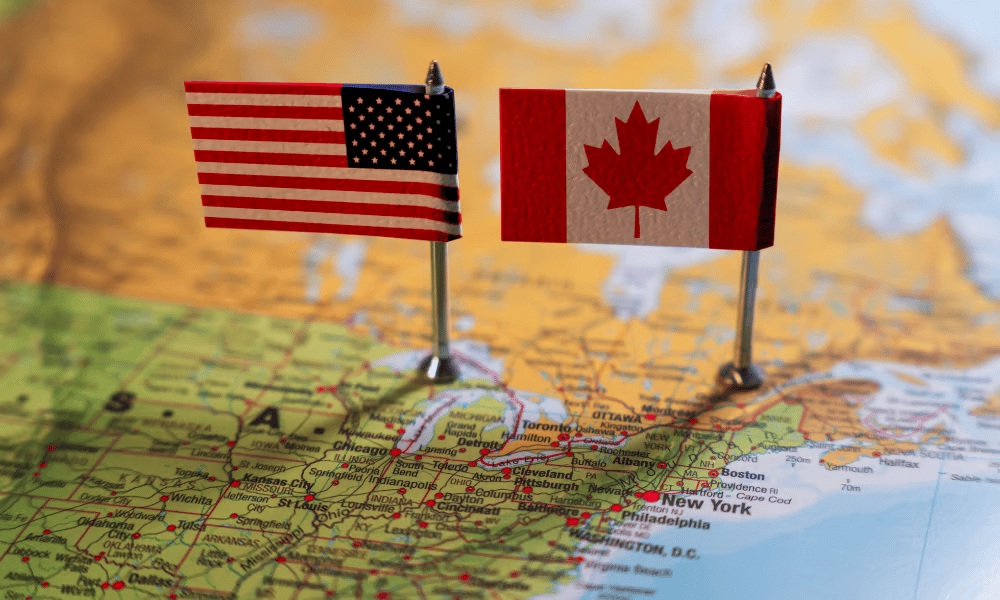
Canada-U.S. Trade Minister Dominic LeBlanc signalled on Nov. 19, 2026, that a Canada-U.S. interim trade deal with the Trump administration is within reach. If achieved, it would trigger formal review talks for the Canada-United States-Mexico Agreement (CUSMA). For HR leaders managing workforce instability driven by tariffs, the development marks a potential turning point.
LeBlanc told CBC’s Power & Politics that the government aims to reach an interim arrangement before year’s end. He acknowledged the timeline is not fixed. “If it takes until January or February to get that deal, we’ll do that work,” he said.
What the deal could look like
An interim agreement would likely keep some steel, aluminum, automotive, and lumber tariffs in place under Section 232, though at reduced rates. The government’s position is that the 338 tariffs, which took effect in August 2026, should be lifted entirely.
The 232 tariffs may remain in some form. LeBlanc framed the objective plainly: “We have to be in a better comparative position.”
Valérie Beaudoin, U.S. politics expert analyst and an advisory committee member, urged caution on the year-end timeline. “It’s not always straightforward, it’s not always easy,” she said, referring to the complexity of negotiating with the Trump administration.
Flavio Volpe, president of the Automotive Parts Manufacturers’ Association and an advisory council member, flagged an open strategic question. The incoming Democratic-controlled Congress has pledged to push back against tariffs on Canadian goods. That shift could accelerate an agreement – or give the Trump administration reason to hold firm.
“It’s my read of it that different parts of this administration have a different opinion on it,” Volpe said.
LeBlanc warned against treating the Democratic congressional shift as a “magic bullet.”
What does a Canada-U.S. trade deal mean for HR workforce planning?
The industries at the centre of these negotiations – steel, aluminum, automotive, and lumber – have faced the most acute HR pressures this year. HR leaders in those sectors have had to manage hiring freezes, retraining commitments, and difficult conversations with workers about job security.
A partial tariff reduction would not resolve that uncertainty overnight. But it would give HR leaders in affected industries a firmer foundation for workforce planning heading into 2027.
Jean Simard, head of the Aluminium Association of Canada and an advisory committee member, called this “the opportune time” for Canada to negotiate. He cited the congressional shift as a window that may not stay open long.
HR leaders can use this period to revisit scenario plans built during the trade war’s most volatile phase. That means reassessing headcount projections in sectors that may see tariff relief and reviewing retention strategies for workers in auto, steel, and lumber.
CUSMA: the longer game
Formal CUSMA review talks would open a larger set of questions for Canadian employers. Cross-border talent mobility, supply chain labour standards, and sector-specific carve-outs have all emerged as HR concerns during the trade dispute. If the U.S. formally withdraws from the agreement, Canada could lose an average of 163,000 jobs per year.
Those issues won’t be resolved by an interim deal, but triggering formal talks would at least put them on the table. For HR leaders managing affected workforces, a Canada-U.S. interim trade deal is the clearest signal of stability in months. Even an interim agreement would represent meaningful progress. HR leaders in tariff-exposed sectors should treat this as a prompt to revisit scenario plans.