‘It becomes a game of keywords,' says Alaa Abousadah discussing recruitment challenges
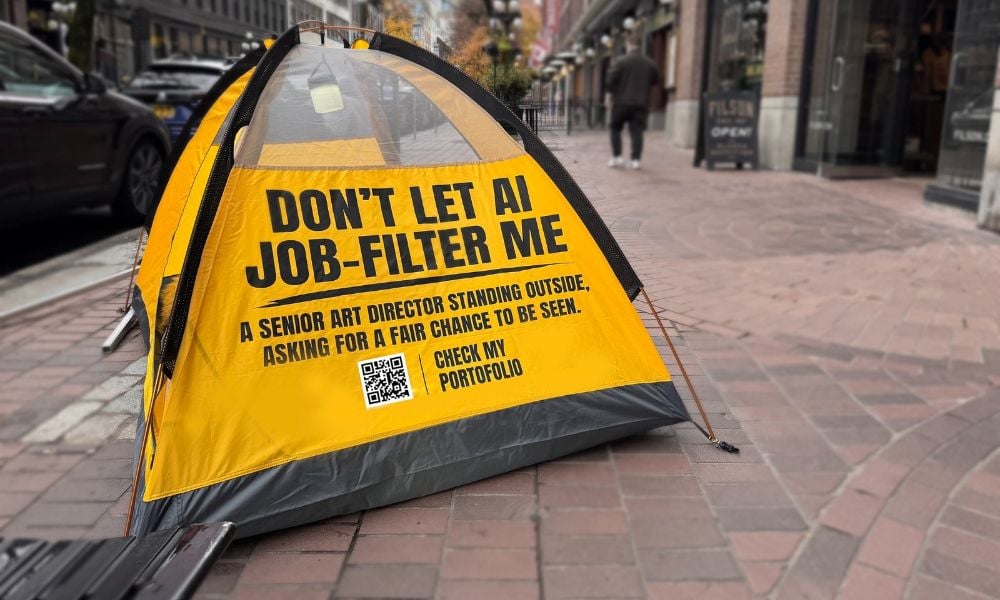
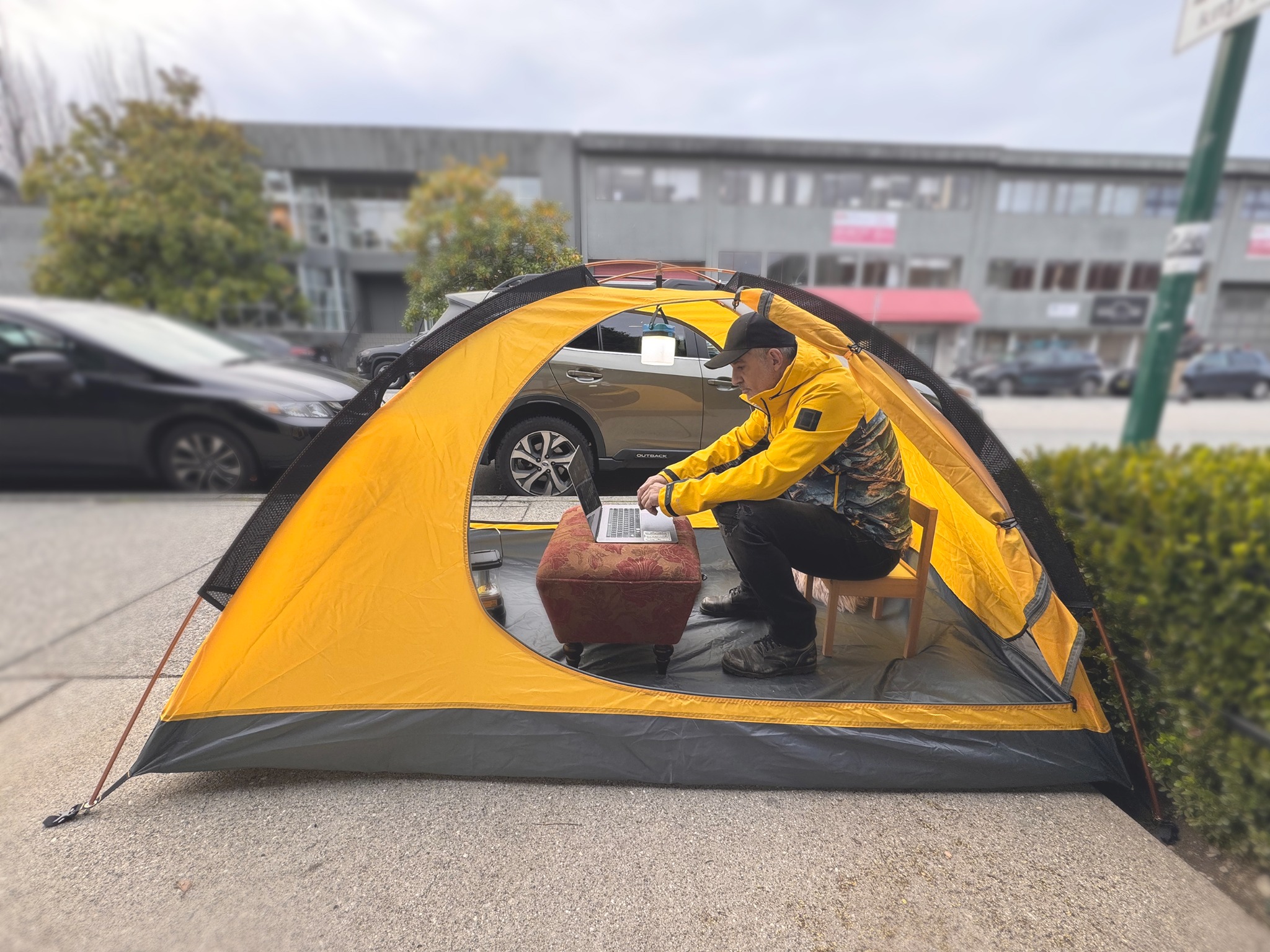
A senior art director in Vancouver pitched a bright yellow tent to protest artificial intelligence screening, arguing the technology rejects experienced candidates before a human ever sees their work.
His message for employers is that tools meant to speed hiring may be filtering out the talent they most want.
Alaa Abousadah said the protest followed months of silence. "For more than two months, I spent hours every day sending out my CV and got zero responses," Abousadah told HRD Canada. At someone's suggestion, Abousadah rewrote the résumé with AI to get past AI screening. "I took their advice; I recreated my CV using AI, but nothing changed."
In that contest, Abousadah argues, experience disappears. "When we're all using AI to write CVs for another AI to screen, it becomes a game of keywords. Twenty-five years of experience can sound just like five."
Why disclosure alone falls short
That frustration is surfacing as transparency rules tighten. Since Jan. 1, 2026, Ontario's Employment Standards Act, 2000 (ESA) has required employers with 25 or more employees to disclose in publicly advertised job postings whether AI is used to screen, assess or select applicants, according to the Government of Ontario's guide to the ESA job posting requirements.
The share of Ontario job descriptions mentioning AI-related terms rose from 9% in October 2025 to 28% in May 2026, according to Indeed Hiring Lab's analysis of Ontario job postings. HRD Canada has outlined the new Ontario job posting requirements for employers.
Yet disclosure tells candidates AI is involved, not whether a person read their application. Abousadah wants employers to close that gap.
Where human review should sit in AI screening
Abousadah's answer is a person, stepping in at the right moment.
"Human judgment needs to come in before a candidate is screened out. AI can help sort applications, but someone who understands the role should look at the work and have the authority to move a candidate forward, even if the system ranked them low," Abousadah said.
In creative roles, that means opening the portfolio, Abousadah said, drawing on a career in advertising in Dubai and toy packaging design. "In advertising, we hire people to think differently. So why would we screen them based solely on how many keywords in their CV match the job posting?"
Managing application volume
Abousadah accepts that volume makes human review harder, but not that it justifies handing decisions to software.
"I'd use AI to help organize applications, and I'd take responsibility for making sure a person reviews them before deciding who moves forward," Abousadah said. The fix, Abousadah said, is smaller review batches, extra reviewers or a paused posting until the team catches up.
Wendy Cukier, professor of strategy at Toronto Metropolitan University in Toronto, drew a similar line in an August 2025 interview with Canadian HR Reporter (CHRR). "I can see where the tools might be used to take you from 2,000 applicants down to 50 or 100, but it would be a big mistake to rely on the tools to take you down to the top 10 or the top three," Cukier said.
Recent HRD Canada coverage has examined why hiring teams must be able to explain how AI scores candidates and Robert Half research showing AI tools are slowing hiring.
Abousadah's plea is direct: "We need to take a stand together and keep people involved in decisions that affect people's lives."