Talent acquisition executives are moving beyond vacancy-filling to build workforce planning strategies tied to business goals
Only five per cent of Canadian organizations say they have both the headcount and skills needed to complete high-priority projects in 2026 – a figure from Robert Half Canada's 2026 Demand for Skilled Talent report that highlights a talent acquisition challenge for HR leaders already navigating rapid business change, generational workforce shifts, and intensifying economic uncertainty. With 57 per cent of hiring managers reporting skills gaps across their departments, the Robert Half Canada report points to a deeper structural problem: workforce planning in many Canadian organizations remains reactive, built to fill seats rather than to shape strategy.
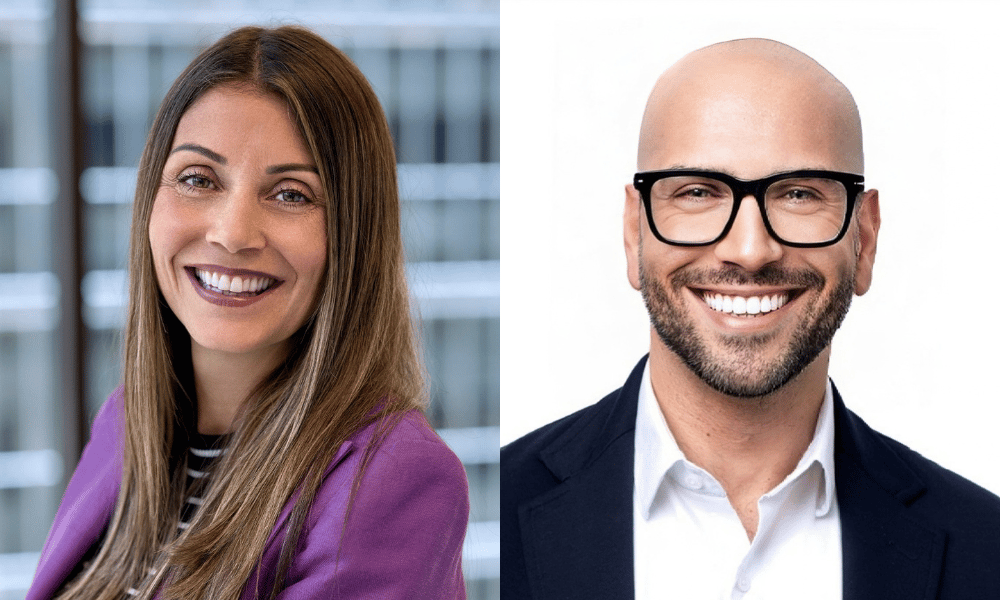
However, some people leaders are pushing for a different model – one in which talent acquisition is embedded in business planning from the start, not activated when a vacancy appears, according to Kelly Davis, Chief People Officer at 123Dentist – a majority dentist-owned dental network headquartered in Burnaby, BC – who’s based in Toronto.
The gap between workforce planning as a concept and as an operational reality is something Davis knows firsthand. 123Dentist is Canada's largest majority dentist-owned dental network with nearly 500 locations nationwide, and it operates in a sector where workforce dynamics are shifting sharply – and the traditional planning calendar is struggling to keep pace.
"The roadmap is just changing, both the business roadmap and the people perspective," says Davis. "What we thought we needed to plan for even three months ago has changed, let alone 12 months ago, which is still how business cycles usually work from a planning and a budget perspective."
The consequences extend beyond planning timelines, according to Davis. She says generational shifts are reshaping what people expect from work and points to a marked increase in demand for non-traditional working arrangements across all age groups in her sector – schedules that sit well outside the standard Monday-to-Friday structure. "I would say on the people side, the talent is ever-changing – individuals in all generations are looking for different types of balance," she says.
Tying dollars and data to talent
Making the shift from reactive to strategic requires more than intent. It demands that talent functions speak the same financial language as the business – a discipline Davis says much of the profession has historically avoided.
"Having true dollars and data tied to your talent acquisition strategy is really, really important," she says. "And I would like to say we've always done that, but honestly, earlier in my career, we didn't – we in HR were responsible to look at empty seats and how many bodies do we need to find, and ops was having their own conversations around revenue dollars that each role fills."
The structural consequence of that gap has been a talent function treated as a support service rather than a strategic driver. HR teams tracking open roles while finance tracks revenue contributions are operating in parallel, not in partnership, says Davis. She believes the fix also means challenging a foundational assumption of traditional recruiting. "In the past, we've always sort of treated a vacancy as roughly equal," she says. "And I think when talent learns to truly work with the operators, you start to realize what a filled role in one part of the country is going to look like in one location, but it might be completely different in another."
Ray Chaaya, Vice President, People & Culture at Zurich Canada in Toronto, agrees the data problem runs deeper still. Most large Canadian organizations have built workforce analytics capabilities, he says, but the sector remains immature in using them to drive real decisions. "We have a long way to go because strategic workforce planning is definitely on the rise and dynamic resourcing, which goes hand-in-hand with that, is really becoming top of mind now because it's linked to the capability question," Chaaya says.
Chaaya’s ambition for a mature analytics function is specific: a live skills dashboard capable of mapping gaps and strengths across an entire enterprise, allowing leaders to redeploy existing talent before turning to external hiring. "Imagine a world where I could open up a dashboard or some sort of view and see where in every area of the what the strengths are in skills and where the gaps are in skills," he says.
Davis frames shared data as the foundation for the whole model. "We need to make sure that the talent HR team has the exact same workforce analytics that operations and finance are using because they all feed off of each other," she says.
Breaking down the silo walls around business strategy
Organizational silos are not merely a cultural concern – they create a structural trap that derails strategic workforce planning at its most critical moment: the budget cycle. Most Canadian hiring managers expect significant challenges filling roles, and that pressure is compounded when proactive investment was never built into the plan.
"Where I see this falling down is it's not that the business doesn't want to do the proactive hiring", but when we come forth and say, ‘Look, we want to upgrade talent, we have these great individuals,’ if it wasn't built into the budget process, it's going to hurt your actual financial numbers," says Davis.
Chaaya believes the solution lies in repositioning what talent acquisition actually does. The function's value, he says, isn’t filling roles – it’s translating business strategy into human capability. "When we're talking about embedding talent acquisition, it's not just hiring more people or headcount or understanding how much headcount you need in order to satisfy the business," he says. "It's really asking the question, can talent acquisition communicate clearly what capability is needed in every area of the business that they support, in order to execute on the strategy and strengthen the bench."
AI and internal mobility as talent acquisition tools
Looking ahead, both Davis and Chaaya see AI as an accelerant towards the goal of strategic recruitment and hiring – but only when deployed with clarity of purpose. How AI is transforming workforce strategy for Canadian HR leaders is a question the sector can no longer afford to defer.
"If we learn to use it the right way, we can leverage AI to have stronger data, which is going to build wider networks for us to recruit stronger talent from and ultimately drive those talent strategies," says Davis.
Davis is equally frank about where the talent acquisition function has stalled. Despite years of investment in recruitment technology, the candidate experience remains poor for most Canadians navigating the hiring process. "Most industries I know – from friends, family, and personal experience – it's still a machine of people applying for open roles,” she says. “Your resume can go into the abyss, you don't feel like you've had a great experience, and that can ultimately hurt [the employer] brand – when we can leverage AI the right way, we can have a much more closed and connecting-the-dots recruitment process."
Chaaya sees internal mobility as the most underused lever in Canadian talent strategy. "If I'm able to start moving people around to help execute on the strategy without relying only on hiring externally, and really elevate our internal mobility process, that changes the game," he says. "Because now you can really develop people internally and leverage people's strengths."
That dives into Davis’ belief that the talent acquisition function feeds the pipeline well before there’s a vacancy to fill by identifying the state of skills and development in the organization. “It goes all the way back to where your succession planning starts, and when we can link that up properly with our other lines of business and business executives, then your proper succession planning leads into the budget discussion,” she says. “Linking that cycle so that we all know what’s our budget for proactive hiring – and that's not HR talent pushing it, it's actually sharing and holding hands on that with your business leaders.”