How can HR solve the problem?
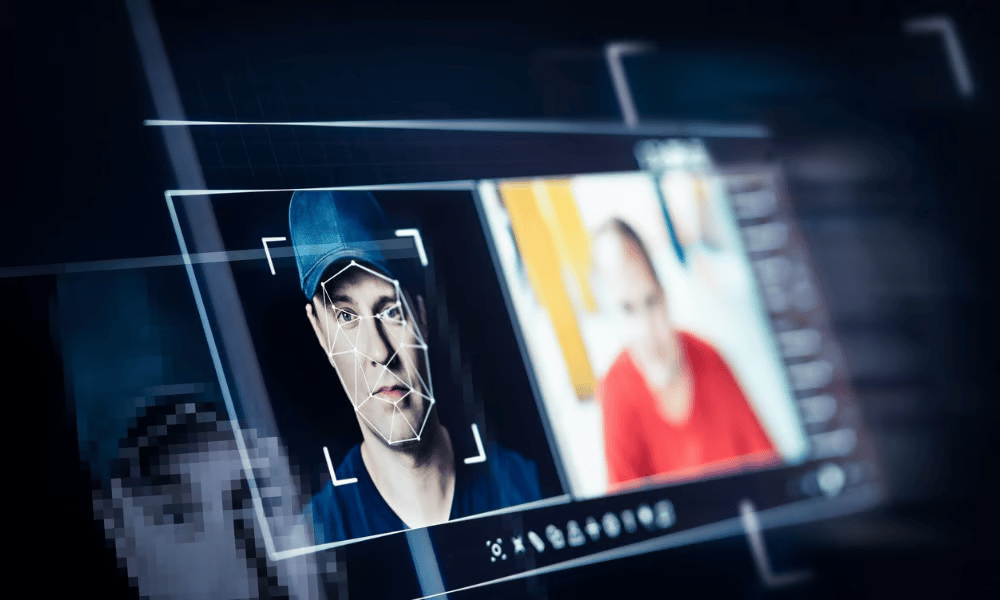
Deepfake fraud has moved from a consumer nuisance to a direct threat to organizations, and Canadian employers are exposed.
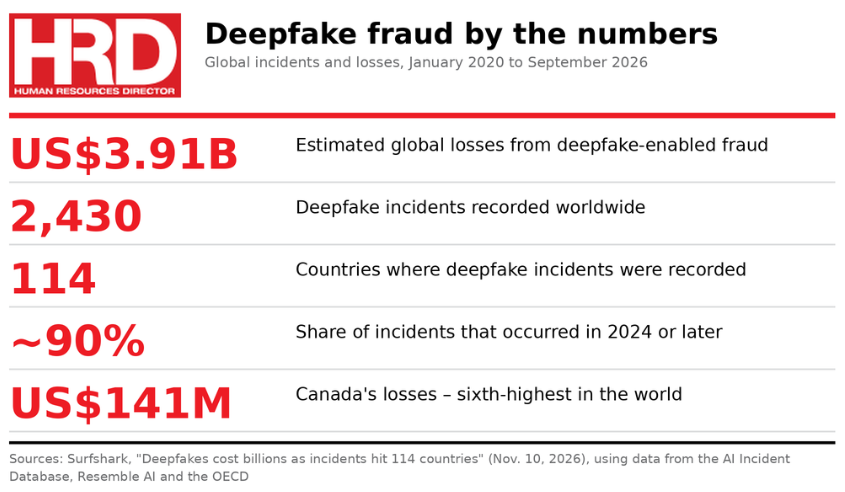
A study published Nov. 10, 2026, by Netherlands-based cybersecurity company Surfshark links synthetic video, image and audio scams to an estimated US$3.91 billion in global losses since 2020.
The researchers drew on the AI Incident Database, Resemble AI and the Organisation for Economic Co-operation and Development (OECD), counting 2,430 deepfake incidents across 114 countries. Nearly 90% occurred in 2024 or later, and Canada ranked sixth worldwide for losses, at roughly US$141 million.
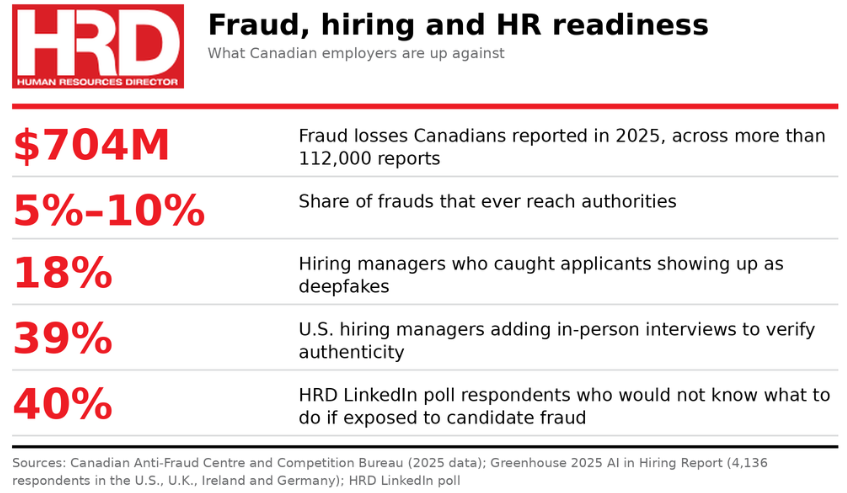
Those figures sit on top of a broader fraud problem at home. Canadians reported more than $704 million in fraud losses across over 112,000 reports in 2025, the Canadian Anti-Fraud Centre said, and the Competition Bureau has noted that only 5% to 10% of frauds ever reach authorities.
Why corporate deepfake fraud should worry HR
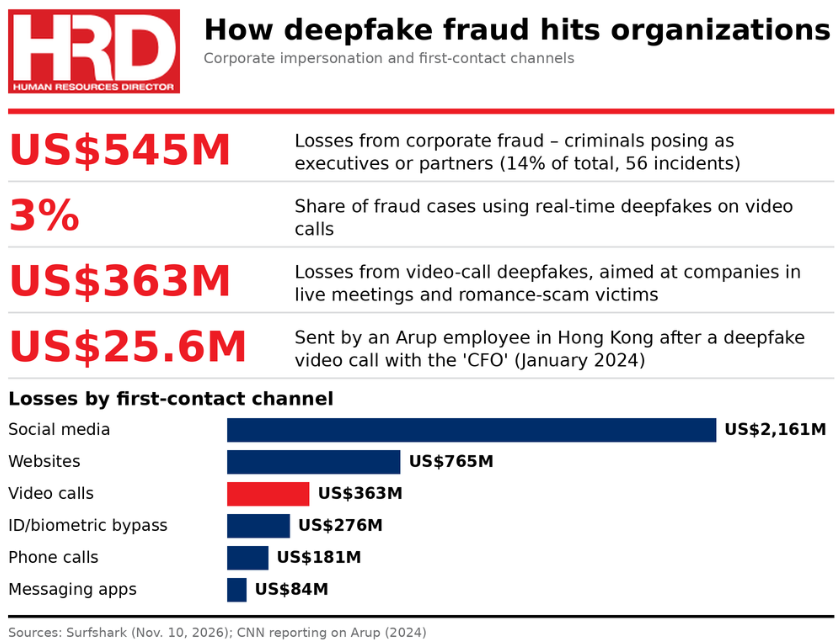
For employers, the sharpest risk is the impersonation of their own leaders. Surfshark’s corporate fraud category, covering criminals posing as executives or partners to request payments, accounted for 56 of 768 recorded fraud incidents and about US$545 million in losses.
Live video has proven especially costly. Real-time deepfakes on video calls appeared in just 3% of fraud cases yet drove about US$363 million in losses, according to the study. Those losses came from schemes targeting companies in live meetings as well as from romance scams.
One corporate case shows how convincing these calls can be. In January 2024, a finance employee at engineering firm Arup’s Hong Kong office agreed to send a total of 200 million Hong Kong dollars — about $25.6 million after a video call with deepfakes of the company’s chief financial officer and other staff, CNN reported.
Hiring, harassment and the trust problem
The same technology is now reaching HR’s own processes. The Greenhouse 2025 AI in Hiring Report surveyed 4,136 job seekers, recruiters and hiring managers in four countries. It found that 65% of hiring managers have caught applicants using AI deceptively, with 18% catching applicants showing up as deepfakes. HRD has outlined the warning signs of candidate fraud HR should watch for during screening.
Many teams are not yet ready for that shift. HRD asked its LinkedIn followers whether they would know what to do if exposed to candidate fraud in the hiring process. Sixty per cent of respondents said yes, while 40 per cent said no.
Fabricated media also complicates misconduct investigations. Ivie A. Serioux and Jerry Zhang of U.S. law firm Littler Mendelson have noted that employers often treated photos, video and audio as genuine by default, putting the onus on the accused. In Canada, provincial occupational health and safety laws – such as Ontario’s Occupational Health and Safety Act – already require employers to investigate harassment complaints. Deepfake allegations are likely to test that obligation.
How employers can protect against deepfakes
With the threat spanning finance, recruitment and conduct, defences must too. Tomas Stamulis, chief security officer at Surfshark, said detection tools often lag the technology, making context as important as visual flaws.
“Seeing or hearing someone is no longer enough to know it’s really them. So when in doubt, pause and verify through a channel you trust,” Stamulis said in the report.
In practice, that means confirming payment requests through a call-back to a known number and requiring more than one approver for transfers. In hiring, Greenhouse found 39% of U.S. hiring managers are adding in-person interviews, and HRD has reported on how HR teams can protect their business from candidate fraud.
Response plans matter too. The Canadian Centre for Cyber Security advises reporting deepfakes to the hosting platform and the CAFC, and the Human Resources Professionals Association (HRPA) says education should be among the first lines of defence.