Director of Talent Development built a shared standard now anchoring workforce development for 220,000 employees across the country
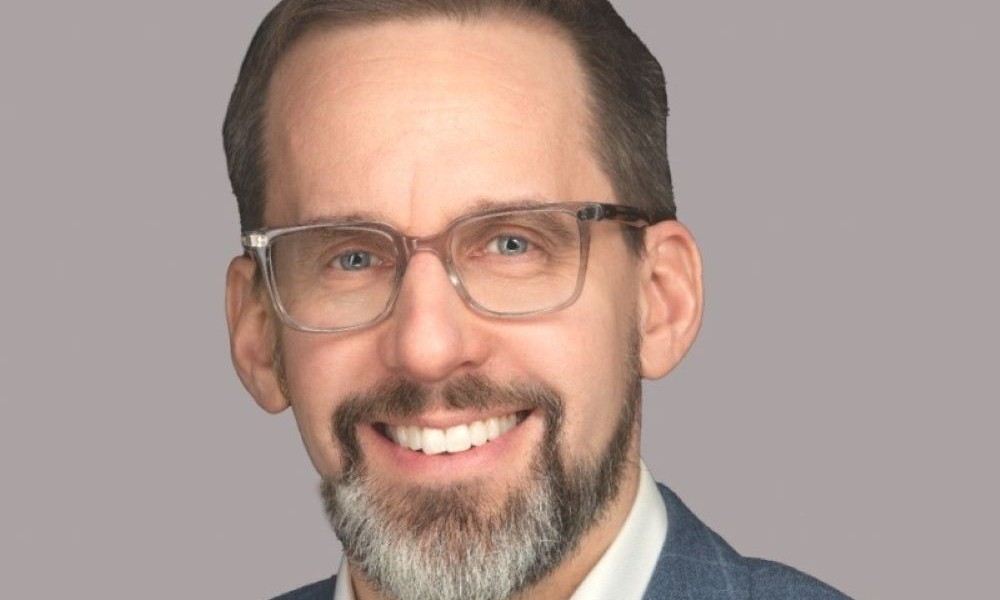
When Mark Coulter, Director of Talent Development at Loblaw Companies Limited in Toronto, joined the organization in June 2025, he didn't find a skills gap. He found a disconnect on the leadership question. Across a workforce of approximately 220,000 employees, according to a 2025 company release – spanning grocery retail, pharmacy, e-commerce, and corporate services – no one agreed on what good leadership actually looked like, he says.
"We didn't have clarity on what effective leadership meant at Loblaw," says Coulter. "What we found was we had no common language – you could talk to people in HR and various leaders around the organization, and everyone had a different definition."
The consequences were visible in the talent data, according to Coulter. High-potential employees appeared and disappeared from succession plans – not because their performance had changed, but because assessors had no shared standard. Results and likability were substituting for leadership evaluation. Before any talent program could operate effectively, the organization needed to settle a more foundational question first, he says.
Designing a leadership framework at scale
According to Coulter, he led the development of a four-stage model that distinguishes leadership expectations by level. The stages – leading self, emerging leader, experienced leader, and an executive tier – are each built around five consistent categories: shaping strategy, building talent, fostering collaboration, driving performance, and demonstrating what the company calls its blue culture.
"The leadership expectations look different by leadership level," Coulter says. "We wanted to make sure that individuals who come into an organization and are frontline leaders have expectations that are clear and important for them at their role, but the expectations are going to look different as you move through the organization."
Aligning this framework across Loblaw's multiple business units – which include grocery retail, Shoppers Drug Mart, e-commerce, and corporate functions – required considerable effort, he says. With that shared definition now in place, he says the plan is to embed leadership behaviours into hiring, performance assessment, succession planning, and development diagnostics.
"Now we have built, I'll call it the foundation of the house, which is clarity on what effective leadership actually looks like," says Coulter. The programs that will bolt onto that foundation are still being designed – but having a common standard, he says, is itself a significant shift for an organization of Loblaw's scale and complexity.
Development as a shared responsibility
With the framework in place, Coulter is focused on changing how leaders and employees approach growth. He says his model assigns accountability for talent development in two directions: employees own their development, and leaders own the conditions that make development possible.
"It can never be just this, ‘Hello, employee. I hope you develop next year,’" he says. "The leader needs to be accountable for ensuring that that individual has the right tools, but ultimately the individual is accountable for the development outcomes. That shared accountability is really critical."
Loblaw is also connecting performance management and talent development more deliberately, according to Coulter. Development targets at Loblaw are now framed as enablers of performance goals – not a separate HR exercise completed at year's start and forgotten by spring.
"We look at developing performance goals as one half of the equation, and then how are you developing your leadership capabilities or your other development areas in conjunction with that, with the goal of increased performance?" he says.
The measurement standard is shifting accordingly. "It's not about completion anymore. It's about did that learning intervention have a measurable impact?" adds Coulter.
Building capability inside a transformation
Loblaw is simultaneously managing an expansive transformation agenda across the organization – digital expansion, health services growth, supply chain modernization, and the rapid integration of AI into its operations, according to Coulter. For talent development, that pace creates a specific pressure: building capability for roles and tools that are evolving faster than any training cycle can follow.
Coulter's current approach is a deliberately loose framework for “a broad, decentralized organization.” Common standards and tools are established at the centre, and functional areas – digital, supply chain, retail operations – determine how to apply them based on their own needs, he says. But he identifies a larger goal the organization is still working toward: getting ahead of skills requirements and building a resilient workforce before the gap becomes visible.
"How do we proactively, at the speed of business, bridge those gaps is going to be an opportunity for us moving forward, which I think a lot of organizations are still trying to get in front of because AI is changing faster than we could have even remotely predicted," he says.
Part of the answer lies in redesigning how learning is delivered. Large, scheduled training events lose their effect when application is delayed so learning and development needs to be embedded in the flow of work, says Coulter. "The more and more that we design and deploy learning experiences that just become part of people's everyday work, the better," he says. "The easier it will be for people to uptake it and the easier it will be for people to leverage those tools and new learnings in their actual day to day."
It’s even more essential in a large, national business like Loblaw that has separate businesses within it, he says. “Each business has different needs and different environmental or business challenges and opportunities,” he says. “So for us to as an organization to provide an infrastructure to make sure that we’re agile, businesses can adapt quickly. and that we can bridge those gaps, is a challenge.”
An increasingly complex role
Coulter holds a Chartered Human Resources Leader designation, a certified executive coaching credential, and a Master of Industrial Relations – testament to how he sees the HR leader role evolving. "HR has never been more complex in my life," he says.
The skills he sees as most underdeveloped aren't content expertise – they're operational. He believes project management, change management, and data-informed decision-making are essential for translating strategy into programs deployed at speed. “The talent manager or the functional expert really needs to have a clear understanding of what that problem is they're trying to solve and solve it in a simple way, because the simple will trump the complex,” he says.
Coulter also argues for a systems view of the talent function. Adjusting one element of the ecosystem can have unintended consequences downstream. "Everything is connected and I call it levers and dials," he says. "You turn something on, how is that going to impact your other talent programs downstream? And if you're not looking at them as an interconnected system, you can very easily solve one problem in performance and all of a sudden you create a problem in succession planning."
That integrated perspective is increasingly what separates effective talent functions from collections of standalone programs, and Loblaw is moving steadily towards an interconnected talent ecosystem, says Coulter. "We've got a strong foundation to start with," he says.