Two 2026 Canadian HR Award winners, decades apart in experience, discuss what HR leadership must demonstrate to matter
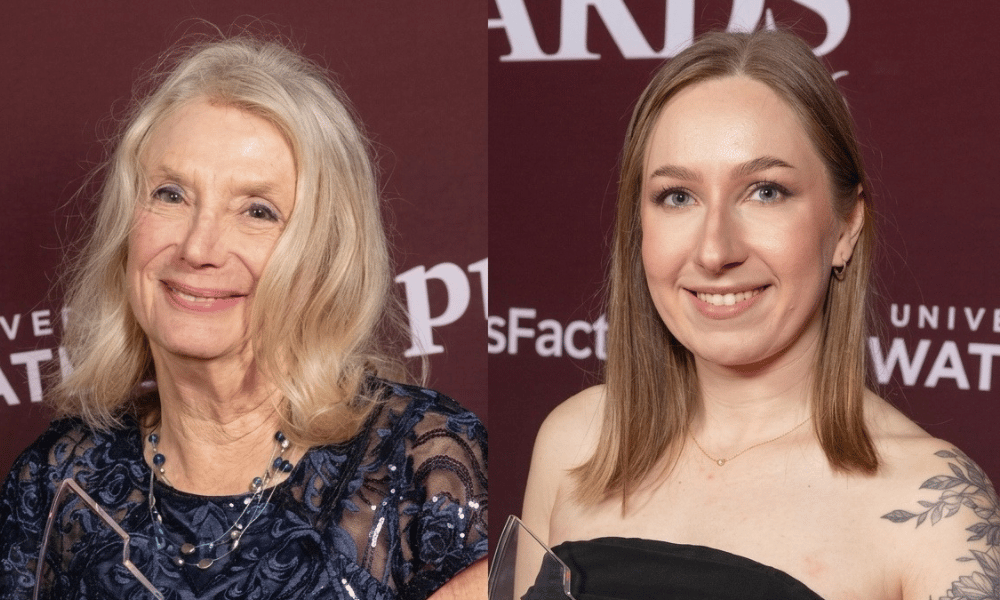
The 2026 Canadian HR Awards, held on Oct. 1 at Toronto’s Rebel venue, honoured outstanding contributions across 23 categories spanning team performance, talent development, employee wellness, diversity, equity and inclusion, and individual leadership. But two awards bookended the profession in a way no others could. Dr. Monica Belcourt, an HR consultant and past Director of the School of Human Resources Management at York University in Toronto, received the O.C. Tanner Award for Lifetime Achievement in the HR Industry. Cylee Wagner-Gasmo, Manager, People and Culture at Strategic Group in Calgary, won the ADP Canada Award for Excellence in Emerging HR Leadership. In separate conversations with HRD Canada, both offered a portrait of a profession still working to define its authority – and navigating its most consequential disruption yet.
For Belcourt, who also served as past president of the Human Resources Professionals Association (HRPA), the most important transformation she witnessed across her career wasn’t a policy, a technology, or an economic shift. It was a change in how the profession justified its decisions, she says.
“I think the most important shift was the change from appointing somebody with social skills and some knowledge of HR based primarily on anecdotes and mentoring relationships, to almost an evidence-based HR, and we’re not quite there yet,” says Belcourt.
A foundation of management and strategy
It’s a shift Belcourt herself worked to accelerate. When she launched an undergraduate HR program at York, she says she fought for it to be named a Bachelor of Human Resources Management, not a Bachelor of Arts. The academic community was skeptical, but the market wasn’t, according to Belcourt.
“We had in the first year 1,000 qualified students, not applicants. We had many more applicants and it was a runaway success,” she says.
Now recognized as the largest HR undergraduate program in Canada and a perennial top academic program in the country, the degree stands as perhaps Belcourt’s most visible legacy. But she considers the broader shift it helped produce – the expectation that HR decisions be grounded in research – to be the more enduring contribution.
“I believe we increased the significance of the possibility of impact of HR on employees and organizations,” says Belcourt. “We've definitely moved beyond the policy-police-picnic-planning HR role, and we have absolutely moved into subject matter expertise.”
Closing the gap between research and practice
One structural problem Belcourt believes still holds the profession back is the disconnect between academic research and day-to-day HR practice. She says she spent much of her career trying to narrow that divide – organizing research streams at HRPA conferences, commissioning a practitioner-focused newsletter, and launching online HR talks.
“What we don’t have is the link between what these people are publishing and saying, ‘This is a really good practice, you should try it, it’s effective, it’s going to impact the organizational outcomes,’ and what the practitioner actually does,” she says.
The problem runs in both directions. Academics publish without asking practitioners what they need to know. Practitioners grapple with questions that research has already addressed. As HRD Canada has reported, how people analytics is reshaping the way Canadian HR leaders make decisions is a case where data-driven expectations are beginning to close that divide – but the gap remains wide.
Belcourt’s concerns about AI follow the same structural logic. She acknowledges that AI will absorb pattern-recognition tasks across the HR function, but her specific worry is what that means for the profession’s pipeline as AI and automation change Canada’s labour market.
“AI is a huge disruptor, and I'm having difficulty predicting the impact of AI on the HR profession, but it is a question that intrigues me,” she says. “What worries me most is a lot of these are entry-level roles where our students get their experience – that’s how they enter the profession, and if you take out that layer, how will our graduates enter the profession? How will they get the experience and the mentorship that enables them to take the subject matter expertise role, which is the next role? I’m worried.”
Navigating disruption, leading transformation
Wagner-Gasmo is living that disruption in real time. Strategic Group, a privately held diversified real estate company, has more than doubled in size during her tenure – she’s been People and Culture Manager since May 2026 and in an HR role with the organization since 2024 – and the past year brought automated workflows, overhauled compliance policies, privacy-focused training, and AI-enabled Human Resources Information System (HRIS) modules landing simultaneously. Although AI is making HR’s job easier around reporting and analytics, the learning and development function has had to scale rapidly to keep pace, according to Wagner-Gasmo.
“Right now it’s a very difficult transition and it’s a little messy for a lot of people with all the changes,” she says. “But I think that the newer generation of emerging HR leaders are going to be better prepared because they’ve gone through this change right from the beginning of their careers, and they’re able to learn as you go and build those systems from the ground up.”
When it comes to making the case for people investment with executive leadership, Wagner-Gasmo says she relies on data. Her team maintains monthly dashboards linking HR metrics – turnover, engagement, performance – to business outcomes, filtered by department, manager, and, because Strategic Group operates in real estate, individual building portfolios.
“I find that especially with executive leadership, hard data is the biggest convincing factor,” she says.
The approach reflects a broader shift in how HR earns strategic influence. As HRD Canada’s recognition of Canada’s best young HR professionals in the 2026 Rising Stars report showed, the most effective emerging practitioners are those who connect people practices to business outcomes – and speak the language of the organizations they serve.
“The future of HR isn’t just about managing people,” says Wagner-Gasmo. “It’s about building organizations that perform better because of how they lead, develop, and support their people.”
Advice for the next generation of HR
On what they would tell early-career HR professionals, both award winners converge – from very different vantage points.
Belcourt believes that volunteering for people projects within the organization is essential to building some of the skills HR needs. She points to a fundraising coordinator role for her organization in conjunction with a charity, taken on when she was a junior employee, that she says transformed her visibility inside her organization and opened executive development opportunities that she credits with reshaping her entire professional trajectory.
“I think, surprisingly, what has made the biggest impact on the trajectory of my entire professional life, not just my work life, was volunteering at an association and going on boards of directors of schools,” she says. “It was these outside activities that had a huge impact, and so I would suggest to anybody besides your job take on a volunteer activity – if it's HR-related, then it's probably going to be very helpful to your organization, but it doesn't necessarily have to be because you will learn other skills.”
Wagner-Gasmo believes in mindset: think strategically before you hold a senior title.
“My biggest piece of advice would be not to wait for a particular title, position, or seniority before thinking strategically,” she says. “It’s easy, especially earlier in your career, to become so focused on completing the work in front of you that you don’t always stop to question the why behind it, what problem you’re solving, or whether there’s a better approach.”
A driver of business outcomes
Both Belcourt and Wagner-Gasmo were among the standouts celebrated at the 2026 Canadian HR Awards, which brought more than 600 of Canada’s most influential people leaders together in recognition of the profession’s best work. Their recognition – decades apart in experience – points to the same underlying standard.
“Is it policy for policy’s sake, or does it actually make a difference somewhere?” says Belcourt.
Wagner-Gasmo sees HR being asked to be more involved in the outcomes of the business and more integrated into all departments, in an era where the future of jobs in an AI era looks different. “That's a learning curve, but it's also our biggest area of opportunity – we're dealing with changing workforce expectations, technology evolving incredibly quickly, and the ongoing always challenge of attracting and developing the right talent,” she says. “But I think that the bigger challenge is connecting all of those things together, so workforce strategy and proactive workforce planning is going to probably be the biggest opportunity for HR to be involved within the business.”