What’s the impact of the World Cup on travel to Canada?

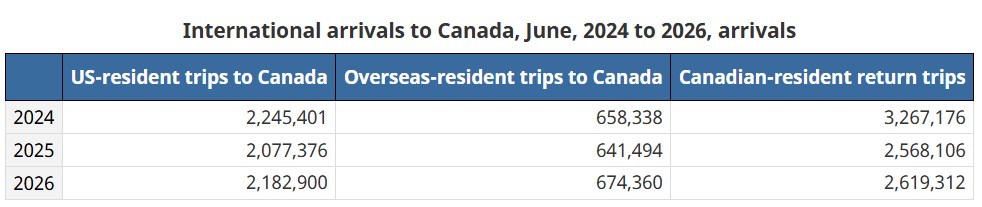
International arrivals to Canada climbed 3.6% year-over-year in June to 5.5 million, according to Statistics Canada (StatCan), a trend HR professionals should track closely given its bearing on cross-border business travel costs and tourism-linked seasonal staffing needs.
StatCan reported that Canadian-resident return trips from abroad by automobile and air totalled 2.6 million in June, up 2.0% from the same month in 2025. Return trips from the United States reached 1.7 million, up 3.2% year-over-year, which the agency said marked "the third consecutive month of year-over-year increase."
That rise was driven by a 5.2% increase in automobile crossings, even as air return trips from the United States fell 3.8%.
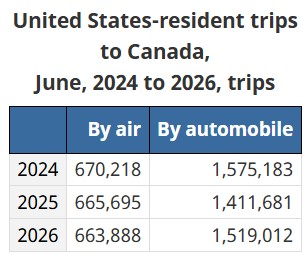
US-resident trips to Canada rose 5.1% in June to 2.2 million, the fifth consecutive month of year-over-year growth, Statistics Canada said. The agency noted that "US residents made 1.5 million trips to Canada by automobile (+7.6%) and 663,900 trips by air (-0.3%)" during the month. The highest single-day arrival volume, 119,600, occurred on Friday, June 19, a US federal holiday.
For HR teams managing travel budgets or seasonal workforce planning in border regions, the growing share of automobile crossings relative to air travel may affect both expense forecasting and staffing levels in tourism, retail, and hospitality roles tied to cross-border visitor volumes.
Canadian residents made their first year-over-year increase in trips abroad in more than a year in April 2026, according to StatCan.
Overseas arrivals and World Cup impact
Overseas-resident trips to Canada increased 5.1% in June compared with the same month a year earlier, Statistics Canada reported. More overseas residents arrived by air (620,800, up 5.8%) than by automobile (53,500, down 2.0%) during the month.
The agency linked part of the increase to the FIFA World Cup, noting that Vancouver and Toronto hosted 13 matches between June 11 and July 19, 2026, involving teams from 15 overseas countries.
Air arrivals from those countries rose 32.5%, an increase of 29,500 arrivals, compared with June 2025. Arrivals from individual countries peaked around their teams' match dates: Australian air arrivals were highest on June 12, ahead of a Vancouver match; Panamanian arrivals peaked June 16, before a Toronto match; and German arrivals peaked June 19, ahead of a June 20 Toronto match.

For HR professionals in host cities, these nationality-specific arrival spikes provide a data-backed basis for short-term scheduling decisions in hospitality, security, transportation, and event-support roles during major international events.
An increase in business travel is a positive development for employers, according to Diana Valler, CHRO of TravelBrands.
“From an HR perspective, face-to-face interactions still play an important role in relationship building, client development, collaboration, and culture. While technology has made virtual work more effective, reduced in-person engagement can slow networking opportunities, partnership growth, and even employee connection, particularly for organizations operating across borders,” she said in a previous statement emailed to HRD.
Previously, researchers at the University of Toronto analysed anonymised cell phone activity from Canadian devices visiting 266 U.S. metropolitan areas between April 1, 2024 and March 31, 2026. They found a median 42% year‑over‑year drop in visits.
“A general trend that we’ve been seeing with these tariffs and with a decline in visitation to the U.S. is that this has been straining for Canadian employees and employers,” U o T data scientist Yihoi Jung previously told Canadian HR Reporter, pointing to the recent closure of a General Motors plant in Oshawa as one sign of pressure on automotive trade and related jobs.