‘Increasingly unaffordable housing appears to be pushing many residents to other parts of Canada’

Toronto, once the fastest-growing metropolitan area in Canada and the United States, has plummeted to 412th place out of 435 metro areas in 2025 — which signals a shrinking, shifting labour pool in Canada's largest job market.
The finding comes from a new analysis by the Centre for Urban Research and Land Development (CUR) at Toronto Metropolitan University, authored by senior economist Diana Petramala and senior research fellow Frank Clayton, who have tracked population growth across Canadian and U.S. metro areas since 2020. Petramala and Clayton put it plainly: "Toronto had consistently ranked as one of the fastest-growing metropolitan areas in Canada and the U.S. – until 2025."
The city ranked first in 2024, a year marked by what the researchers describe as "a tidal wave of immigration." A year later, it dropped near the bottom, based on population estimates from Statistics Canada and the U.S. Census Bureau covering the twelve months ending July 1, 2025.
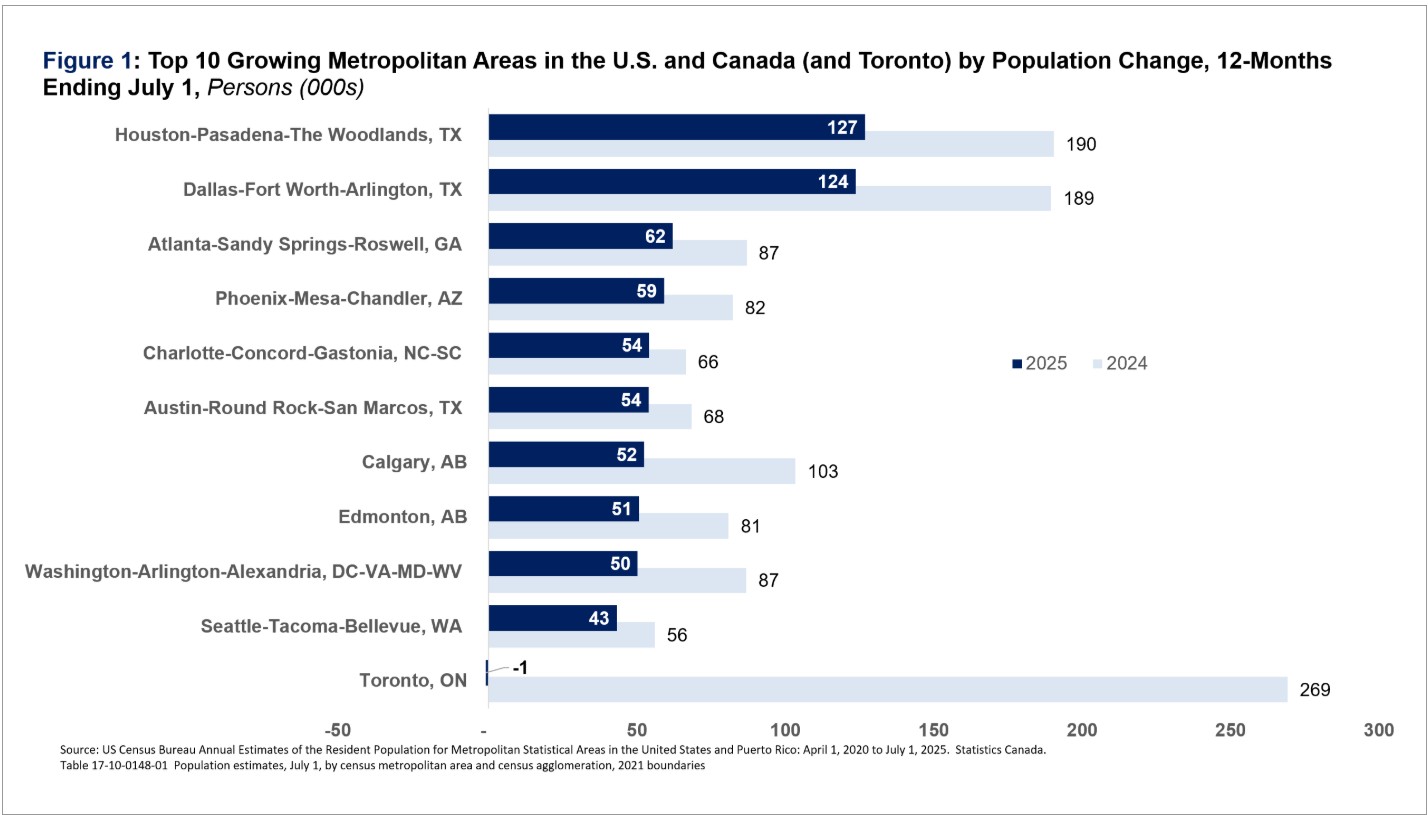
Calgary and Edmonton were the only Canadian metro areas to crack the top ten fastest-growing regions in North America last year, at seventh and eighth place, while Houston and Dallas topped the list. Montreal and Vancouver also tumbled, from fifth and sixth place in 2024 to 25th and 92nd.
Canada's population fell for a third consecutive quarter to start 2026, dropping by 55,025 people between January and April to an estimated 41,417,056, according to Statistics Canada.
Not just an immigration story
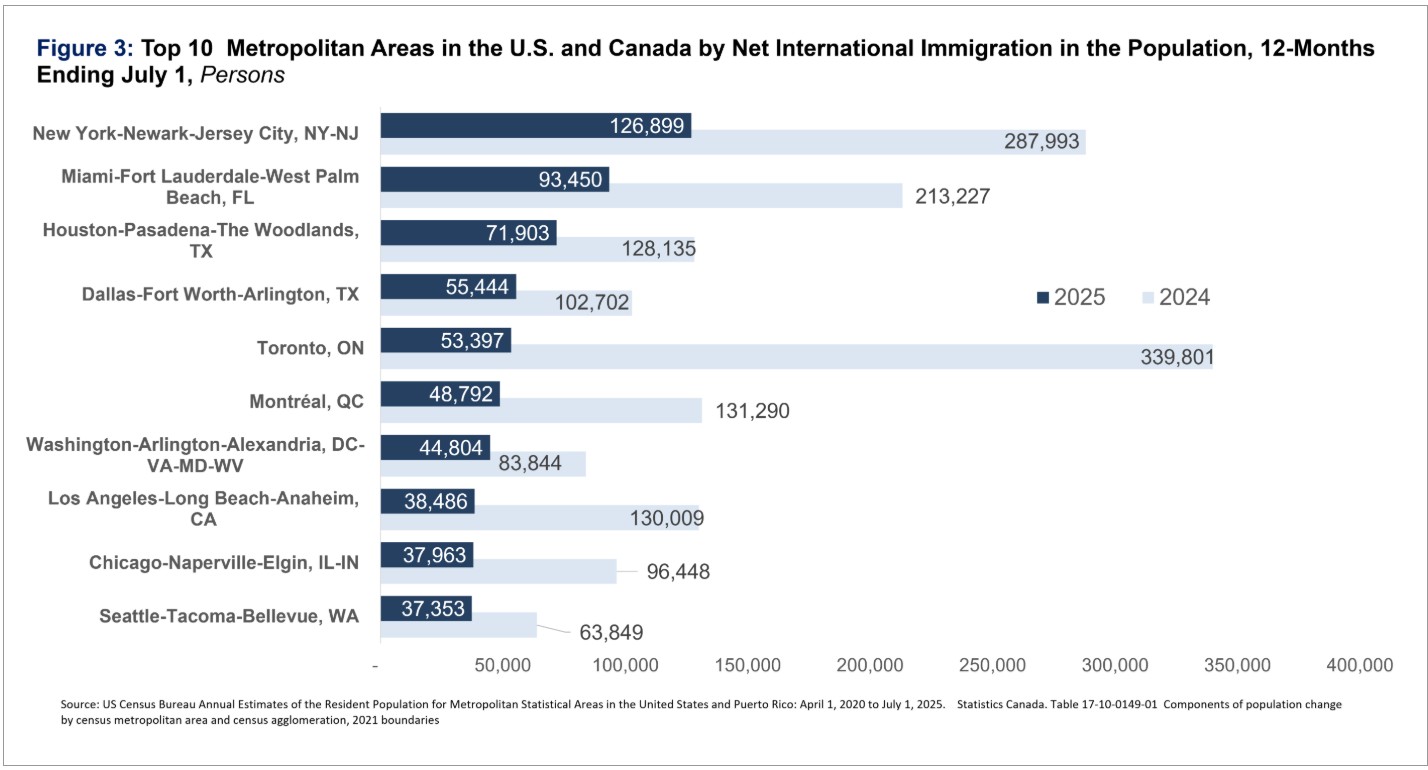
For HR teams managing recruitment pipelines in the Greater Toronto Area, the more important finding may be why the slowdown happened. Petramala and Clayton note immigration alone does not explain the drop: Toronto "still continued to post one of the strongest rates of international migration among the fastest-growing metropolitan areas," even after federal cuts to immigration targets slowed newcomer arrivals compared with 2024.
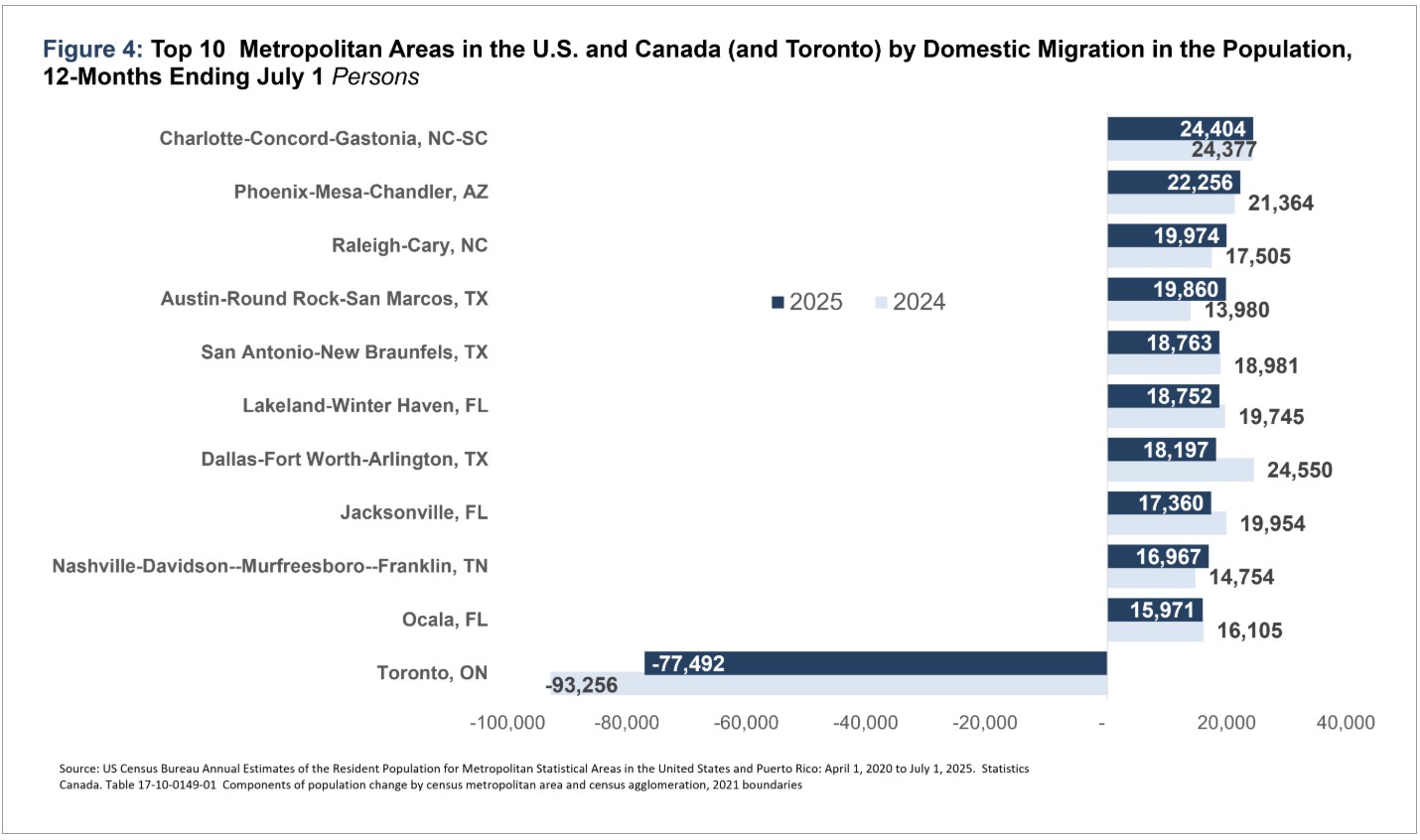
Instead, the researchers point to a large, sustained outflow of existing residents to other parts of Canada, pushing Toronto's net domestic migration negative. This matters because a region can keep attracting international talent while still losing experienced workers to lower-cost provinces, thinning the local labour supply in ways immigration numbers alone would not reveal.
Toronto and Montreal did remain top destinations for newcomers, ranking fifth and sixth among Canadian and U.S. metro areas combined, behind Texas, Florida, and New York. But no Canadian metro area appeared on the top-ten list for net domestic migration in 2025.
What’s driving the exodus?
Petramala and Clayton attribute the exodus largely to affordability pressures, not a single policy shift. "As the region attracted newcomers from around the world at lower rates than in 2024, increasingly unaffordable housing appears to be pushing many residents to other parts of Canada," they write in the report.
For HR professionals overseeing relocation packages, remote-work policies, or regional office strategy, the finding underscores a trend building for years: Toronto-based employers may increasingly need to compete with lower-cost regions not just for new hires, but to retain staff they already have.
Toronto is facing higher unemployment and weaker income growth than other major Canadian cities, according to a previous report from the Fraser Institute that raises concerns about the city’s long-term economic performance and standard of living.