‘Its stagnation is an important contributor to Canada’s dismal recent economic growth story’

Toronto is facing higher unemployment and weaker income growth than other major Canadian cities, according to a new report from the Fraser Institute that raises concerns about the city’s long-term economic performance and standard of living.
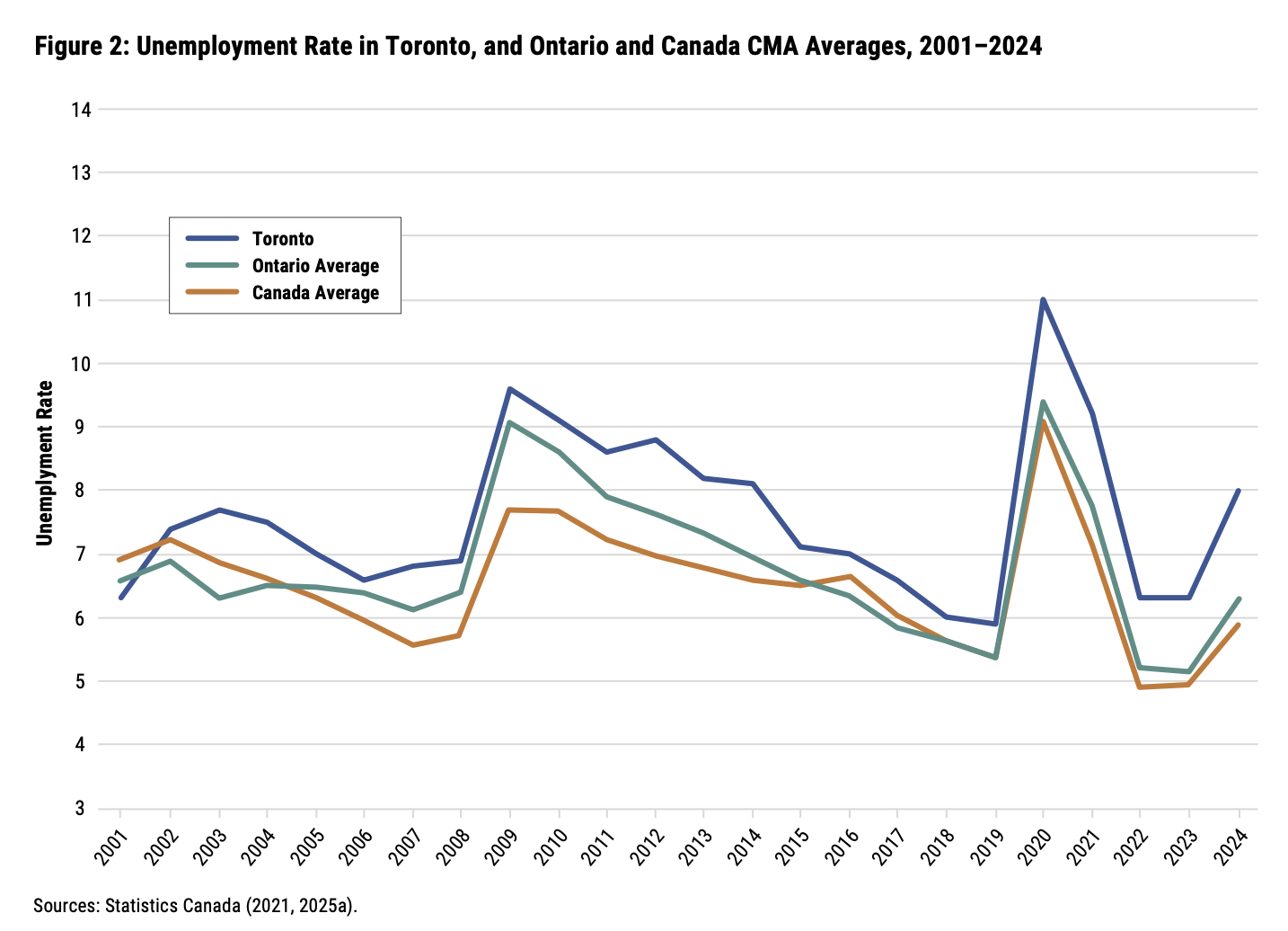
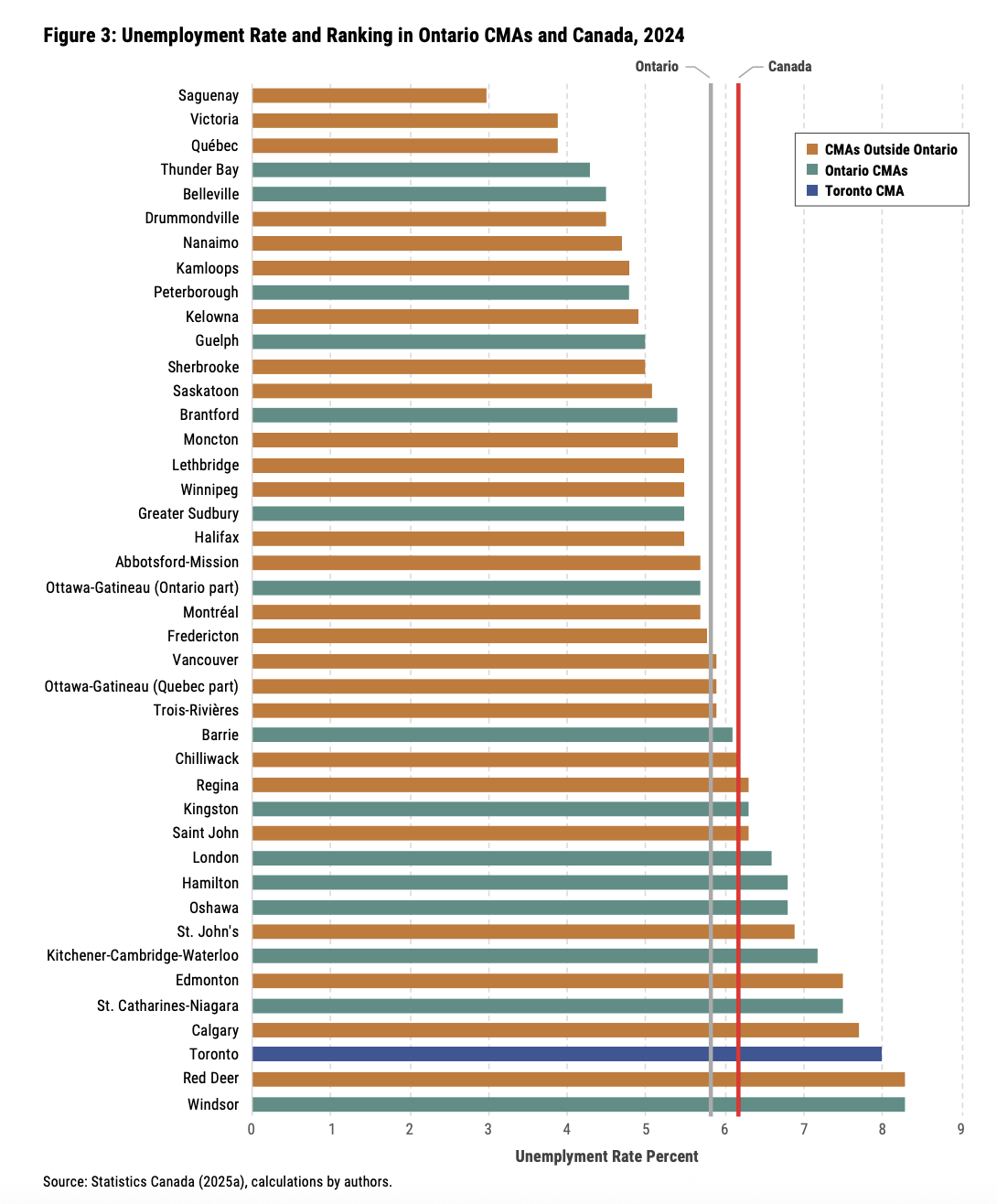
Stagnant Living Standards in the City of Toronto finds that Toronto’s unemployment rate reached 8.0% in 2024, significantly above both the national and provincial averages for large urban centres. The report examines unemployment, median employment income and before-tax household incomes in Toronto compared to other census metropolitan areas (CMAs) across Canada, covering the period since 2000.
For HR professionals, the findings have implications for recruitment, retention and compensation planning in the area.
Unemployment rate above average
By 2024, Toronto’s unemployment rate was 2.1 percentage points higher than the average for all Canada’s CMAs, and 1.7 percentage points higher than the average for Ontario’s CMAs, the Fraser Institute report states. The city’s 8.0% jobless rate was the third highest among Canadian CMAs, behind only Windsor and Red Deer.
“Despite its history as an economic engine, Toronto now lags behind Canada’s other large metropolitan areas on key economic metrics. Unemployment rates have been higher, and median-income growth has been slower in Toronto for a long time now,” says Ben Eisen, senior fellow at the Fraser Institute and co-author of the study.
Long-term stagnation
The bulletin builds on earlier Fraser Institute research that had highlighted stronger job creation in Toronto than in most other Ontario metropolitan areas after 2008. When the analysis is extended back to 2000, however, the new report concludes that the city has experienced prolonged economic underperformance.
“The data show that the city has seen economic stagnation and limited growth in living standards since the turn of the century,” the authors write.
The Fraser Institute notes that while Toronto’s total employment growth between 2001 and 2024 placed it around the middle of the pack among Canadian CMAs, its unemployment rate has diverged upwards from national and Ontario averages since 2020.
Median employment income declines
From 2000 to 2023, inflation-adjusted median employment income in Toronto declined slightly, rather than increased. “Between 2000 and 2023, inflation-adjusted median employment-income growth in Toronto was slightly negative, at -0.2 percent. This is substantially lower than the Canadian average for CMAs during this period, which was 15.1 percent,” the report finds.
The Fraser Institute argues that this weak performance in median employment income is closely linked to productivity and living standards in the city.
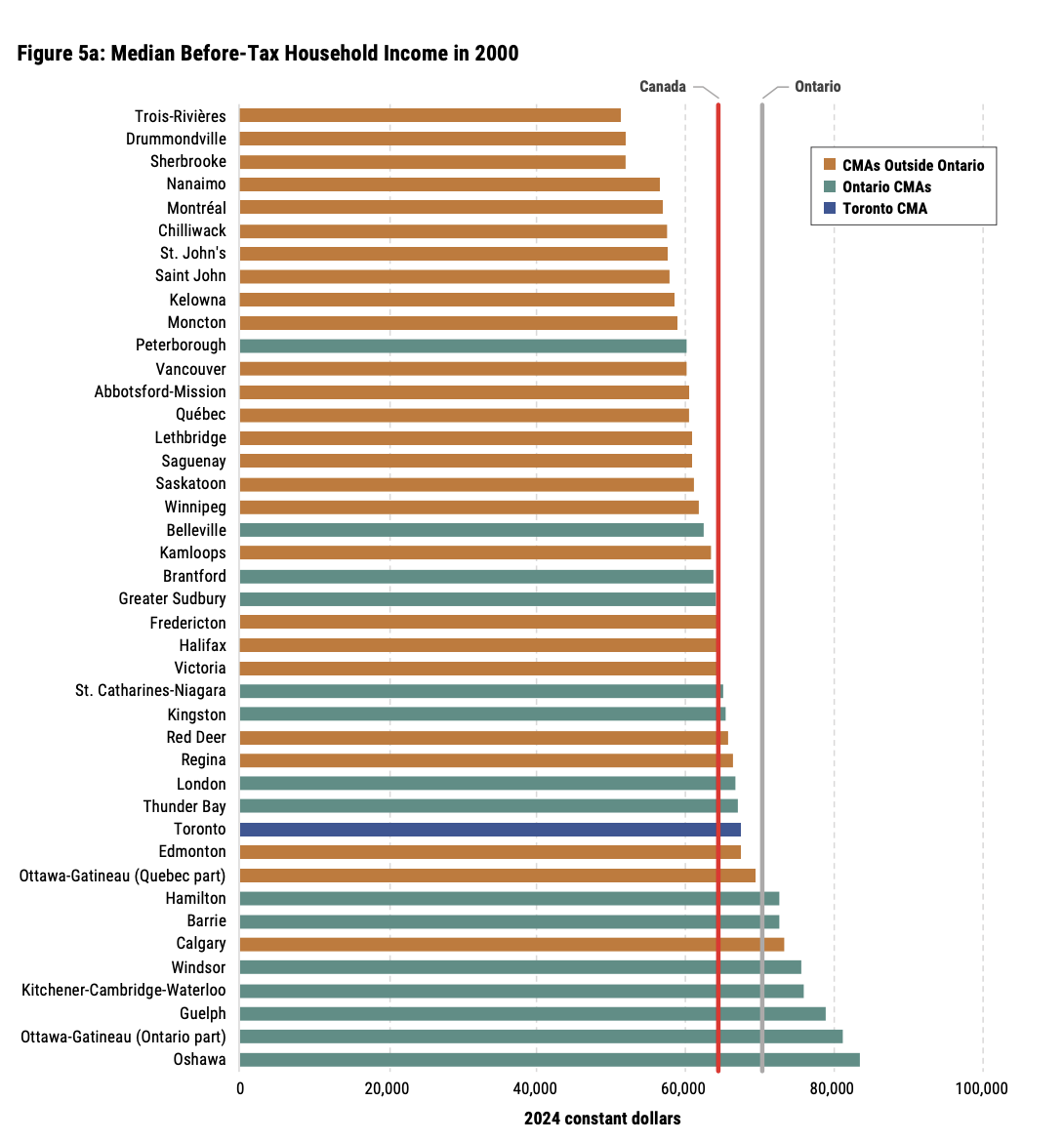
The analysis also shows that Toronto’s relative position on household income has deteriorated over time. In 2000, median before-tax household income in Toronto ranked 11th out of 42 CMAs and sat above the national average. By 2023, Toronto had fallen to 30th place, with what the report describes as “near complete stagnation” in median before-tax household income since the turn of the century.
The Fraser Institute notes that this weak income performance has coincided with population and employment growth, creating a contrast between the city’s visible economic activity and its underlying indicators: “Far from being an economic powerhouse, the evidence presented here points to rising unemployment, weak income growth, and stagnant living standards in Canada’s largest metropolitan area."
Canadians are bracing for a tougher financial year in 2026, with large majorities expecting the cost of living, housing affordability and the broader economy to deteriorate, according to a previous report.
National implications
The Fraser Institute says Toronto’s economic performance has implications beyond the local labour market because of the city’s central role in the Canadian economy.
“Toronto represents about 20% of the entire national economy, and its stagnation is an important contributor to Canada’s dismal recent economic growth story,” Eisen says. “Given the outsized role Toronto plays in Canada’s overall economy, the city’s underperformance is a concern for all Canadians.”
Canadian manufacturers in heavily tariffed industries are seeing declining or stagnant employment despite mixed trends in output and rising prices, with auto, metals and forestry workforces under the greatest strain from the U.S. tariffs, according to an RBC Economics report.