‘We're acting now, alongside our federal partners, to help businesses manage the immediate impacts’
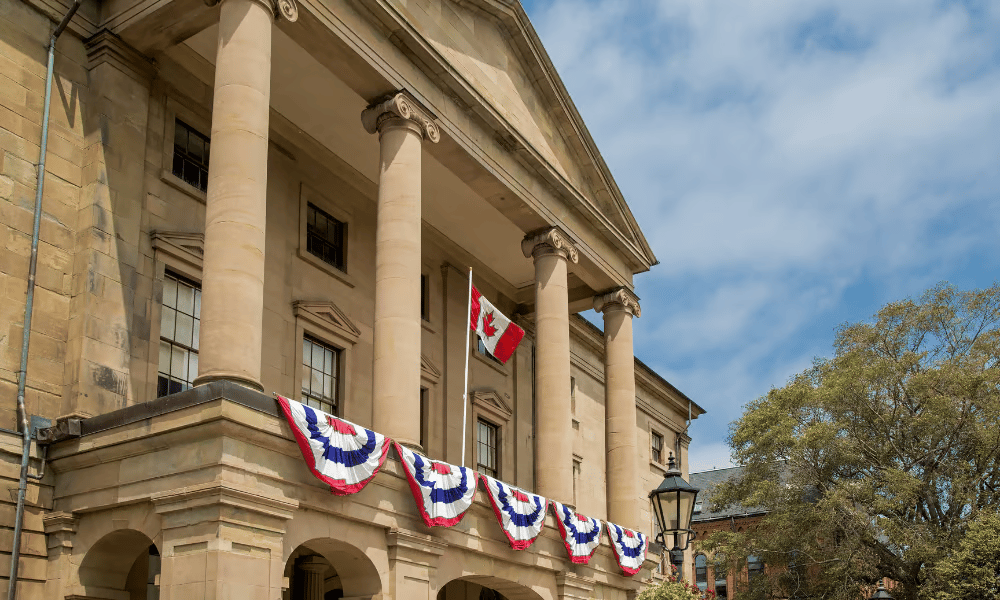
HR professionals in tariff-exposed sectors will need to review new eligibility rules this week after the governments of Manitoba and Prince Edward Island announced tariff relief packages featuring employer wage subsidies, a payroll tax deferral and funded worker-training programs.
The Manitoba government announced more than $100 million in targeted supports for workers, businesses and producers responding to the latest round of U.S. tariffs, Business, Mining, Trade and Job Creation Minister Jamie Moses and Agriculture Minister Ron Kostyshyn said in a joint statement.
The package includes a new $13.7-million Tariff Workforce Stabilization and Youth Employment Program to provide wage subsidies to employers in affected sectors, a $50-million Trade Resilience Loan Program for working capital, and a deferral allowing businesses to delay provincial retail sales tax and payroll tax payments from Sept. 1 to Dec. 31, 2026.
"Canadians are united in the face of growing threats to our economy and sovereignty from the Trump administration," Moses said. "Our government is working closely with our federal counterparts to support Manitoba workers, businesses and producers through this period of uncertainty."
This comes after Canada moved to impose sweeping counter-tariffs on approximately $27.6 billion worth of American goods after trade negotiations between Ottawa and Washington collapsed and the US held firm on a broad 50% duty regime targeting Canadian exports. Alongside the counter-tariffs, the federal government announced a $7.5 billion package of new and enhanced supports, building on nearly $25 billion in trade-related assistance provided since the original round of US tariffs began in 2025, according to the Department of Finance Canada's news release.
Prince Edward Island offers $500,000
Prince Edward Island announced its own supports, building on a tariff response plan first released in March 2025. Finance PEI will deliver a $10-million Tariff Working Capital Assistance Program, offering businesses up to $500,000 at 4% interest over seven years, with interest-only payments for the first two years.
Innovation PEI will separately allocate $2.5 million in non-repayable grants of up to $50,000 per business. For workers, the Canada-Prince Edward Island Workforce Tariff Response will invest $3.1 million over three years through SkillsPEI to fund training and employment services in tariff-affected sectors.
"We're acting now, alongside our federal partners, to help businesses manage the immediate impacts, protect Island jobs and give them the tools they need to adapt," said Premier Rob Lantz.
Canada as a whole would take a big hit should there be a full breakdown of the Canada-United States-Mexico Agreement (CUSMA/USMCA), according to a previous report. Such a scenario would cost Canada 102,000 jobs in 2027 alone, notes the Canadian American Business Council (CABC).
Businesses welcome supports
Manitoba labour and business groups welcomed the announcement. "We are glad to see . . . [the government] providing supports for businesses hand-in-hand with supports for working people," said Kevin Rebeck, president of the Manitoba Federation of Labour. Bram Strain, president and CEO of the Business Council of Manitoba, said the measures give affected industries "the resources to support employees, retain talent and diversify markets."
In Prince Edward Island, Minister of Workforce and Advanced Learning Zack Bell said the training investment is meant to help workers "adapt, innovate and move forward together" amid trade disruption.
Both Manitoba and Prince Edward Island said their measures are intended to complement existing federal supports, and both indicated their responses could be adjusted further as Canada-U.S. trade conditions evolve.
Recently, the Ontario government announced that it is immediately broadening eligibility for the Protect Ontario Financing Program (POFP), a $1-billion loan fund for businesses facing tariff-related working capital challenges such as payroll, lease and utility payments.
Meanwhile, in response to the 50% tariff on Canadian alcohol the United States of America (USA) enacted on Aug. 22, Saskatchewan will reciprocate with a 50% on USA alcohol imported into Saskatchewan, effective Sept. 8.
"Saskatchewan has always been a strong supporter of free and fair trade," Deputy Premier and Minister of Finance Jim Reiter said. "Our preference is to see tariffs removed on both sides of the border, but Saskatchewan cannot ignore measures that negatively affect our producers, exporters and communities."
The 50% tariff will apply to U.S.-origin alcohol imported into Saskatchewan, according to the provincial government.