‘A single person can maintain more than 150 identities’
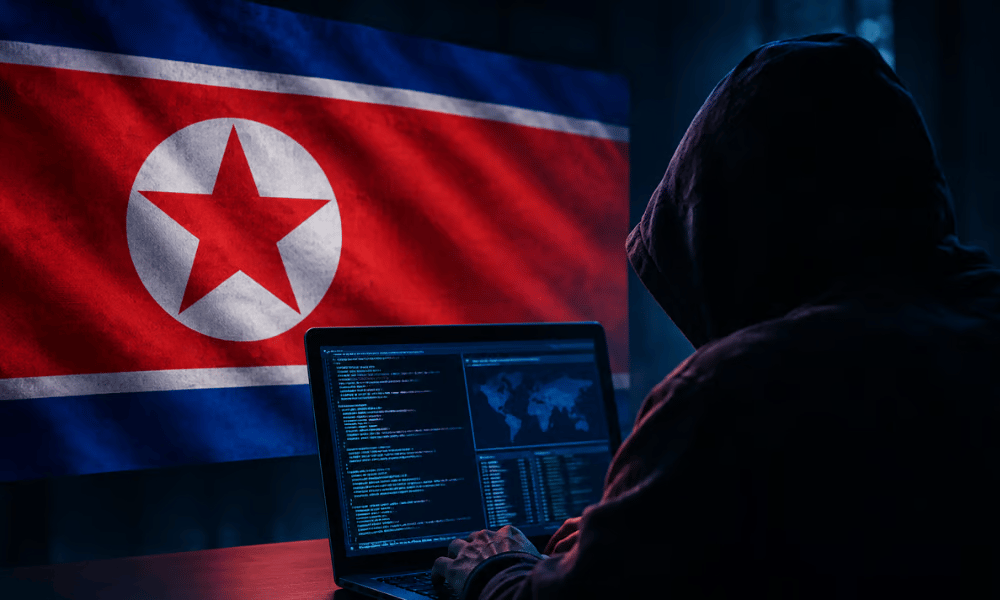
Remote hiring fraud by North Korean IT workers has reached Canadian employers, and HR leaders are now expected to stop it at the recruitment stage.
A year-long investigation by CBC's the fifth estate, released on Nov. 23, found operatives using fake Canadian identities to land remote jobs at private companies and in government.
The team even set up a fake company and hired an operative.
The stakes are high: North Korea's IT worker schemes generated nearly US$800 million in 2024, according to the U.S. Treasury Department's Office of Foreign Assets Control (OFAC).
Why remote hiring fraud is an HR problem
The fifth estate found a forged Ontario driver's licence listing a Toronto address that does not exist. The same person held Canadian, U.S. and Finnish identity documents, each showing the same face under a different name. Investigators also found a list of Toronto landmarks, apparently prepared so applicants could pass as locals.
The operation is built for volume. Evan Gordenker, a security engineer at payments firm Airwallex, told the fifth estate: "They are a well-oiled machine, so a single person can maintain more than 150 identities."
Michael Barnhart, a U.S.-based intelligence and investigations specialist at insider-risk firm DTEX who formerly led North Korea threat-hunting at Google subsidiary Mandiant, urged employers to rethink who they are dealing with. "Stop looking at them as a government and more as a criminal enterprise, like a single-family mafia, all reporting up to the, the Kim family," he told the broadcaster.
Legal and security exposure for employers
If the applicant is a front for a criminal enterprise, the hire is no longer a recruitment mistake that can be fixed in a probation review. It can put the employer on the wrong side of sanctions law and open its systems to espionage.
Canadian authorities, led by the Royal Canadian Mounted Police (RCMP), flagged the threat in July 2025, as covered in HRD Canada's report on the RCMP warning about North Korean freelancers. According to the RCMP advisory, contravening sanctions is a criminal offence. Under the Special Economic Measures Act, conviction on indictment carries up to five years in prison.
The RCMP also warned that "North Korean IT workers may insert passive malware and backdoors in program codes that can collect information, monitor traffic, or facilitate future exploitation."
On July 31, 2026, Canada and 10 other countries, including the U.S., Japan and the U.K., issued a joint alert warning that the workers increasingly use artificial intelligence to disguise their identities.
How HR leaders can tighten remote vetting
Detection is getting harder. The U.S. Federal Bureau of Investigation (FBI) said in an October 2026 public service announcement that no single indicator reliably identifies these workers, because their activity overlaps heavily with legitimate remote employment.
The RCMP recommends scrutinizing documents for forgery, holding video interviews, watching for AI-enabled deepfakes and verifying references directly.
Husnain Bajwa, senior vice-president of product at fraud-prevention firm SEON, told HRD in May 2026 that much of this can run in the background.
"A good verification system can look at device fingerprints, network behaviour, submission timing, document metadata, and identity consistency across platforms, all without the candidate ever knowing it's happening," he said in HRD Canada's report on candidate fraud warning signs for HR.
Tighter screening carries its own risk. U.S. law firm Holland & Knight cautioned in August 2026 that overly aggressive screening could amount to unlawful discrimination, and urged coordination across HR, legal, IT and security teams.
The task for HR leaders is to add these controls without eroding the trust that keeps genuine talent engaged – a theme among employers in HRD Canada's Best Places to Work in Canada: The Listening Advantage report.