‘People facing the greatest challenges are often also the least likely to have their needs fully met or to remain in care’

Employers counting on benefits plans to carry staff through financial stress may need to look closely at what happens after employees seek help.
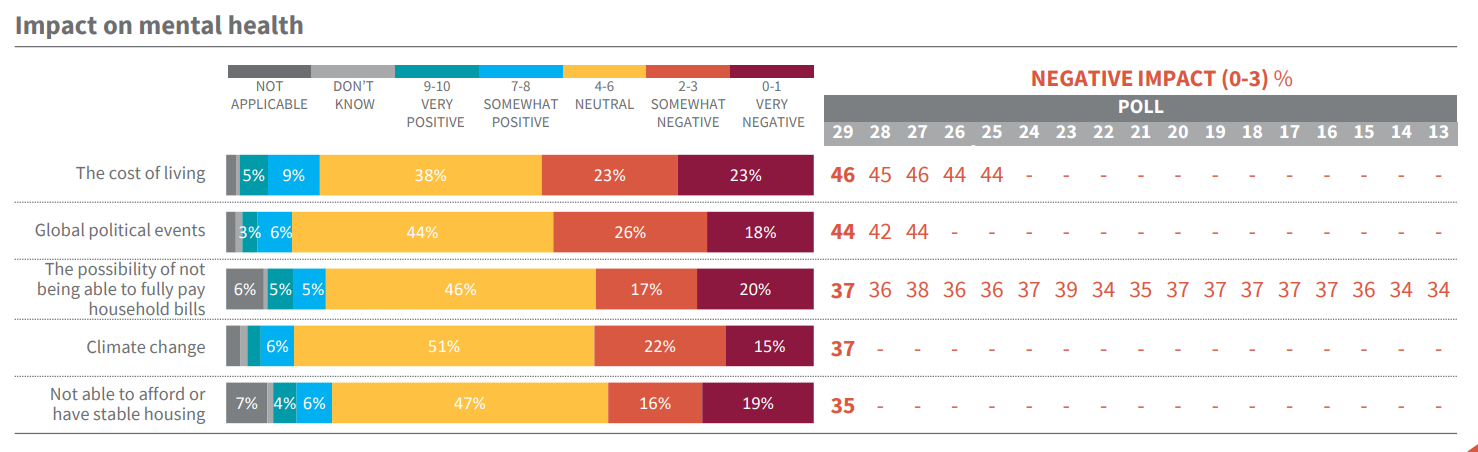
New national polling from Mental Health Research Canada (MHRC) finds 46% of people in Canada say the cost of living is hurting their mental health, while 52% of those who used mental health or substance-use support in the past five years ended care earlier than planned or needed.
The poll surveyed 4,005 people aged 16 and older online between July 27 and Aug. 10, 2026, and carries a margin of error of ±1.5 percentage points, 19 times out of 20, according to MHRC.
"Mental health is shaped by much more than what happens inside the health system," says Akela Peoples, CEO of MHRC. "People are trying to manage financial pressure, stay connected and find support that actually works for them. These findings reinforce why we need to look at the whole picture, not just whether someone is able to get through the door."
 Financial strain runs deep
According to MHRC, 37% of respondents report trouble paying household bills in full, and 35% struggle to afford or keep stable housing.
The pressure extends beyond household budgets. MHRC finds 44% of respondents say global political events are harming their mental health, while 37% say the same about climate change.
The figure has edged up from MHRC's previous wave in June 2026, when 45% linked the cost of living to poorer mental health, as noted in our report on mental health disruptions at work in Canada. Workplace data points the same way. The TELUS Health Q2 2026 Mental Health Index found 63% of workers name cost of living as their main financial stressor, and one in five say money worries have hurt their productivity, as detailed in recent findings on financial stress and worker productivity.
Why do early exits from care matter?
Access to care is only part of the picture. Among people who used mental health support in the past year, 65% say it met most or all of their needs, but just 29% say their needs were fully met, according to MHRC.
MHRC also finds that 52% of respondents who used mental health or substance-use support in the past five years stopped earlier than planned or needed. The leading reasons were:
-
not seeing real-world progress (16%)
-
not feeling understood or respected (12%)
-
unclear goals or expectations (11%)
The gaps widen for people in the greatest distress. Only 14% of those with severe anxiety symptoms and 17% of those with moderately severe to severe depression symptoms say care fully met their needs. Early disengagement rises to 72% and 74% in those groups. Among people showing signs of alcohol or cannabis dependence who accessed support, 84% and 79% respectively ended care early, MHRC reports.
"What stands out in this wave is how clearly the pressures connect," says Michael Cooper, vice-president of data and partnerships at MHRC. "Economic strain, the ways people cope, whether they feel connected and what happens when they enter care are not separate mental health stories. The data show that people facing the greatest challenges are often also the least likely to have their needs fully met or to remain in care. That is exactly why tracking these experiences together matters."
What should HR leaders take from the data?
Much of the strain the survey captures happens out of sight. When dealing with stress, 43% of respondents keep busy or push through on their own and 42% withdraw or take time alone, according to MHRC. Only 11% count seeing a counsellor, therapist or other mental health professional as a coping strategy, while 21% report at least one potentially harmful coping behaviour.
Time pressure also shapes who stays connected. Among respondents with fewer social connections, 28% cite a lack of time as a barrier and 24% point to mental health challenges, MHRC finds. The charity cautions that these results show an association, not cause and effect.
For employers, the findings suggest that offering a benefit is not the same as meeting a need. Continuity of care, clear treatment goals and whether employees feel understood may matter as much as coverage limits. Workers also appear open to more support on money matters.
TELUS Health found 63% want employer-provided resources on retirement and savings plans. Trust remains a hurdle, with only 49% of workers comfortable raising a mental health issue with their manager, as outlined in our coverage of mental health stigma blocking workplace disclosure.
Here are three action items for HR to address the issue, drawn from recent Canadian research:
|
Action item |
Data points |
Sources |
|
1. Pair mental health benefits with practical financial support |
60% of workers don't fully understand the retirement or savings plan they pay into; 63% want more employer-provided resources, communications or support for retirement, pensions or savings plans; 46% of people in Canada say the cost of living negatively affects their mental health |
TELUS Health, Q2 2026 Mental Health Index, Sept. 1, 2026; Mental Health Research Canada (MHRC), Understanding the Mental Health of Canadians, Poll 29, Sept. 22, 2026 |
|
2. Check whether mental health benefits keep people in care |
52% of people who used mental health or substance-use support in the past five years ended care earlier than planned or needed; leading reasons were not seeing real-world progress (16%), not feeling understood or respected (12%) and unclear goals or expectations (11%); 80% of Canadian employers offer an employee assistance program (EAP), but only 16% of employees know about the benefits available |
MHRC, Poll 29 report and news release, Sept. 22, 2026; Dialogue Health Technologies report (2025) |
|
3. Put tangible, flexible supports first and train managers |
Paid time off (69%), personal days (58%) and flexible schedules (52%) rated more effective than awareness programs (22%) or social events (26%); only 49% of workers feel comfortable telling their manager about a mental health issue; Rebecca Gewurtz, associate professor of rehabilitation science at McMaster University in Hamilton, Ont.: "Our research shows that with training, managers are able to have those conversations with employees and then direct employees towards other sources of support." |
MHRC, Mental Health in the Workplace 2025, and TELUS Health, both as cited by HRD Canada, Sept. 3, 2026; Gewurtz interview |