HR leaders urged to update smoking policies as vaping creeps into virtual meetings and hybrid work arrangements
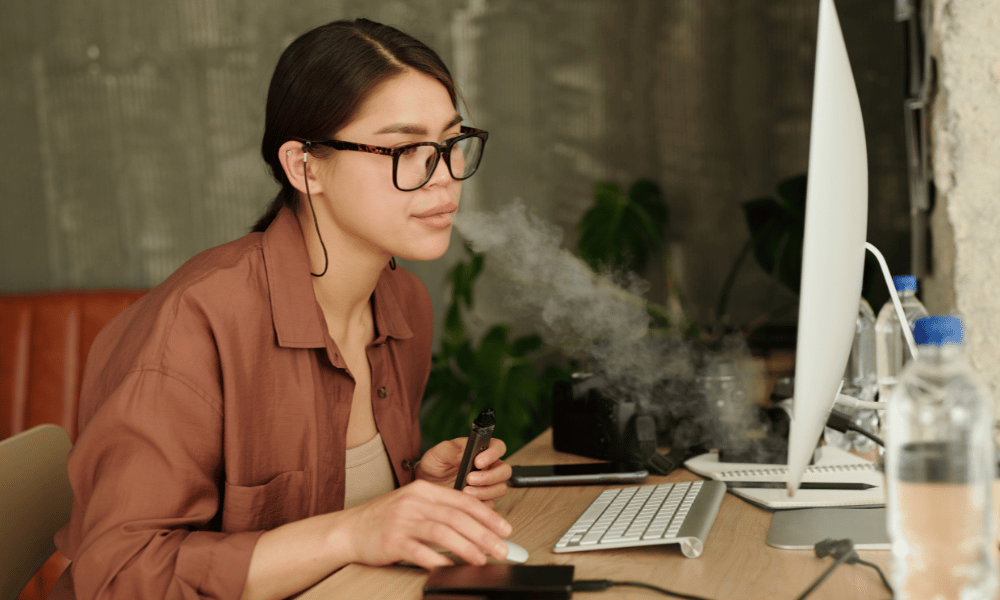
More than half of workers surveyed have seen someone vaping inside their workplace, prompting calls for employers to make clear that smoke-free rules apply equally to e-cigarettes – in the office and on camera.
The September 2026 survey of more than 1,200 respondents by people2people Recruitment found 57 per cent had witnessed workplace vaping at least once, including 43 per cent who had seen it more than once. More than a quarter (27 per cent) admitted to vaping at work themselves, with 24 per cent saying they had done so several times.
Suhini Wijayasinghe, head of HR solutions at people2people Recruitment in Sydney, told HRD the behaviour is more widespread than many employers assume.
"It does happen far more often than people realise," she said.
According to people2people, public health and work health and safety (WHS) requirements treat vaping the same as cigarette smoking in enclosed indoor workplaces. That covers offices, lunchrooms, bathrooms, warehouses and enclosed company vehicles.
In New South Wales, for example, NSW Health inspectors enforce the vaping ban wherever smoking is banned and can issue cautions or $300 on-the-spot fines to people who break the law. Nationally, since 1 July 2024 only established pharmaceutical supply chains have been allowed to distribute and supply vapes, with tobacconists, vape shops and convenience stores barred from selling any type of vape, according to the Therapeutic Goods Administration (TGA).
Workplace vaping is often habit, not defiance
Wijayasinghe said usage surged during the pandemic and has not eased since.
"It really exploded post-COVID," she said. "I would have thought that it would have dropped off considerably, but it's actually stayed pretty strong the whole way through."
She has had to raise the issue with employees several times over the past few years.
"More often than not, it's habit and accidental rather than coming from a place of maliciousness or trying to hide something really."
Part of the problem, she said, is that vapes lack the smell and ash of cigarettes, so some people assume they are less of a concern.
"The reality is you are still exposing people to secondhand vapour. It's something that you've inhaled and then exhaled, and they are then ultimately exposed to that."
The survey found clear generational differences. Gen Z respondents were the most likely to have vaped at work several times (34 per cent), compared with 24 per cent of Millennials and 16 per cent of Gen X and Baby Boomers.
What should HR leaders do about workplace vaping?
people2people recommends employers review their policies so vaping is named explicitly alongside smoking. The policy should state where it is prohibited, whether designated outdoor areas exist, and how the rules apply to company vehicles and remote work.
"From an employer's perspective, the practical response is to make sure policies clearly refer to both smoking and vaping. Using specific language can help employees understand that the same restrictions apply. It is also helpful to explain where employees can go during a break, whether a designated outdoor area is available and who they can speak to when they have questions about the policy," Wijayasinghe said.
Newer products, such as nicotine pouches, complicate the picture. Wijayasinghe said employers should set one consistent standard for all substances rather than ruling on each product individually.
"Ultimately, at work, if it all comes back down to it, would you ever smoke a cigarette in the workplace? No. So would you ever smoke or vape or do anything in the workplace? I think the safest rule of thumb is to just go, let's stick to the simple things."
Substance issues at work extend well beyond vaping, as HRD's report on amphetamines remaining the most detected drug in workplace tests shows. Wijayasinghe said the tone of the first conversation with an employee matters most.
"I think it's always important to come from a place of trust and compassion first and foremost," she said. "Have that conversation first, establish those boundaries first before going a little bit harder and being like, this is absolutely horrendous and needs to be managed with formal disciplinary action. Because nine times out of 10, it never happens again."
For repeat breaches, the message must become firmer.
"In those very rare instances where it's a repeat offender, then you need to have a conversation around what those expectations are again, and the fact that it's a non-negotiable. It's not up for discussion."
Virtual meetings blur the home–work boundary
Remote work adds another layer. Almost one-third of respondents (32 per cent) had seen someone vape during a virtual work meeting. While 55 per cent said this was never acceptable, 34 per cent believed it was fine with the camera off and 11 per cent when working from home. Gen X and Baby Boomers were the most likely to say it was never acceptable, at 68 per cent.
"The shift to remote and hybrid work has created new questions about the boundary between someone's home environment and their work environment," Wijayasinghe said.
The issue is becoming more pressing as flexible work becomes more formalised. Victoria has now pushed its right-to-work-from-home law back to July 2027, and employers are still weighing whether full-time working from home is paying off.
Wijayasinghe's advice is to keep standards for home and office the same.
"You wouldn't vape in a meeting if you were at the office. So equally, if you're at home and you're in a meeting, the same would apply," she said. "As with all great privileges, we have responsibilities that come with that."
She said the aim is clarity, not judgement.
"The purpose of a clear policy is not to judge people's personal choices. It is to give employees straightforward information about the workplace rules, help managers respond consistently and support a shared understanding across the organisation."