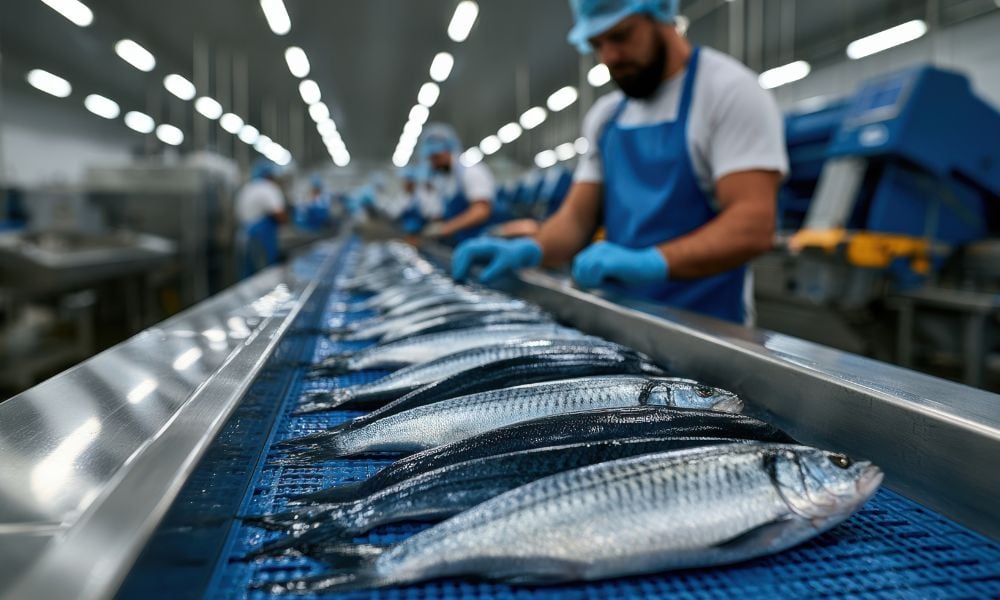
$8.5 billion seafood industry exempted after swift pushback; U.S. softens stance on cultural protections as Sept. 8 deadline approaches
Both Canada and the U.S. have made adjustments to their approach in their ongoing trade war, although there are no signs they plan to return to the bargaining table anytime soon.
The U.S. imposed new 50-per-cent tariffs on nearly $28 billion worth of Canadian goods on Aug. 22 after trade negotiations between the two countries collapsed. Prime Minister Mark Carney suspended talks last week, accusing U.S. negotiators of demanding terms that would limit Canada's ability to pursue independent trade agreements and restrict domestic cultural protections, including for the French language on streaming services. On Tuesday, Canada pledged to respond dollar-for-dollar, with counter-tariffs on over 700 U.S. products set to take effect Sept. 8 — covering sectors from steel and dairy to clothing, appliances and electronics, according to the Department of Finance Canada.
Ottawa adjusts counter-tariff list after seafood industry pushback
The federal government moved rapidly to revise its counter-tariff schedule following an immediate wave of industry concern. Finance Canada announced late Wednesday that seafood and fish products had been removed from the list, saying in an announcement on social media platform X that the decision was “based on feedback” – a significant reversal made less than 24 hours after the full schedule was published.
The Nova Scotia Seafood Alliance described itself as "somewhat blindsided" by the original inclusion, CBC News reported. Geoff Irvine, executive director of the Lobster Council of Canada in Ottawa, told CTV News that Canada imports approximately $400 million worth of U.S. lobster annually to supplement raw material supplies in eastern Canadian processing plants – all of which would have been subject to the counter-tariffs.
"Our biggest concern is any counter-tariffs against Canadian seafood," Irvine said. Canada's seafood sector is one of the country's largest export industries, valued at approximately $8.5 billion annually, according to CTV News.
Finance Canada said in the announcement that it had made "select adjustments to protect against broader economic harms" and confirmed it would continue working with Canadian industries to assess the effectiveness of its measures, with particular focus on sectors most directly targeted by U.S. tariffs.
Diplomatic signals amid trade uncertainty
On the diplomatic front, Canada-U.S. Trade Minister Dominic LeBlanc confirmed on Thursday that the U.S. had agreed that Canadian protections for the French language and cultural industries would not be subject to trade action – removing one specific sticking point from future negotiations.
LeBlanc said in a statement on X that Canada looks forward to "further constructive U.S. clarifications on their other positions which would create the possibility of a mutually beneficial trade agreement that respects Canadian sovereignty."
However, the broader trade environment remains volatile. U.S. Trade Representative Jamieson Greer has warned repeatedly that Washington would not stand idle if Canada continued to escalate its retaliatory measures. With counter-tariffs not yet in effect and negotiations suspended, the pressure on Canadian employers to develop contingency workforce plans is intensifying.
Tariffs threaten jobs, economy
The potential toll on Canada's workforce is significant. Analysis by Trevor Tombe, an economics professor at the University of Calgary, estimates that approximately 87,000 Canadian jobs could be at risk if the tariffs remain in place. Ontario and Quebec face the largest projected losses, with sectors including electronics, textiles, furniture and plastics manufacturing most exposed.
Bank of Montreal (BMO) economists estimate the 50-per-cent U.S. tariffs could subtract half a percentage point from Canada's gross domestic product (GDP) growth, according to CBC News.
Earlier this month and before Canada announced its counter-tariffs, the U.S.-based Tax Foundation estimated that the U.S. tariffs would reduce the long-run U.S. GDP by 0.4 per cent and hours worked by 345,000 full-time equivalent jobs.
To support businesses and workers navigating the disruption, the Canadian government announced $7.5 billion in new and enhanced measures to protect Canadian workers and businesses affected by the tariffs and counter-tariffs.