No contract, no pay stub, and no case for being an independent contractor
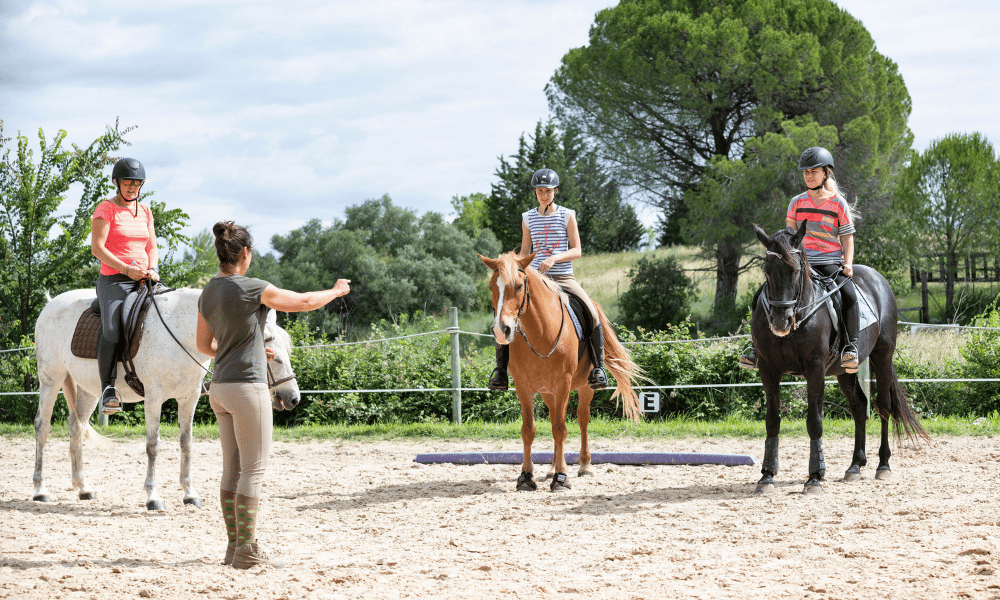
A horseback riding coach who never signed anything more than a verbal agreement has convinced Ontario's labour board that a company's independent contractor label didn't match how she actually worked.
In a decision dated July 27, 2026, Vice-Chair Paul Young of the Ontario Labour Relations Board found that a riding coach at Well Dressed Equestrian Inc., a horseback-riding lesson barn, was an employee of the business rather than an independent contractor, reversing an earlier ruling from an employment standards officer. Neither the company nor Ontario's Director of Employment Standards appeared at the hearing to respond.
A verbal deal made during someone else's maternity leave
According to her testimony, the riding coach met the barn's owner years earlier at a different stable, where the owner was one of her students. Impressed by her coaching, the owner asked her to join the business, but she turned down the offer at first. After a stretch of ill health and a job loss, she reached out about selling a horse; the owner bought it and renewed the job offer, wanting her to start right away to cover an upcoming maternity leave. She accepted.
No written contract followed. As the board's decision put it, "her arrangement with the company was a verbal one." She began work as a barn manager and riding coach at $25 an hour in May 2022, eventually working nearly every day of the week except Fridays, when she kept a part-time job elsewhere. As demand from clients grew, so did her hours, stretching from early afternoon into the evening.
She said she brought three of her own horses to the barn, joining a roster of roughly ten workers, including stable hands, tack staff and between three and six riding coaches at any given time. Clients, she said, were never hers to find. They registered for lessons online through the company, which also set the fees they paid.
Time sheets, an app and someone else's tack
Every lesson, she testified, ran on a schedule set through a booking app the company used, and that schedule could shift without warning, sometimes while she was already on her way to the barn. Coaches were expected on-site half an hour before a lesson began to prepare horses, and if a client cancelled, she said, no pay followed, even if she had already shown up.
Pay, according to her evidence, arrived by e-transfer every two weeks based on time sheets rather than invoices, with no deductions taken off and no pay stub issued. After the owner had her baby, she said she also began collecting and forwarding every other coach's and stable hand's time sheets to the owner. Horse shows paid differently: an hourly rate at first, later switched to a flat $50 per student.
Nearly everything she worked with, the board found, belonged to the barn. Saddles, bridles, crops, mounting blocks and the horses themselves were company property, along with the jumping poles and standards, though she bought her own after a shortage at a new second location, with a promise of reimbursement if they were damaged. When the arrangement ended, it was by email, effective immediately.
The board rules with no one on the other side
With no one from the company or the Director of Employment Standards in the room, the vice-chair had only the coach's account to go on. He turned to the same test Canada's top court has used for decades to sort employees from contractors: was she running her own show or someone else's?
The company, he found, controlled who got lessons, what they cost and when they happened, and supplied nearly all the tools of the trade. She had no real shot at profit and no risk beyond simply not getting paid. In his words, she was "not acting as a person in business on her own account."
That finding settles only her employment status, not what the barn might owe her. The hearing was split into two stages on purpose, and a second one still needs to be scheduled to sort out the unpaid wages, vacation pay and termination pay she's claiming. The file stays open with the same vice-chair until then.
See Heather Yeo v Well Dressed Equestrian Inc., 2026 CanLII 82147 (ON LRB)