Huang's return raises questions about accountability, company culture and what happens when a CEO appears to be above the rules
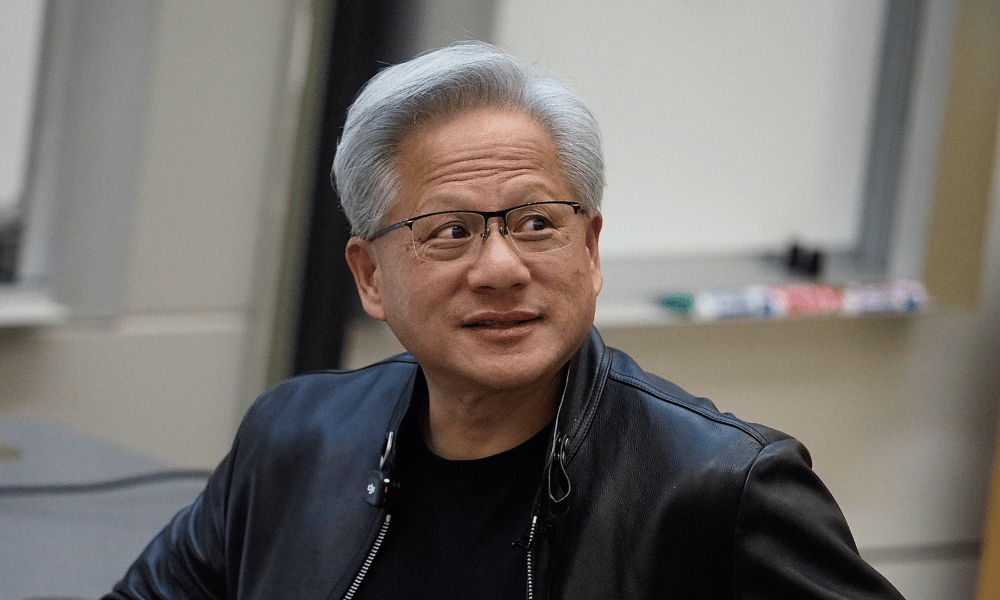
Jensen Huang is back as Nvidia's CEO, but his return may leave the company with more questions than answers. The board voted unanimously on Monday to reinstate him, just 11 days after he resigned as Nvidia's chief executive with immediate effect. The reversal comes after Nvidia had pushed back on calls for his return, with the board now saying its investigation will continue, according to a release filed with the U.S. Securities and Exchange Commission.
For Anna Tavis, a clinical professor at New York University, the bigger issue is what Huang's return says about accountability at the company.
"He's violating his own company's rules, and nonetheless he gets away with it. So what kind of example does it set?" she said.
Michael Nalick, an associate professor of management at the University of Denver, sees a similar risk for Nvidia's culture. By bringing Huang back, he said, the company is sending a message about what it will and won't tolerate.
"The rules have been thrown out the window here on what is permissible, what is not permissible," Nalick said.
The abrupt reversal also leaves employees facing considerable uncertainty. Anthony Nyberg, a professor of management at the University of South Carolina's Darla Moore School of Business, said the situation is unusual enough that it's difficult to predict how staff will respond.
"The leaving and coming back is really unprecedented, so who knows how people respond to that," he said.
Nyberg added that employees generally don't want to work amid turmoil, and that uncertainty can make it difficult for them to focus on their day-to-day responsibilities.
What Huang's return says about Nvidia's culture
Nvidia's board has already acknowledged that the behavior behind Huang's resignation was inconsistent with the company's code of conduct. Board chair Harvey Jones made that point during the company's Nov. 17 earnings call. Yet the board has since voted unanimously to bring Huang back.
That decision makes Huang an unusual exception to a pattern identified in Nalick's 2025 study of nearly 400 CEO scandals. The research found that CEOs left after personal scandals five times as often as after financial misconduct, making Nvidia's decision to bring Huang back a notable departure from the pattern.
For Tavis, the issue isn't the personal nature of the circumstances behind Huang's departure. It's whether the company's own standards apply to its most powerful leader.
"The violation is what matters here. It's not about a private family matter. It's a violation of the code of conduct," she said.
That raises questions about whether employees feel free to challenge the decision. An online campaign calling for Huang's return drew thousands of signers who identified themselves as Nvidia employees, according to its organizers. Tavis questioned how freely employees could express a view that went against the campaign, warning that those who spoke out could be silenced.
The decision could also create divisions among Nvidia's senior leaders, Nalick said, particularly between those who supported Huang and those who did not.
"There's going to be rifts of who was loyal to him versus who wasn't on the executive team," he said.
Tavis also expects the situation to cost Nvidia some of its talent.
"They're all extremely talented. They're going to find other places to go," she said. "There is going to be a contingent that's going to leave."
A board without a plan B
Nyberg said he presumes the board and major shareholders were spooked by the market's reaction to Huang's departure, and that Nvidia's lack of a succession plan caused real damage. The stock rose more than 30 percent in early trading Monday after the board announced Huang's return.
The scale of Huang's leadership structure raises questions about how prepared Nvidia was for a future without him. The New York Times has reported that Huang had 60 direct reports.
"If you have 60 direct reports and no successor, that's a business sustainability issue," Tavis said.
Tavis said she doesn't believe Nvidia lacked leadership talent.
"I'm sure even around 60, in a level below, there were plenty of talent," she said.
Nyberg said founder-led companies face particular challenges because so much of the business can become tied to one person's identity.
"There are different dynamics that go into play if you think about family-led or founder-led companies because so much of the company is wrapped up in their identity," he said. "That's why for those kind of companies, it's extra important that they're thinking about how does the company transcend beyond the single individual."
Nvidia's board said in its release that it voted to reinstate Huang after a series of discussions and meetings with him left it satisfied with his candor and ability to lead. It also said it received input from senior levels of the U.S. government and is confident his return poses no national security risk, and that it believes the move is in the best interests of stockholders, employees, partners and customers. The board said the committee's investigation will proceed to conclusion and that Huang fully supports it.
Tavis questioned why the board reinstated him before the investigation was complete.
"This reinstatement happened before the investigations were formally finalized, which means that you really question the integrity of the board," she said.
Tavis's criticism points to a broader question about how boards prepare for a leadership crisis. Nalick said boards can limit the damage by acting early, noting that some have taken action against CEOs before problems became public.
"When you have all this out in the open and you're not acting proactively, you're acting reactively, that's when it creates the huge turmoil," he said. "And so the lesson for all of this is boards need to be proactive on this."
Nyberg said CHROs should be closely involved in building emergency and succession plans, as well as maintaining a strong relationship with the board. He said he doesn't know anything about Nvidia's CHRO, but that the company does not appear to have had those plans in place.
Tavis said the head of HR should have a direct role in succession discussions with the board.
"The head of HR should be reporting to the board and working with the board on the succession issues," she said.
But Tavis also sees a bigger risk in the way companies can become so closely tied to their founders that challenging their authority becomes difficult.
"The board needs to be able to say no," she said. "And really, the whole idea of a charismatic personality cult of founder-leader is a very fragile long-term business proposition."
What happens next may depend as much on the market as on the board's judgment. Nyberg said that if Nvidia's stock rebounds and the company settles, Huang's return may come to be seen as the right decision. But if the market doesn't recover, the board may have to reconsider whether bringing him back was the answer.
"If the entire stock market rebounds and this is a calming thing, we can all say, 'wow, he's an extraordinarily important person for the entire U.S. economy,' and we'll just be glad that he's there despite his frailties," he said. "If it doesn't rebound that way, then perhaps he wasn't the magic solution after all."