‘The restaurants that invest in both technology and people will be the ones best positioned to thrive’
HR professionals in Canada’s food service sector need to prepare workforce frameworks now as artificial intelligence (AI) voice ordering technology moves closer to Canadian drive-thrus, according to one expert.
Sylvain Charlebois, Professor and Director of the Agri-Food Analytics Lab, says AI will reshape restaurant jobs rather than eliminate them — but only if employers treat the technology as a tool for augmenting workers.
“The future is less about replacing people and more about augmenting them,” Charlebois says in a statement sent to HRD Canada.
Two U.S.-based AI voice companies, Presto and SoundHound, have told CBC News that drive-thru chatbots could reach Canadian locations within months.
Technology already reshaping U.S. drive-thrus
AI-powered drive-thru systems have operated at U.S. locations since approximately 2021, with early pilots drawing mixed results before the technology improved. White Castle now runs an AI chatbot called Julia at about 40 U.S. locations, and McDonald’s and Taco Bell are also testing AI ordering systems, according to CBC News.
In late 2023, McDonald’s announced it is partnering with Google to build out an AI chatbot that would help restaurant workers during their shifts.
More than a quarter of U.S. restaurant operators surveyed by the National Restaurant Association are already using AI-related tools, CBC reported.
White Castle’s Chief Marketing Officer Jamie Richardson told CBC News that Julia achieves order accuracy “well above the 90% range.” Store manager Denise Harley said the system has become routine. “It just helps us get the orders in and out faster,” she told CBC News.
Charlebois says the most immediate gains lie behind the scenes — inventory control, demand forecasting, and shift scheduling — freeing frontline employees to focus on hospitality.
“Restaurants that use AI to improve operational efficiency while maintaining genuine hospitality will have the greatest competitive advantage,” he says.
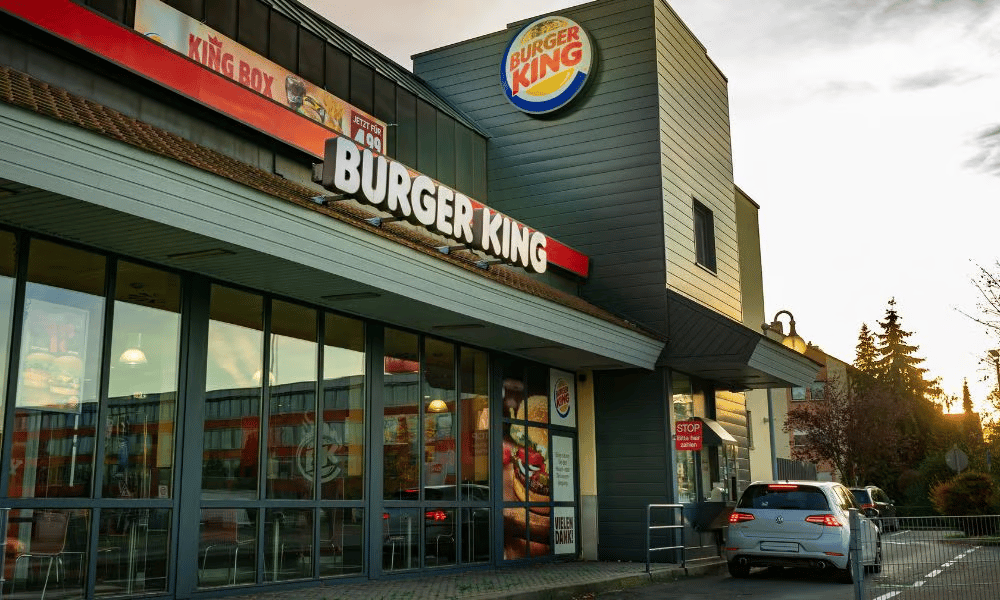
Recent reports noted that Burger King is testing an AI system that can detect whether employees are using polite language, such as "please" and "thank you".
Labour pressures and displacement strategy
The restaurant sector’s embrace of AI is rooted in familiar workforce pressures: labour shortages, high turnover, and thin margins. “AI can automate repetitive, low-value tasks such as taking orders, scheduling shifts, inventory management, and forecasting demand,” Charlebois says. “That allows employees to spend more time on activities that create value — hospitality, customer service, and problem-solving.”
He, however, warned directly against framing AI as a headcount-reduction tool. “Restaurants that treat AI solely as a labour-reduction strategy may be disappointed. Its greatest value lies in helping employees perform better, improving profitability, and delivering a more consistent customer experience,” he says.
Richardson echoes that position, telling CBC News: “We haven’t used it as a way to reduce employment. We’ve used it as a way to be, hopefully, more productive.”
The World Economic Forum has forecast that cashier and order-taking positions will rank among the fastest-declining jobs globally over the next five years, CBC reported.
Unions sound alarm on worker rights
Canada’s organised labour movement is watching closely and has taken its concerns to the global stage. Speaking at the International Labour Conference in Geneva on June 10, Canadian Labour Congress Secretary-Treasurer Lily Chang warned that too many employers view technological change as an opportunity to reduce their workforce, intensify work, and expand surveillance.
“Artificial intelligence is already transforming workplaces and industries around the world,” Chang said. “Workers see the potential, but many are also worried about what it means for their jobs, their privacy, and their futures.”
Chang added: “Workers cannot be expected to carry the burden of economic uncertainty by giving up fundamental rights.”
The CLC is calling for Canada Labour Code amendments requiring employers to consult workers before introducing AI that alters job duties or employment security. CLC Executive Vice-President Siobhán Vipond told CBC News the obligation extends further: “Employers do have a responsibility to workers and our communities.”
Governance and upskilling
Charlebois says transparency is non-negotiable when AI intersects with employment decisions.
“There must also be transparency around how AI is used, particularly if it influences hiring decisions, employee scheduling, or performance evaluations,” he says.
Employers without clear governance policies risk employee relations disputes and regulatory exposure as Canadian AI legislation develops. And upskilling, Charlebois says, is equally urgent.
“Restaurants should invest in digital literacy and AI fluency — short, practical training sessions integrated into regular operations can have a significant impact.”
Cross-training in operational and technical skills improves career mobility and reduces turnover, he adds.
“Ultimately, the restaurants that invest in both technology and people will be the ones best positioned to thrive.”