Average weekly earnings up 3.7% compared to last year

Canada’s labour market experienced a setback in June 2025, with payroll employment numbers falling even as job vacancies saw a slight rebound, according to new data from Statistics Canada.
The latest Survey of Employment, Payrolls and Hours revealed that the number of employees receiving pay or benefits from employers dropped by 32,900, or 0.2%, in June. This decline follows a modest gain in May and marks a reversal in the recent trend.
Despite the monthly dip, payroll employment remained 41,000 higher than a year earlier, representing a 0.2% annual increase.
And average weekly earnings increased by 0.7% in June and are up 3.7% compared to last year, reaching $1,302. This growth reflects a combination of higher wages, changes in the mix of jobs, and other factors. Average weekly hours worked held steady at 33.4.
Employment gains, losses by sector
Ten out of 20 sectors reported lower payroll employment in June. Manufacturing led the losses, shedding 8,400 jobs, while retail trade and construction also posted notable declines. Health care and social assistance, a sector that had previously seen steady gains, lost 3,700 positions. These losses were partially offset by a 3,800-job increase in public administration, driven mainly by local and regional government hiring.
Manufacturing employment has been on a downward trajectory since January, with a cumulative loss of 26,600 jobs so far this year. The transportation equipment, chemical, and machinery manufacturing sub-sectors were the hardest hit. On an annual basis, manufacturing payrolls were down by 24,700, said StatCan.
Retail trade also saw payroll numbers drop by 8,100 in June, continuing a general downward trend that began earlier in the year. General merchandise, food and beverage, and building material retailers contributed most to this sector’s losses.
Construction employment fell by 5,200, with specialty trade contractors and both residential and non-residential building construction leading the decline.
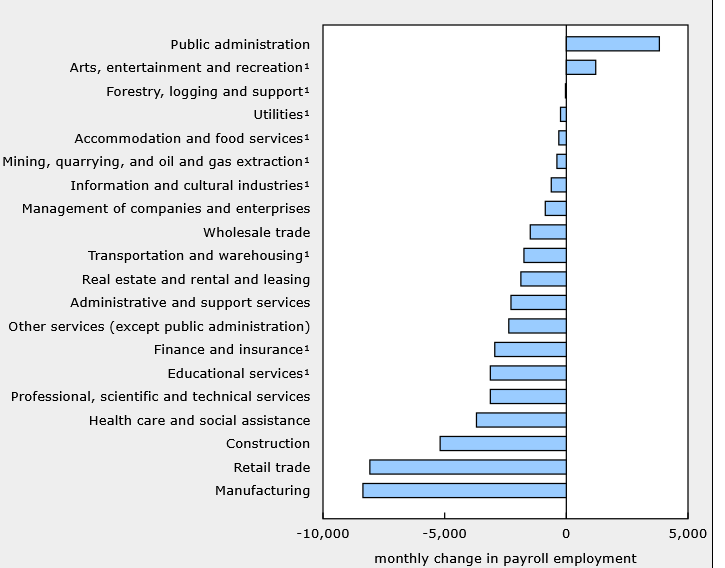
After nearly three years of steady growth, health care and social assistance payrolls slipped by 3,700 in June. The decrease was mainly due to fewer jobs in nursing and residential care facilities as well as social assistance organizations. Despite this monthly drop, the sector has added over 230,000 jobs since August 2022.
Public administration was one of the few sectors to buck the trend, adding 3,800 jobs in June. Local and regional governments accounted for most of this growth.
Over the past year, public administration employment has risen by 18,600, though federal government payrolls have declined, said StatCan.
The rate of youth unemployment in Canada has reached levels beyond what could be expected, according to a recent report.
Job vacancies edge up after spring decline in Canada
Canada’s job vacancies rose by 12,100 (+2.5%) in June to reach 492,000, partially reversing declines seen in April and May. However, vacancies remain well below last year’s levels, with a year-over-year drop of 59,200 positions (-10.7%).
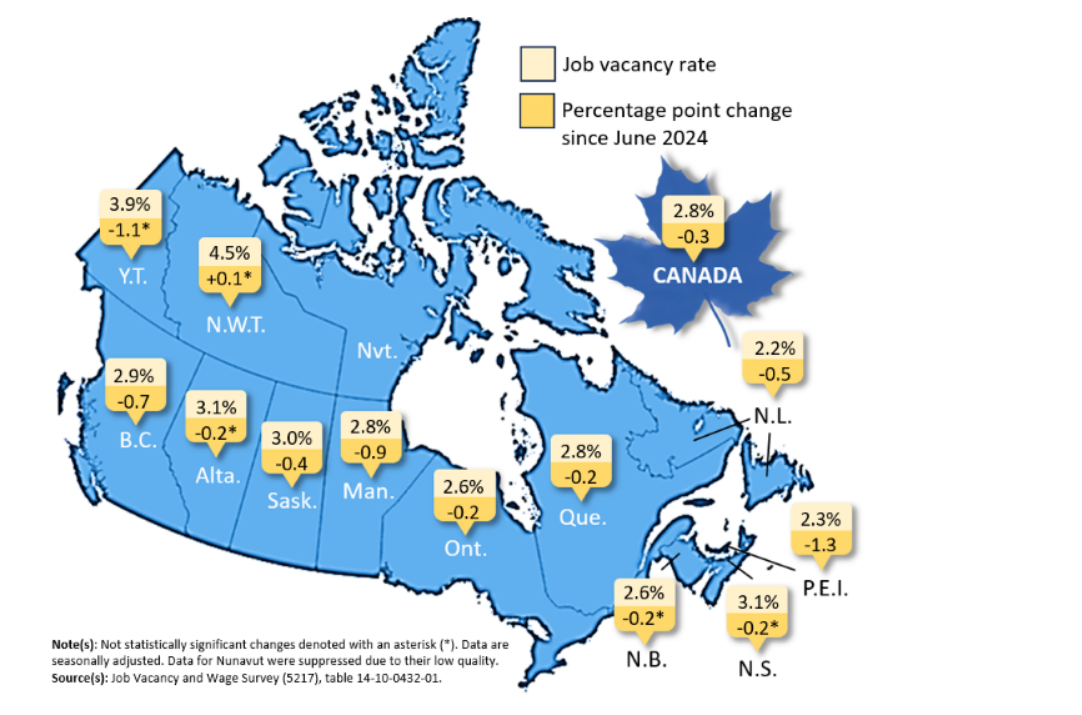
The job vacancy rate stood at 2.8%, slightly higher than May but down from 3.1% a year ago.
There were 3.2 unemployed Canadians for every job vacancy in June, a slight improvement from May but still higher than last year. This shift is due to both a rise in unemployment and a decrease in available positions.
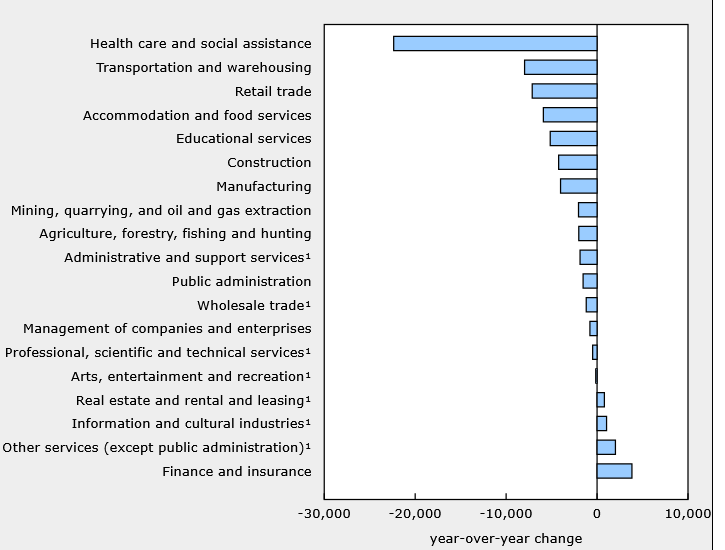
Construction was the only sector to see a significant increase in job openings in June, with vacancies jumping by 4,600 (+13.1%). Still, construction vacancies remain far below their 2022 peak. Health care and social assistance continued to have the highest number of vacancies at 98,500, though this figure has fallen by 18.5% over the past year.
Alberta was the only province to post a notable rise in job vacancies in June, up by 8,100 (+13.5%). Most other provinces saw little change, and vacancy rates were highest in Nova Scotia, Alberta, and Saskatchewan. Prince Edward Island, Manitoba, and British Columbia recorded the largest year-over-year drops in vacancy rates.