‘The marginal impact of the change on the Canadian economy is likely relatively small’
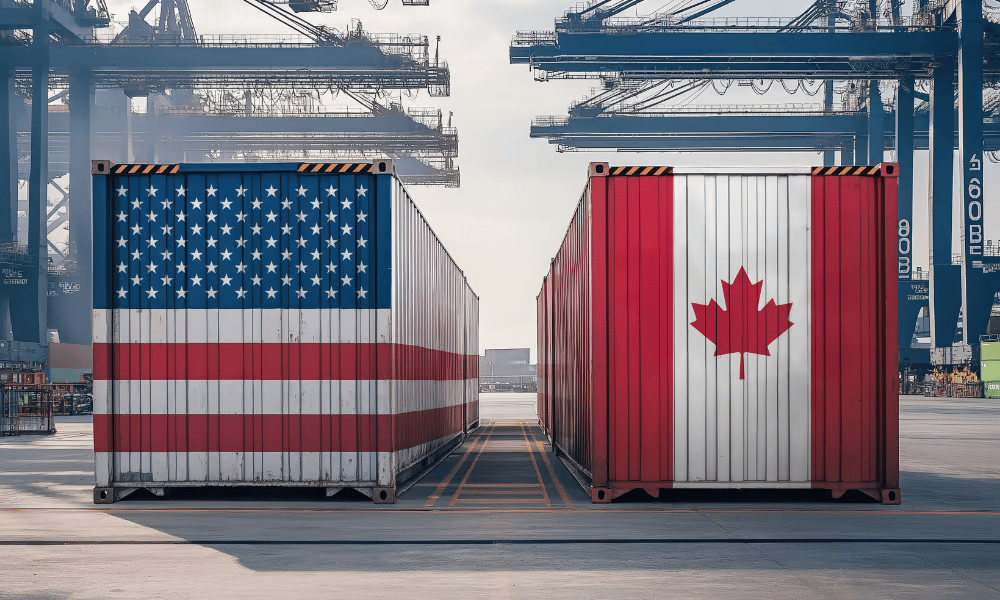
WIth the escalation of the trade dispute between Canada and the United States, HR has some challenges ahead.
On Tuesday, U.S. President Donald Trump announced a fresh round of retaliation against Canada's counter-tariffs, banning imports of Canadian motorcycles, dairy products and select alcoholic beverages effective Sept. 29, while adjusting tariffs on other goods.
The banned products were already covered by a 50% tariff imposed last month under the Section 338 list, according to the Toronto Star.
‘Marginal impact of the change’
“This marks an escalation, but with a 50% tariff on these products, many were already likely too expensive for U.S. importers to buy. Therefore, the marginal impact of the change on the Canadian economy is likely relatively small (again, notwithstanding the significant impact on specific exporters targeted),” said Nathan Janzen, an assistant chief economist at RBC, in a note.
Trump also said he would exclude Canadian companies from a U.S. government procurement program covering roughly $50 billion (U.S.) in purchases annually. Scotiabank economist Derek Holt called this move "immaterial," estimating Canadian firms' share of the program at "between a few hundred million dollars per year and the low single-digit billions" — "chump change," he said, according to the Toronto Star report.
On Monday, Trump said on Truth Social that Montreal-based Bombardier would no longer be permitted to sell aircraft in the United States unless it manufactures there, writing, "NO MORE SELLING BOMBARDIER IN THE UNITED STATES! Their products aren't good enough!"
Canada's retaliatory tariffs on nearly $28 billion worth of U.S. goods took effect at 12:01 a.m. Eastern Time on Tuesday.
Possible economic stagnation
Despite the minimal immediate impact, Capital Economics economist Stephen Brown warned that Canadian GDP could stagnate or contract in the fourth quarter if the existing 50% tariffs persist, the Toronto Star reported. He called it "increasingly plausible" that the Canada-United States-Mexico Agreement could remain unresolved through the rest of Trump's term.
"The prospect of the U.S. and Canada resolving their trade differences soon seems slim," Brown said, according to the report "At best, that would leave Canadian firms dealing with U.S. tariffs and heightened trade policy uncertainty for another two years. At worst, it would raise the risk of Trump withdrawing from the [CUSMA] altogether."
Janzen echoed that a broader trade war remains the bigger threat than this specific announcement. "The real risk remains further escalation into a tit-for-tat trade war covering a much larger share of trade — something that hasn't occurred with this latest development yet," he said, according to the Toronto Star.
The human cost of the Canada–U.S. trade war is already registering on labour market dashboards before the full weight of September's tariffs has been felt. Canada shed 42,000 jobs in August, according to Statistics Canada — the final employment report before the full force of 50 per cent tariffs from the U.S. hit the Canadian economy.