‘Canada is entering a period of new ambition to advance major projects and build for the future’
HR leaders across Canada should act now: strengthen apprenticeship and skilled trades pipelines, build retention plans for an aging workforce, and forge partnerships with technical colleges and industry associations to close the trades gap.
That’s because as Ottawa courts $1 trillion in new investment, the biggest obstacle to delivering on that promise may not be capital — it's the workforce needed to build it.
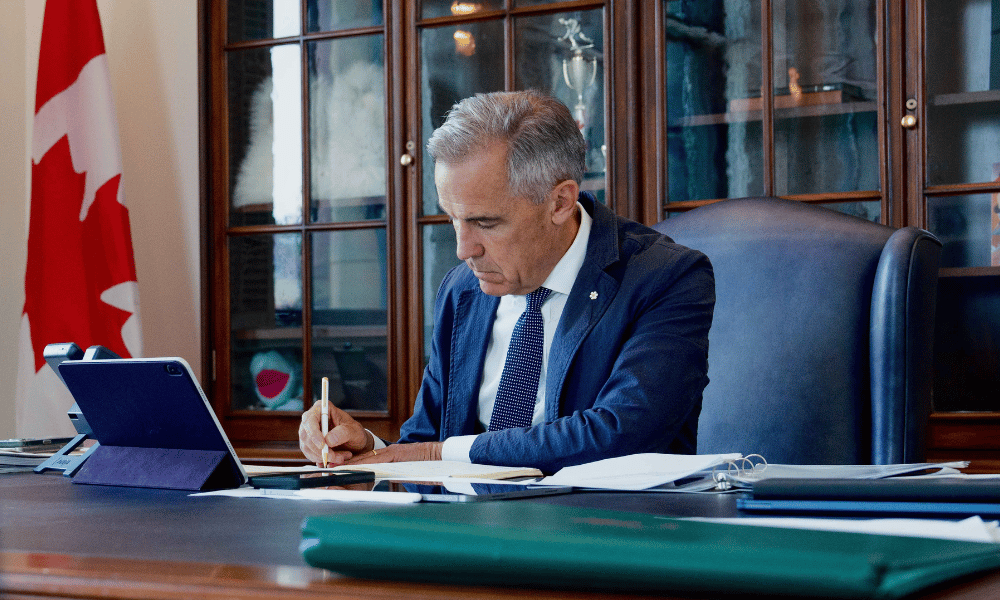
Prime Minister Mark Carney used the second day of the Canada Investment Summit in Toronto to confirm plans to open the country's four largest airports to private investment, while the federal government pursues a five-year goal of attracting $1 trillion in new capital.
Business leaders speaking at the two-day event repeatedly flagged labour capacity as a constraint on those ambitions. Leaders at the summit and a parallel conference shared frustrations about doing business in Canada, including the observation that a lack of skilled labour threatens to stall projects even if capital is available, according to The Globe and Mail.
Ottawa estimates the country must add more than 1.4 million tradespeople by 2033 as a large share of the current workforce approaches retirement age, the same report said. Statistics Canada's ongoing reporting on construction labour shortages documents a persistent gap between demand for skilled workers and available supply in the sector.
Bank leader flags labour access as key risk
Raymond Chun, chief executive of Toronto-Dominion Bank, told The Globe and Mail's Stefanie Marotta that Canada is on the cusp of an investment super cycle, but cautioned that reducing regulatory complexities and improving access to skilled labour will be key to attracting investments.
Regional shortages are already visible. In Halifax, a lack of skilled workers is already holding back economic growth, The Globe and Mail reported, even before an expected wave of demand tied to the arrival of Canada's new submarines.
More than one-third of construction companies already report labour shortages or difficulty recruiting skilled workers, according to StatCan figures cited by the same report.
Airport privatization plan raises workforce questions
Carney confirmed in his keynote address that the federal government is seeking private investors to operate Toronto Pearson, Montreal-Trudeau, Calgary and Vancouver airports, while retaining public ownership of the underlying land and assets, according to CBC News. The plan builds on language first introduced in Budget 2025's section on catalysing investment in airports and ports, which signalled openness to attracting private capital into national airport infrastructure.
A special Liberal caucus meeting was called Monday to brief MPs on the plans, with legislation expected this fall, CTV News reported. Some caucus members voiced alarm that the sale of airports was being presented as a fait accompli, according to an unnamed Liberal MP who spoke to the publication.
For HR teams in transportation, a shift toward private operating models often brings changes to workforce structure and collective bargaining arrangements — issues expected to surface as legislation advances.
Capital announcements underline the talent gap
The summit produced several large funding announcements. The Canada Pension Plan Investment Board and Brookfield Asset Management Ltd. announced a new $50 billion fund, with each organization contributing up to $25 billion in equity capital over five years, CBC News reported.
|
Investor |
Commitment |
Structure |
Time frame |
|
Canada Pension Plan Investment Board |
Up to $25 billion in equity capital |
Joint 50-50 structure with Brookfield Asset Management Ltd. |
Five years |
|
Brookfield Asset Management Ltd. |
Up to $25 billion in equity capital |
Joint 50-50 structure with Canada Pension Plan Investment Board |
Five years |
|
Combined fund total |
$50 billion |
New joint fund for large-scale investments in Canada |
Five years |
"Canada is entering a period of new ambition to advance major projects and build for the future, creating compelling investment opportunities across the country," said John Graham, chief executive officer of the Canada Pension Plan Investment Board.
BCE Inc. also announced plans to quadruple its artificial intelligence (AI) data centre capacity in Saskatchewan, an investment of up to $5 billion, according to The Globe and Mail. Aidan Gomez, co-founder and chief executive officer of Canadian AI company Cohere, told the summit: "We have many strengths in terms of data centres. We have a cold climate, we have clean energy. We are very well-positioned to become a superpower in data centres to the world. We can do that if we choose to."
More than 1,000 demonstrators gathered in downtown Toronto to protest the summit, CBC News reported, with a coalition of climate, labour, housing and Indigenous rights groups arguing that governments should prioritize affordable housing, public services and good jobs instead.
For HR professionals, the message from this week's summit is consistent: capital is arriving faster than the workforce required to deploy it.
Carney previously has framed the summit as a response to a decade of fading international investment.