'Trauma doesn't always show up when you think it's going to show up... if often sneaks up on people'
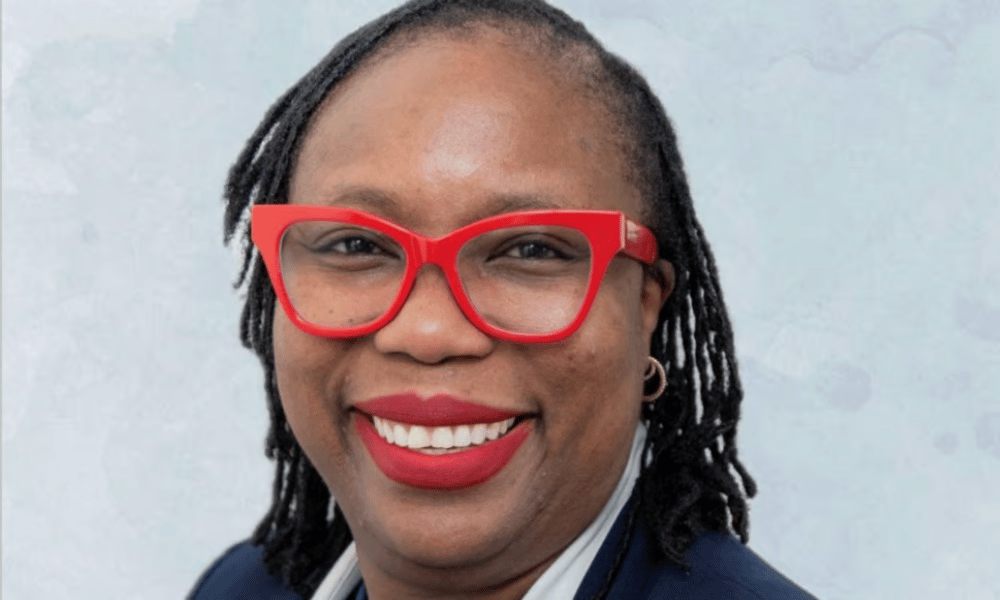
Lola Obomighie has spent much of her human resources career working in health care and alongside people from marginalized and vulnerable backgrounds, experience she said has shaped how she recognizes trauma in the workplace long before it becomes visible in performance or conduct.
Obomighie, vice-president of people, culture and organizational effectiveness at Northumberland Hills Hospital (NHH) in Cobourg, Ont., is scheduled to speak at HR Fest Canada on trauma-sensitive HR leadership.
The conference runs November 10-11, 2026, at Rebel in Toronto.
Focus on HR's own emotional toll
Obomighie said her session addresses a tension she has observed throughout her career: HR leaders are expected to support employees through difficult periods, but are given little space to process similar events themselves.
"As HR professionals, as HR leaders, our job is to provide support," she said in talking with HRD. "We provide support, we provide advice, we point people to policy, we talk about good practice, we tell them where there are opportunities."
She said that responsibility can come at a personal cost when HR staff are simultaneously absorbing the effects of restructuring, layoffs or organizational conflict.
"How do we provide support and advice when we ourselves are going through a difficult time where we're traumatized by the events in the organization that we're providing support over and about?" she said. "How do we carry both of those in a manner that does not erode our ability to be professional, but also does not mean that we are depleted emotionally as well?"
Trauma can surface indirectly
Obomighie said she is not a clinician but described workplace trauma broadly as anything producing pain, anxiety or lasting discomfort, drawing on her health-care background and work with vulnerable populations to explain how it often hides in plain sight.
"Trauma doesn't always show up when you think it's going to show up," she said. "It often sneaks up on people, and it often sometimes can come to bear, not even always through the experiences that we've had, but the things that we've witnessed in others."
As an example, she cited survivor's guilt among employees who remain with an organization following layoffs, as well as anxiety tied to sector-wide shifts such as the adoption of artificial intelligence.
Left unaddressed, she said, workplace trauma can surface as absenteeism, reduced productivity or resistance to change. "I've seen it manifest in unprofessional behaviours, in exclusion, where people inadvertently gravitate towards where they find comfort and they end up excluding people," she said.
She said that responsibility can come at a personal cost when HR staff are simultaneously absorbing the effects of restructuring, layoffs or conflict.
"How do we provide support and advice when we ourselves are going through a difficult time where we're traumatized by the events in the organization that we're providing support over and about?" she said. "How do we carry both of those in a manner that does not erode our ability to be professional, but also does not mean that we are depleted emotionally as well?"
She’ll talk about that and more in the Expert Talk - Trauma‑Sensitive HR: Leading When People Are Not OK at HR Fest.
Career path shaped by data and people
Obomighie said her move into human resources was unplanned. She originally trained in economics and statistics before her first job, working directly with people, redirected her career path.
"I fell into HR by mistake, probably, but not dissimilar to a lot of other HR professionals," she said.
She went on to complete a master's degree in HR, professional qualifications and an MBA, gravitating toward strategy, culture and labour relations. She also serves as an adjunct professor with Queen's University's Industrial Relations Centre, teaching courses on HR strategy and analytics.
Asked what advice she would give young people entering HR amid the rise of artificial intelligence, Obomighie said the technology should be treated as a tool rather than a threat to the profession.
"I think AI is an enabler, it needs to be embraced," she said. She encouraged newcomers to find mentors, pursue relevant qualifications and commit to ongoing learning. "I am a very, very huge supporter of continuous professional development," she said.
HR Fest is scheduled on Nov. 10 and 11, 2026, at Rebel Toronto. Secure your slots now right here.