VP of People and Culture emphasizes long-term talent strategy and turning mental health services inward for employees
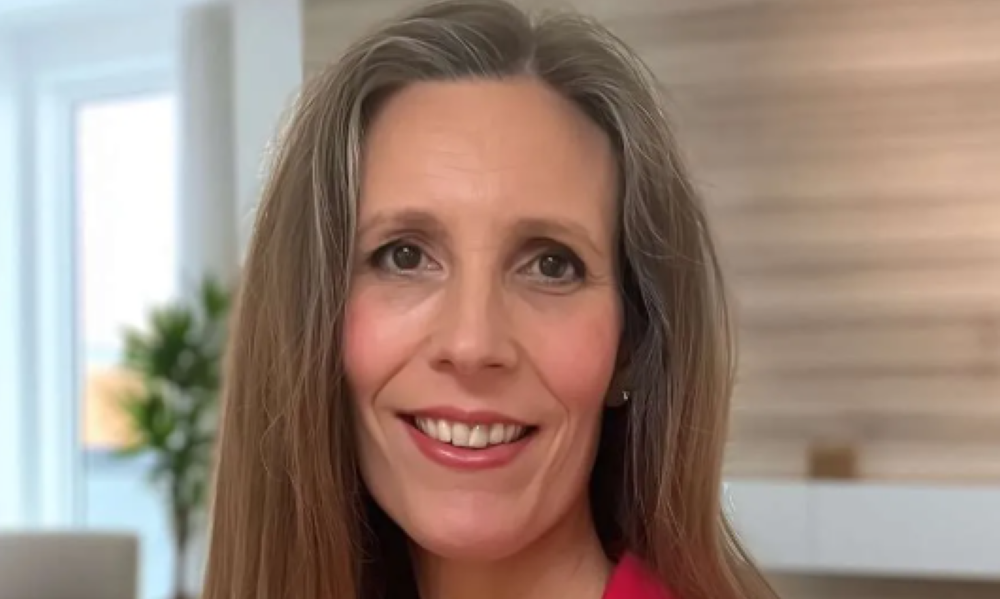
In a sector defined by giving care, the people providing it are often the last to receive it. Angela Slade, Vice President, People and Culture at Homewood Health in Guelph, Ont., is working to change that – building a mental health talent pipeline that begins in secondary schools and extends, if need be, to inpatient treatment for staff themselves.
Statistics Canada data published in May 2026 found that job vacancies in health occupations nearly tripled between 2016 and 2024, rising from 2.1 per cent to 5.8 per cent. Though vacancies have since moderated from their pandemic peak, competition for qualified mental health professionals remains fierce. Slade has watched those pressures shift across her healthcare career, and the lessons from the worst of it during the pandemic still inform how Homewood thinks about its people.
"There were certainly moments where it was like getting water from a stone, trying to find healthcare professionals to fill our open roles with a desperate need," she says. "We learned a lot [during the pandemic]. There's research that came out – both human resources and healthcare professional research – that really helped inform our thinking around why people come and why people stay."
As Canada's healthcare and social assistance sector navigates a persistent talent shortage, the growing pressure on human resources (HR) professionals in Canada's healthcare sector is one that is top of mind for Slade.
Treating the talent pipeline as a relationship
Homewood Health, which operates addiction and mental health treatment centres across Canada, treats its talent pipeline as a long-term relationship rather than a transactional exercise to help address the staffing crunch in nursing, according to Slade.
"We really work to build relationships and diversify our pipelines, looking to partner with universities and colleges and really build those pathways and those student relationships early," she says.
That has translated into preparing a future health workforce with a coast-to-coast student practicum program, a nursing graduate guarantee, a clinical extern program, and a tuition reimbursement policy spanning a range of health disciplines, says Slade. Staff who began in non-credentialled roles have gone on to complete degrees, sit regulatory exams, and stay – evidence that career investment and retention are the same conversation, she says: "I went to [a Homewood facility on the west coast in Fall 2025], just introducing myself to staff and asking ‘How did you find us?’” she says. “And one of them said, ‘I was a student here and I never left.’”
The pipeline also reaches into elementary and secondary schools, where Homewood clinicians run sessions on gambling addiction, mental health awareness, and the work of mental health professionals. The aim is to grow a generation with both the awareness and the professional identity to channel it productively – people who grow up wanting to be not just a nurse, but a mental health nurse, says Slade.
Practicing what the organization preaches
With burnout affecting more than six in 10 Canadian professionals, according to a Robert Half survey released in April 2026, it sits at a particular intensity in frontline healthcare, where workload and emotional labour compound each other. Homewood isn’t immune – but it’s also the expert in mental health, which creates an obligation Slade takes seriously.
“We look to ensure that we’re still working to reduce barriers to access and reducing stigma even within our own organization – sometimes the doers are the last ones to see they need care," she says.
Since early 2025, Homewood has systematically extended to employees the same continuum of care it offers to patients – what Slade calls "turning our services inward."
"Any service, care, or treatment we provide to a customer, patient, or client, we should be able to provide to one of our team, to an employee," she says.
In practice, that covers a comprehensive employee and family assistance program (EFAP), long-term psychotherapy, crisis management services – including on-site clinicians deployed after difficult patient situations – and Rapid Impact, a program that expedites psychiatric and psychological assessment for staff on short-term disability. The most recent addition is access to inpatient treatment, with travel coverage from anywhere in the country. Slade says she views rising EFAP utilization as a marker of success, not a warning sign: “That means that our people are hearing about the service we have and are engaging it more often,” she says. “Low utilization would suggest not that people don't have problems, but that people aren't engaging the support for their problems.”
Trauma-informed collaboration – a clinical standard adapted for internal use – now runs through Homewood's HR processes, from performance conversations to the competency frameworks governing employees and managers alike, according to Slade, who says that Training has been delivered in waves to embed it deeply.
What great HR leadership looks like
The most durable piece of career advice Slade received that she applies to her leadership role today came from a change management professor during her HR studies at Queen's University in Kingston, Ont.
"She said, ‘As an HR professional, make sure you know your business, what they do, how they do it, the finances, the operations.' If you really want to be good at your job, you need to know,” says Slade.
That principle takes Slade out of her office and onto clinical floors – joining huddles, checking in after incidents, and showing up on harder days as readily as on celebratory ones.
"[HR] may be a cost centre, but we are not a support function," she says. "We’re partnering in a healthcare environment that’s directly connected to patient and client outcomes."
Planning for tomorrow's workforce
With a workforce skewing older than many industries, Homewood is building what Slade calls a “red-yellow-green” readiness map by role, informed by age analysis and anticipated retirements. She says she’s watching the distribution carefully, expanding novice learning at inpatient treatment centres with additional paid hours and structured curriculum designed to anchor new graduates to the specialty they have chosen.
On the technology front, an artificial intelligence (AI) scribe is under consideration to reduce the administrative burden of clinical documentation, freeing clinicians for direct patient care, according to Slade. Internally, the people and culture team is experimenting with Microsoft Copilot – without employee identifiers – to cut HR administrative work. And as the organization ramps up its transformation, Slade has been explicit with every team: no roles are being replaced.
"We are not replacing our people. This is about reducing burnout. This is about freeing up time to do the work that matters. It's about a better experience for our people,” she says.
The true cost of employee burnout across Canada has been estimated and documented. For Slade, at Homewood Health the case for investing in the people who provide mental health care writes itself – the cost of not doing so is visible every day.