Nearly a quarter of hiring managers admit they've made bad hire in last two years

If you think hiring has gotten harder, you’re not alone. A whopping 94% of Canadian hiring managers say it’s taking them longer to fill open roles than it did just two years ago, according to a recent survey.
The takeaway? Hiring is getting more complicated, but cutting corners isn’t the answer.
“Businesses who prioritize thoroughness and clarity, without compromising efficiency, will be best positioned to hire top talent and to avoid the long-term consequences of making the wrong hire,” says Koula Vasilopoulos, Senior Managing Director at Robert Half, Canada, which did the survey.
Lengthy process to hire
So, what’s slowing things down? Managers point to a few key bottlenecks:
- Evaluating candidates' applications and determining who to interview (53%)
- Thorough reference checking (48%)
- Scheduling and conducting interviews (40%)
The survey polled over 1,500 hiring managers across Canada in April.
“The hiring process can be overwhelming,” says Vasilopoulos.
“In the current hiring landscape, companies need to take a streamlined and strategic approach to hiring to find the right talent for business-critical needs.”
Summer-related job postings in Canada have declined this year compared to recent years, according to a report from Indeed.
Costly mistakes in recruitment
Even with all this extra effort, mistakes still happen. Nearly a quarter of hiring managers (24%) admit they’ve made a bad hire in the last two years—and those errors come with a price, finds the survey.
On average, it took four weeks to realize the mistake, and teams lost more than 15 hours of productivity per week dealing with underperformance.
Over half (56%) say a bad hire led to turnover on their teams.
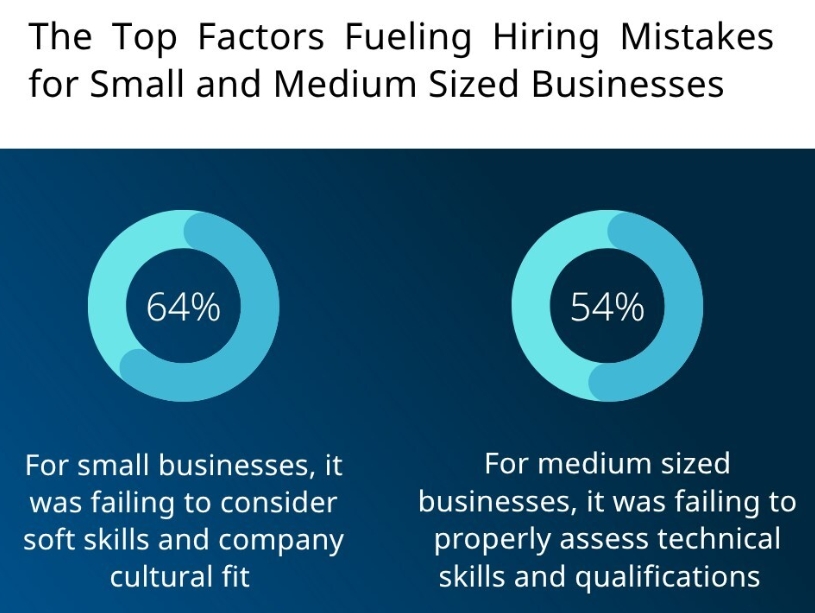
So, what’s behind these missteps? The most common culprits are:
- Failure to consider soft skills and cultural fit (50%)
- Not properly assessing technical skills and qualifications (49%)
- Failure to communicate clear job descriptions and role duties to the candidate (33%)