Could this reshape workforce planning for Canadian HR teams?
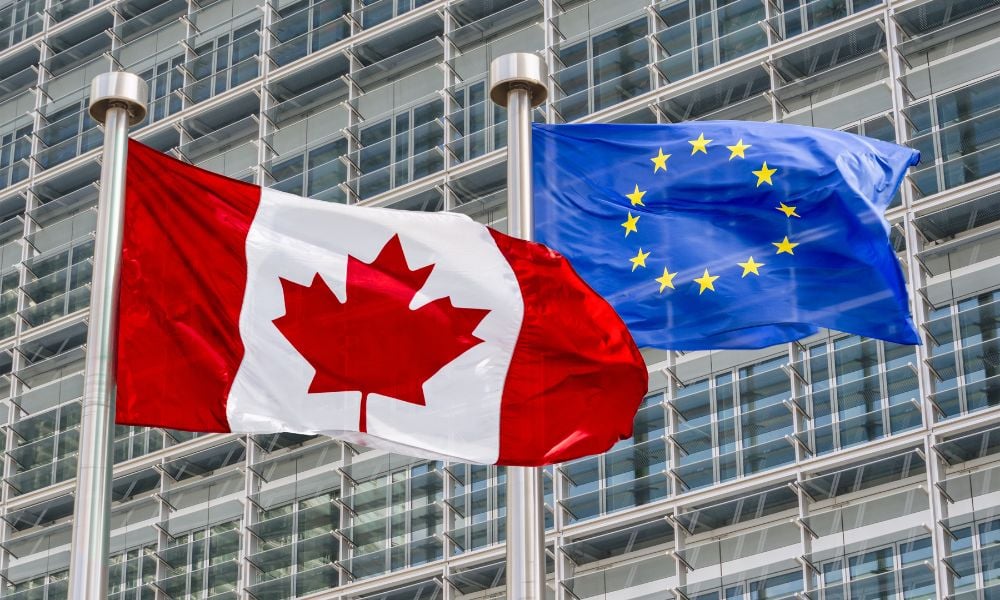
European Commission President Ursula von der Leyen, head of the European Union's (EU) executive body in Brussels, Belgium, delivered her State of the Union address to the European Parliament in Strasbourg, France.
She proposed that Canada become the EU's first associate member, a status that does not currently exist in EU frameworks.
Von der Leyen said the bloc needed to "urgently reimagine" its global partnerships, adding "we want to bring the relationship with Canada to the highest level possible," according to CNN.
Prime Minister Mark Carney, seated in the front row, rose and embraced her afterward, and has described his own goal as "a unique alliance between Canada and the European Union," according to a report by IMI Daily cited by HRD Canada.
Global mobility questions for Canadian employers
Freedom of movement within the EU and the European Economic Area is tied to citizenship rather than residency, so any new arrangement would likely affect Canadian passport holders before permanent residents, according to CNN.
That distinction matters for global mobility planning inside Canadian organizations with European operations, and echoes domestic efforts such as Ottawa's recent push to remove federal barriers to labour mobility across the country.
Serhan Aysever, managing partner at Beyond Global Partners in the United Kingdom, said the changes would raise the appeal of Canadian citizenship for internationally mobile families, though he called the process lengthy, according to HRD Canada. Charlie Maggi, founder and CEO of The Open World in France, said the plan remains speculative and suggested a sector-specific arrangement is more likely than universal access, according to HRD Canada.
Workforce sentiment split on deeper EU ties
A national survey by Abacus Data, an Ottawa-based polling firm, conducted between September 4 and 9, 2026, found four in five Canadians support closer integration with the EU on trade, travel, work and study.
The same survey found 49 per cent would support Canada becoming a full EU member state, according to Abacus Data.
Pierre Poilievre, leader of Canada's opposition Conservative Party, has argued against closer alignment with either the United States or the EU, citing sovereignty concerns. Renew Europe, a parliamentary group holding 77 of 720 seats in the European Parliament, publicly backed the proposal following the speech, according to CTV News.
Officials remain cautious on details
Jonathan Wilkinson, Canada's ambassador designate to the European Union, said the two sides are still working out how to describe the relationship. "We're not there," Wilkinson told reporters, according to CTV News. He added that officials remain focused on concrete outcomes rather than terminology, according to CTV News.
A spokesperson for the Prime Minister's Office said Canada welcomed moving beyond the existing trade agreement, adding "this is a unique, positive approach that we will define together," according to CBC News. Carney addresses the European Parliament on Sept. 17, 2026, ahead of a Canada-EU summit in Ottawa on October 29 and 30, 2026, according to HRD Canada.
The relationship is built on the Comprehensive Economic and Trade Agreement (CETA), in force since 2017, which helped grow bilateral trade to €130.8 billion (US$151 billion) in 2025, according to the European Commission, as reported by CNN.
Full EU membership requires unanimous approval from all 27 members and a location within Europe, a bar Canada cannot meet.
Employers are already weighing Canadian employers' growing reliance on foreign workers to fill workforce gaps, and Canada and the EU signed a broader partnership earlier this year on trade and skilled labour mobility as part of a wider Canada-EU partnership announced in June.