How can HR maximize the current immigration system?

HR professionals who recruit internationally should review their talent pipelines now, because a new RBC Thought Leadership report warns that Canada's immigration system has "lost its edge" and faces continued volatility that could disrupt hiring plans for skilled newcomers.
The report, A Smarter Immigration Strategy, was authored by RBC's Jackie Pichette, Policy Lead for Skills & Higher Education, alongside economist Farhad Panahov and design lead Caprice Biasoni. It draws on consultations with more than 60 economists, demographers and policy makers over six months.
RBC found Canada admitted roughly three million migrants between 2022 and 2024 — about a decade's worth of immigration in three years — driven mainly by lower-skilled temporary residents. Per capita GDP fell for two consecutive years, and Canada's population later declined for the first time in modern history.
Pichette's report says more than 25 rule changes affected international students in roughly two years, contributing to unpredictability that employers must navigate when sponsoring foreign talent.
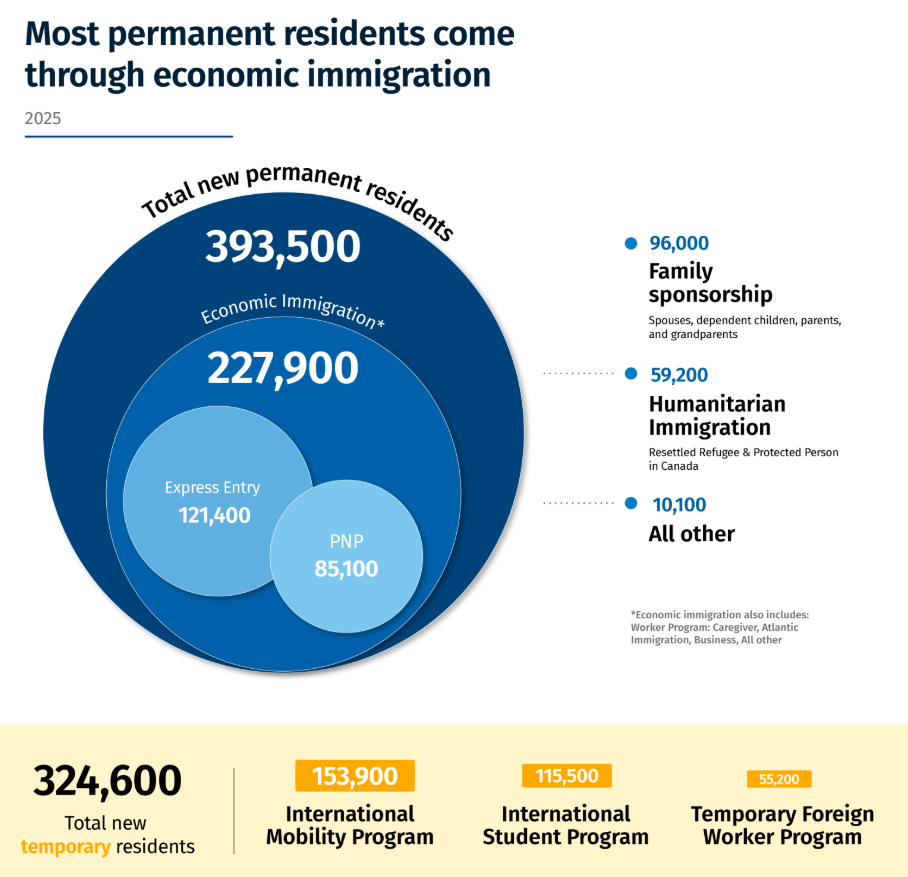
Express Entry and skills gaps
RBC's report identifies Express Entry, the federal points-based system, as central to the problem. Sub-categories added in 2022 allow lower-scoring applicants in targeted occupations to be admitted ahead of higher scorers, with the Canadian Experience Class now requiring "over 100 points more, on average, than it does through other categories."
This matters to HR teams because employers sponsoring candidates outside priority occupations may face longer waits, even as overall program standards have loosened, RBC found. The Express Entry cut-off score fell from the mid-400s before the pandemic to as low as 75 in 2021.
Provincial Nominee Programs, meanwhile, have grown to roughly 80 pathways nationally, RBC reports. Retention outcomes vary widely, from 39% in Prince Edward Island to about 94% in Ontario and Alberta for newcomers landing between 2010 and 2015 — a gap employers recruiting for regional roles should factor into retention planning.
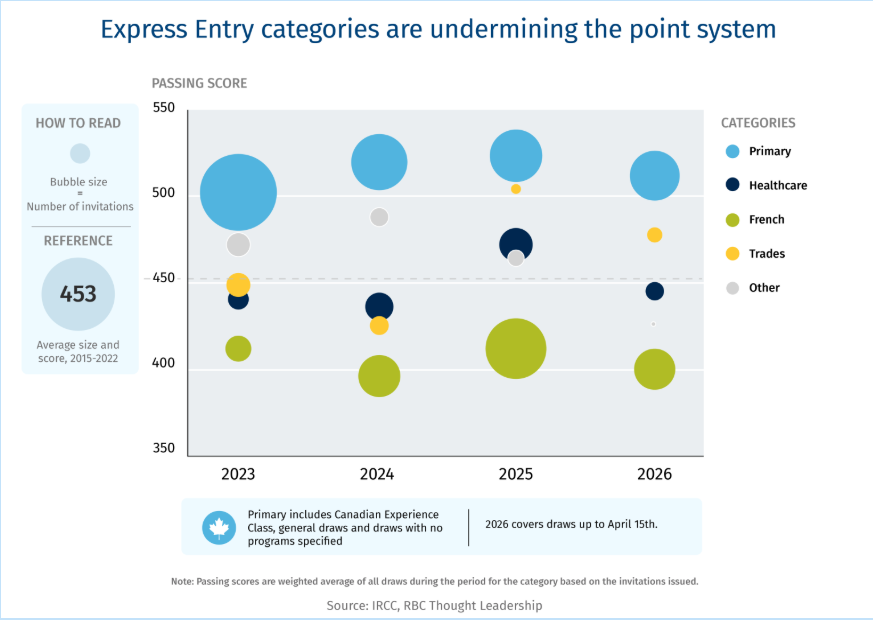
Data gaps and reecommendations
RBC's report also flags weak data as a barrier to policy stability. Canada's Longitudinal Immigration Database carries a two-year reporting lag, compared with three months in New Zealand, the report says.
A 2026 federal auditor general report cited in RBC's findings said Immigration, Refugees and Citizenship Canada "did not know whether students were leaving Canada after their permits expired," with departures confirmed for only about 40% of nearly 40,000 expired study permits.
RBC recommends a stable population growth target near 1%, restoring Express Entry's points-based focus, consolidating provincial categories, and advancing faster data reporting through the ePayroll project. Pichette's report frames these steps as necessary to restore Canada's reputation as a predictable destination for skilled workers — a reputation HR professionals depend on when making long-term international recruitment commitments.
Canadian HR professionals looking to strengthen their international recruitment strategy can draw on a growing body of research from thinktanks, government evaluators and employer coalitions that points to five concrete actions — summarized below with the data and sources behind each.
Canada could significantly expand its workforce by removing barriers that prevent internationally trained professionals from working in their fields, according to a previous report 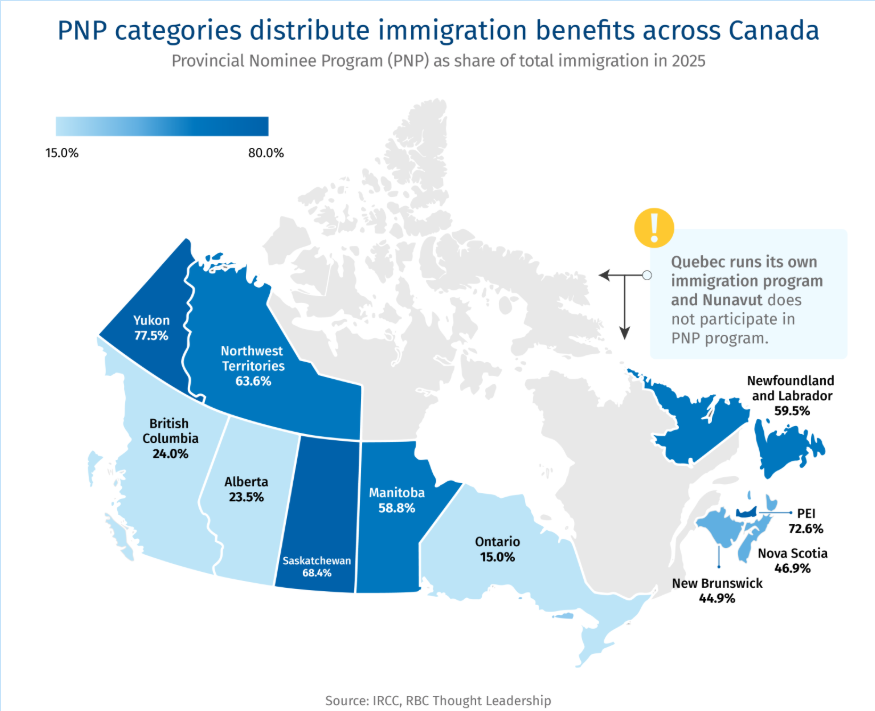 by the Institute for Canadian Citizenship (ICC).
Here's how HR can maximize the current immigration system, according to different sources:
|
# |
Instruction |
Supporting Data |
Source |
|
1 |
Prioritize candidates with strong Express Entry scores, especially those in the Canadian Experience Class, when sponsoring skilled workers |
The C.D. Howe Institute finds labour market gains since 2015 are "concentrated among highly educated immigrants," consistent with Express Entry's design; RBC reports Canadian Experience Class immigrants earned a median $92,100 after 10 years, versus $67,400 for economic immigrants overall |
C.D. Howe Institute, Canada's Immigration Gains Were Driven by Selection, April 16, 2026; RBC Thought Leadership, A Smarter Immigration Strategy, Sept. 1, 2026 |
|
2 |
Use Provincial Nominee Programs for regional skills shortages, but budget for retention support given uneven outcomes |
RBC reports five-year retention ranging from 39% in Prince Edward Island to about 94% in Ontario and Alberta; Signal49 Research finds one in five skilled immigrants leave Canada in the long term, with onward migration risk peaking around the five-year mark and highest among the most highly educated |
RBC Thought Leadership, A Smarter Immigration Strategy, Sept. 1, 2026; Signal49 Research, The Leaky Bucket 2025: Retention Trends in Highly Skilled Immigrants and In-Demand Occupations, Nov. 18, 2025 |
|
3 |
Invest in foreign credential recognition and bridging supports rather than defaulting to Canadian-experience requirements |
Signal49 Research estimated 844,000 Canadians were unemployed or underemployed due to unrecognized credentials, a shortfall worth up to $17 billion annually in lost earnings; a Vancity/Angus Reid survey found two-thirds of newcomers said their international credentials were "less respected than the Canadian equivalents" |
BC Chamber of Commerce, citing Signal49 Research (2015) and Vancity/Angus Reid Global survey, Expanding Foreign Professional Credential Recognition, 2023 |
|
4 |
Provide structured mentoring or onboarding support for newcomer professionals rather than leaving integration to chance |
Program evaluation found TRIEC Mentoring Partnership participants were 2.45 times more likely to secure good-quality employment within three months than non-participants, with 77% finding work in their field within six months, and a return of $10.50 for every $1 invested |
TRIEC, Demand for & Impact of Mentoring Newcomer Professionals (ALLIES-Accenture evaluation) |
|
5 |
Build hiring pipelines that can absorb continued policy volatility, rather than relying solely on temporary-resident streams |
RBC counts more than 25 rule changes affecting international students in roughly two years; Signal49 Research forecasts that slowing immigration will push employers to recruit more from the existing domestic labour pool as shortages drive wage growth "above the inflation rate" |
RBC Thought Leadership, A Smarter Immigration Strategy, Sept. 1, 2026; Signal49 Research, cited in The Globe and Mail, "Wages to increase as immigration slows, Conference Board says," 2025 |