‘These are high‑responsibility, well‑paid positions where you’d expect compensation practices to be more mature’

Women in Canadian tech leadership are earning substantially less than men, a disparity that experts say puts pressure on HR leaders to re‑examine how senior talent is paid, promoted and rewarded.
A 2026 salary survey by executive recruitment firm Artemis Canada reports that women in tech leadership roles earn about 78 cents for every dollar earned by men. Median base salary for male leaders was $194,500, compared with $152,000 for women, a gap of 22% before bonuses and equity are taken into account.
“These are high‑responsibility, well‑paid positions where you’d expect compensation practices to be more mature,” Artemis Canada notes in the report, arguing that the gap at senior levels reflects systemic issues rather than differences in experience or talent pipelines. The data are based on self‑reported responses from leaders across Canadian tech companies.
The pay gap is happening in the context of a sector that is both lucrative and male‑dominated. Drawing on recent census‑based analysis, the report notes that women represent only about 25% of tech workers in Canada, leaving the bulk of high salaries and equity opportunities in male hands.
The firm concludes that Canadian tech is “highly paid, disproportionately male, and still paying women less for the same kinds of roles.” It argues that anyone focused on closing wealth gaps in Canada “has to care about what happens inside tech,” given the sector’s outsized role in generating high incomes.
JobEase’s “Canada Salary Report 2025,” released in early 2026, estimates the national gender pay gap at 16.2% in 2025 and puts the tech sector’s gap at 18.2%, one of the widest across industries examined. The report warns that without targeted interventions, tech will remain among the sectors “where the gender pay gap is most pronounced.”
Canada is unlikely to reach gender pay parity without systemic change, according to an analysis of how women and men actually move through the job market. That is because Canadian women set significantly higher salary targets than men but still end up applying for lower‑paid roles, according to JobLeads.
Gaps by level, bonuses and equity
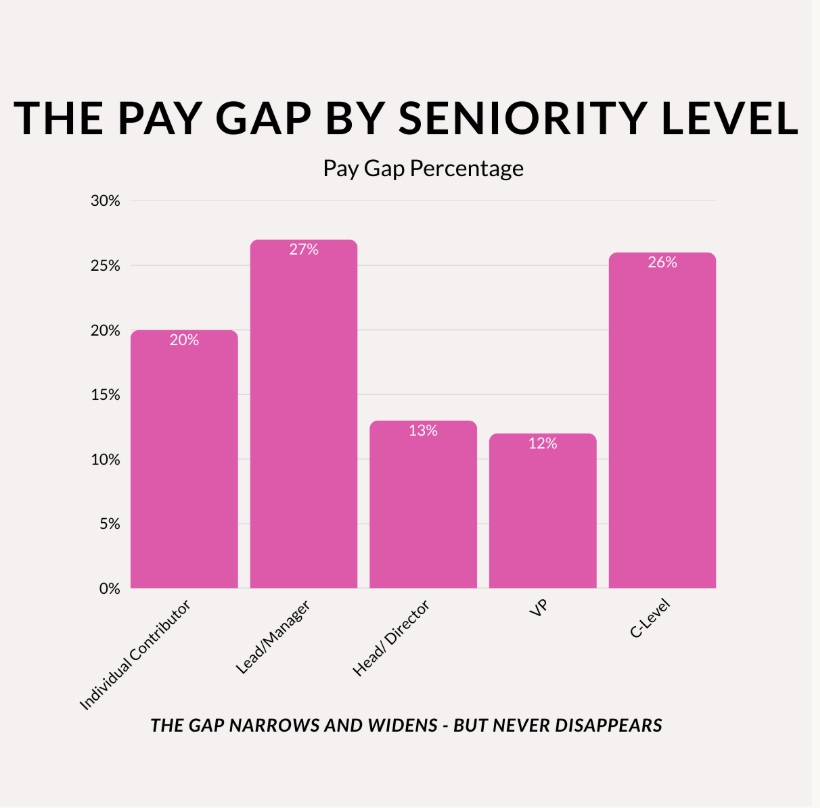
When Artemis Canada compared pay by seniority, the gender gap narrowed and widened across levels but did not disappear. The report cites approximate gaps of around 20% for individual contributors, 27% for leads and managers, 13% for heads and directors, 12% for vice‑presidents and 26% at the C‑suite.
“The exact numbers fluctuate, but one thing remains constant: the gap never hits zero,” the report states. Artemis Canada links this pattern to structural factors such as how organisations level roles, design compensation ranges, negotiate offers and make promotion decisions over time.
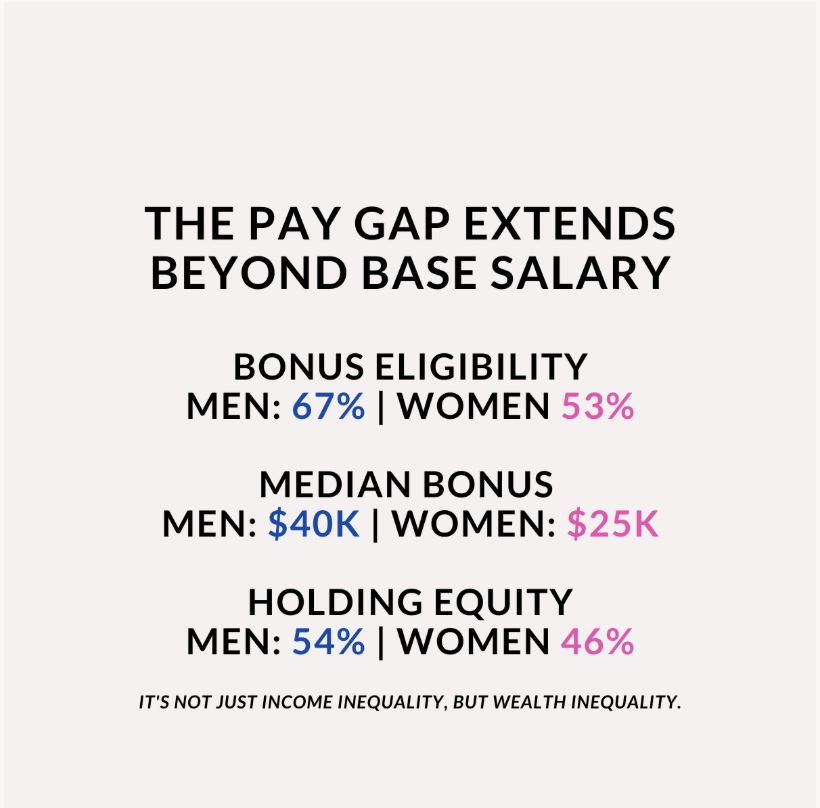
Variable pay and ownership also showed marked differences. Sixty‑seven per cent of male respondents reported receiving a bonus, compared with 53% of women, with median bonuses of $40,000 for men and $25,000 for women. Equity participation was reported by 54% of men and 46% of women.
The gender wage gap in Canada narrowed considerably over the past four decades, but full equality remains out of reach, according to data from Statistics Canada (StatCan) released in 2025.
Satisfaction, well‑being and calls for HR action
Despite the documented differences in base salary, bonuses and equity, men and women reported identical levels of satisfaction with their compensation. Artemis Canada describes this as a “surprising finding” and warns employers not to treat it as evidence of fairness, suggesting that expectations, limited visibility into peers’ pay and a tendency to normalise personal outcomes may help explain the result. “Satisfaction scores don’t absolve you of inequity; they simply show you can’t rely on self‑reported satisfaction as proof that your compensation practices are fair,” the report states.
On well‑being, 66% of both women and men reported healthy well‑being at home, but the figures diverged at work: 57% of men reported healthy well‑being compared with 52% of women.
“This isn’t about ‘women being less resilient’ or ‘wanting different things.’ It’s about the conditions we create in tech organisations,” Artemis Canada writes. The contrast between home and work well‑being points to workplace‑specific factors, such as culture and workload, that fall within HR’s remit.
Artemis Canada urges employers to respond with concrete measures, including auditing pay and promotion outcomes by gender at each level, reviewing bonus and equity eligibility and allocation, and increasing transparency around ranges and decision‑making criteria.
“Representation matters. But representation without compensation equity is not real progress,” the report notes, warning that women in leadership who are paid less, receive fewer or smaller bonuses and hold less equity are carrying equal responsibility with less financial security.
“We built this report… so leaders, founders, boards, and job‑seekers in Canadian tech can anchor their conversations in real numbers, not just narratives,” Artemis Canada says.
The firm concludes that leaders in Canadian tech, including HR professionals, sit closest to “the levers that can change this: salary bands, equity pools, hiring processes, promotion criteria, and the everyday decisions that shape who thrives at work.”
What is Canada doing to address the gender pay gap?
The Canadian federal government is tackling the gender pay gap on three main fronts in this report: legislation and transparency, data/measurement, and structural supports for women’s labour‑force participation.
Here’s what they are doing, according to the 2025 Sustainable Development Goals (SDG) annual report:
|
Area of action |
Key measures / details |
|
Strengthening pay‑equity law and pay‑gap reporting |
• In June 2024, the federal government brought two sets of regulations into force to advance the Pay Equity Act, designed to encourage employer compliance and clarify how the Act applies in ministers’ offices. • Under the Employment Equity Act, federally regulated private‑sector employers with 100+ employees must collect and report data that identify compensation and representation gaps affecting women, Indigenous Peoples, persons with disabilities and visible minorities. • In 2024, the government launched Equi’Vision, an online tool that publishes comparative pay‑gap and representation data for federally regulated private‑sector employers, making employer‑level gaps visible to the public, workers and investors. |
|
Tracking progress through a national gender wage indicator |
• The report uses Domestic Indicator 5.5.1 – the median hourly gender wage ratio – as one of its key SDG 5 (gender equality) metrics. |
|
Addressing structural drivers: unpaid care and child care |
• The SDG 5 section tracks Domestic Indicator 5.4.1 – time spent on unpaid domestic and care work – showing women still do substantially more unpaid work than men, especially in child‑rearing years. • As a concrete response, the federal government highlights its Canada‑wide Early Learning and Child Care (ELCC) system, aiming to create 250,000 new child‑care spaces by March 2026, with a “$10‑a‑day” affordability goal. • The report explicitly links unpaid child‑care responsibilities to barriers to women’s labour‑force participation and notes that women’s participation rates have risen alongside recent ELCC investments. |
Recently, the Alberta Federation of Labour (AFL) noted that Alberta “is the only province that has not adopted pay equity legislation, pay transparency legislation, or a pay equity negotiation framework.” That has resulted in the province having the worst gender pay gap in Canada.
The average gender wage gap for core‑age workers across Canada was 13% in 2024, while Alberta’s gap was 18% in 2024 and 17.4% in 2025, the group stated, citing data from Statistic Canada (StatCan). If the gap were eliminated, women in Alberta would earn about $7 more per hour on average, the AFL says.