Director General of newly-renamed division balances creativity, diversity, and accountability at Canadian public cultural institution
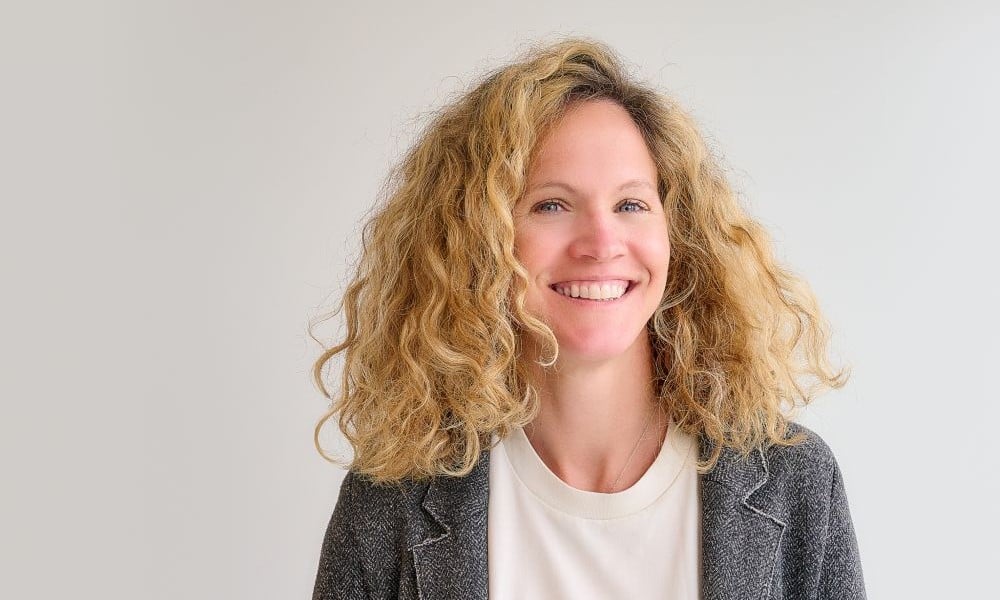
Cynthia Miller stepped into the role of Director General, People and Culture at the National Film Board of Canada (NFB) earlier this month, but her approach to leadership has been shaped over years in both the public service and creative environments.
Miller describes her philosophy as the product of many experiences rather than a single turning point. What connects them is a commitment to deep listening, genuine understanding and the willingness to adapt, she says. “Throughout different experiences and different roles, you see the value in how we can shape institutions when we truly listen and act,” Miller says.
One experience stands out other. In 2016, when Miller was the NFB’s Head of Human Resources and Labour Relations, she worked with colleagues and Indigenous advisers on the NFB’s Indigenous Action Plan for 2017–2020. The process underscored how easy it is for organizations to believe they understand communities and commitments without having the full picture, she says.
“That work was really kind of an awakening in terms of you can listen, but sometimes you just don’t understand,” she says. “There are keys sometimes that you don’t have access to, and until you do, it is hard to take the right path.”
This experience reinforced Miller’s model of listening and understanding that she’s taken with her, she says. “It really resounded with me and it has followed me through my career in terms of saying, ‘I really need to make sure I understand and, if I don't, that I have the colleagues and the resources to be able to make this work and adapt the organization,” she says.
Staying connected to a fast‑shifting ecosystem
That insight now underpins how Miller views people and culture at a federal cultural agency that is also a creative producer and distributor.
She stresses that HR leaders can’t limit their focus to policies, processes, and internal dynamics. At the NFB, the environment around the organization — from the audiovisual industry to the labour market and public policy — is shifting too quickly for that.
“If we were talking about five years ago what the labour market was to today, it is completely different,” she says. “Technology, AI, the government changes, whoever’s in government — all of these things mean you always need to be agile, because even if it’s outside, it influences our industry and our staff.”
That agility is complicated by what she calls the NFB’s duality — a federally funded agency subject to strict frameworks that must still move with the speed and creativity of a production house.
“We’re a producer, we need to act quickly, and we have to be creative, but at the same time we’re constrained by many, many laws,” she says.
From program owner to shared stewardship of EDI
The NFB’s strategic plan puts organizational culture, talent development, and equity, diversity, inclusion and accessibility (EDIA) at the centre of its future. For Miller, that means redefining HR as a facilitator and steward rather than the sole owner of people programs.
“It’s not about trying to develop the best program with HR practices, but what’s needed in each of our sectors to make sure that we’re helping,” she says.
She points to Commissioner Suzanne Guèvremont’s position on EDIA as emblematic of that shift. When the NFB was preparing to hire a senior advisor for EDIA, Guèvremont was clear about the role’s purpose.
“She was saying EDI is everywhere and it’s not HR, like this person is going to help support the rest of the organization,” Miller says. “For her, the focus was that everybody needs to own this — it's hard to do that shift for managers and even HR to make sure that we're there to facilitate, but the ownership is within each team.”
With about 350 employees across offices from Vancouver to Halifax — including micro‑offices and the head office in Montreal — that shared ownership has to be grounded in local realities, according to Miller. “We ask managers, in your sector, what is the most relevant action to take next year,” she says. “You need overarching initiatives, but you also need to make sure those commitments show up in daily practices.”
Aligning people, creators and audiences
One of the NFB’s priorities, as stated in its strategic plan, is to prepare the organization for a more youthful and diverse Canada, with particular attention to Indigenous and under‑represented voices. For Miller, people strategy is inseparable from that creative mandate. “For us, this priority goes beyond just our workforce,” she says. “It is about ensuring alignment between our people, our creators and the audiences that we serve.”
On the recruitment front, HR is more intentional about where and how it posts roles to reach broader and more diverse pools of talent that reflect Canada today, according to Miller. She says that internally, the team is focused on development — putting in place programs that support growth and leadership opportunities for diverse staff and help remove blind spots from selection processes.
Creating safe conditions for creative risk
The NFB has an 85‑year history of experimentation, from pioneering IMAX to launching a free streaming platform on the NFB’s website, and Miller is clear that her role as a people leader is to protect that spirit, not to narrow it, and create the conditions that allow creativity to flourish safely.
“One of the greatest assets the NFB has is the passion of its people,” she says. “For many of them, working at the NFB is a culmination of their studies and where they wanted to reach in the film industry, and that sense of purpose really fuels creativity and innovation.”
Those conditions extend to the creators, directors and film crews who aren’t employees but are essential to the organization’s mission, says Miller. “Without them, we can’t create what we are creating,” she says. “We need to make sure that they know they will be paid and we negotiate good working conditions for them.”
Embedding commitments in everyday practice
For Miller, making commitments around ESG, reconciliation, Indigenous narrative sovereignty, and EDIA real begins with having the right people in key roles. “If you want to make these commitments live, we need to have the right leaders to really carry them forward in a meaningful way,” she says.
She says that the NFB is working with an Indigenous executive search firm to recruit a Director General of Indigenous Programming and Strategy — a role designed to help advance reconciliation and Indigenous narrative sovereignty in an authentic way.
Beyond structure, Miller highlights the importance of employee voice. She says an employee council, selected to reflect the full breadth of the NFB across region, ethnicity, position and department, reviews new policies and directives before they are finalized, while a champion committee of managers adds another perspective.
“Ultimately, to build trust and have employees engaged, they need to see things happening on a day‑to‑day basis,” she says.
From HR to people and culture
Miller’s recent appointment to the General Director role coincided with a renaming of her division from Human Resources and Institutional Services to People and Culture — a change she had been considering for some time. Her portfolio extends beyond traditional HR to include accommodations, material resources, security, official languages, EDI, and organizational development, so she says she wanted a title that reflected how those levers combine to shape everyday experience.
“I wanted to find language that was simple and clean, that resonated, and was holistic,” she says. “When you think of culture, it’s not just shaped by leadership or values — It’s really influenced by everything.”
Back to fundamentals in a fast‑changing world
Looking ahead, Miller believes HR leadership will be defined less by new language and more by mastery of the basics in a complex environment. “There is always the word strategic, but how much more strategic can you be?” she says. “How I'm seeing it is that we kind of have to take, not a step back, but go back to some basics — to take a sports analogy, get your fundamentals right and then you'll be able to play the best game without thinking.”
With change accelerating, Miller believes HR teams need time and discipline to clean up and fine‑tune core processes so they can support true organizational design and workforce planning. “Systems thinking is important to be able to really link when we are thinking about AI, so that we're able to think more strategically and workforce plan organizational design and transformation,” she says, noting the NFB’s innovation lab as a partner in exploring how technology can free up human skills to advance the strategic plan.
“HR leadership is really about agility,” Miller says. “Things are shifting so fast that we need to always think in terms of skills and make sure that our staff are able to pivot quickly.”