Executive Vice President Corporate Services explains how tying culture to compensation – and benchmarking inclusion – drives HR results
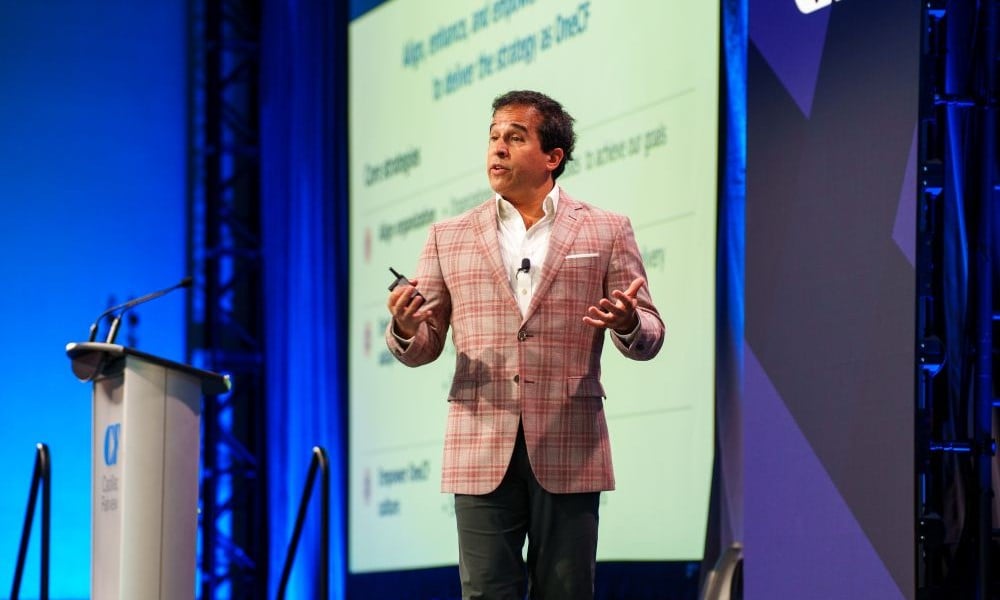
Employees who report feeling included are 30 times more likely to be engaged, according to internal data of Cadillac Fairview (CF). The company measures this kind of data as part of its philosophy of people strategy as a key pillar of its business, according to Norm Sabapathy, Executive Vice President of Corporate Services at CF in Toronto.
When Sabapathy joined CF in 2013, he says much of the organization’s people function was outsourced to consultants who had built programs that were expensive, fragmented, and difficult to measure. Leadership believed the work was happening, but much of it wasn’t, according to Sabapathy.
“There were some good things happening here for sure, but one of the reasons that I was attracted to this business and they were attracted to me joining was that I was going to bring a different approach to talent, people, culture, and capability,” says Sabapathy.
What followed has positioned CF – one of North America's largest owners, operators, investors, and developers of real estate, with a portfolio valued at approximately $28 billion, according to the company – as a distinctive example of people strategy embedded at the core of a Canadian enterprise. Sabapathy has led that shift for over a decade.
People and culture as a pillar of business strategy
Many organizations treat people and culture as a function that supports the work rather than co-determines it. Cadillac Fairview went further, says Sabapathy.
"We evolved the people and culture side of what we do from being a strategic enabler, which it is in most companies, to actually being a pillar of our business strategy," he says. "We have three pillars of our business strategy, and one of them is called culture and capabilities."
That designation has been embedded in the organization, surviving multiple refreshes of CF's broader strategic plan even as the other pillars changed. It operates under a simple internal mantra: live purpose and act on values, and it’s been a collective effort to get there, says Sabapathy.
The contrast with wider industry practice is notable. Principal Connections’ report HR Directors Consensus 2026 found that while 70 per cent of organizations view HR as a strategic partner, only 25 per cent consider it central to enterprise strategy – an influence paradox means that Canadian CHROs are trying to resolve.
People and culture data, incentives
Elevating people strategy on paper is straightforward, but sustaining it over nearly a decade of leadership cycles requires executive and board alignment, as well as measurement with real consequences for leaders in the organization, says Sabapathy.
"Everyone in our organization who’s eligible for short-term and long-term incentives, a component of that is tied to some aspect of people and culture," Sabapathy says. "Many companies measure lots of things, but we actually tie those measurements to short and long-term compensation right up to the CEO – not only do we say it's important strategically, we tie them to people's compensation, so that really helps to make it stick."
Whether at a performance review, talent discussion, or succession planning conversation, employees at CF are evaluated on two dimensions: what they accomplished, and how they accomplished it, says Sabapathy.
"It just reinforces throughout the whole people cycle from hiring to offboarding people, that how you do things and what you accomplish, those two things are really important and we're going to pay attention to those," he says.
Before any of this could take hold, Sabapathy needed a clear picture of what was actually happening. When he arrived in 2013, he launched a "people tour" – speaking one-to-one with every senior leader and reaching approximately 75 per cent of the broader organization in smaller groups over a three-month period, he says. That grounded intelligence shaped the measurement agenda that eventually became embedded in CF’s strategic scorecard.
An expanded portfolio – and what it signals for HR leadership
The current scope of Sabapathy's role reaches well beyond a conventional people function, as his title may indicate. He says he oversees human resources, communications, public relations, brand management, philanthropy, and data and technology – a combination that reflects a deliberate view of how enabling functions should relate to one another.
"I'm not a technology expert, but I have oversight of our technology and our artificial intelligence rollout and adoption in the company," says Sabapathy. "And where I can be helpful is connecting the dots between enabling functions and the strategy of the company in a practical way."
The logic is that people, process, and technology can interact continuously, he says, adding that brand management fits the same framework. "Brands are built from the inside out," Sabapathy says, which is why communications, philanthropy, and reputation management now sit under the same roof as people strategy. He predicts the model will become more common as AI reshapes how organizations integrate those functions.
The key finding about inclusion
The most striking data to emerge from CF’s measurement work involves the link between inclusion and engagement, according to Sabapathy. The data linking inclusion to a large increase in engagement was found in June 2026, with what Sabapathy calls "data intersectionality" – examining representation, engagement, employee experience, and inclusion together rather than reviewing each indicator in isolation.
"There aren’t too many things that HR is doing where if you can move the needle here, you get a 30-times return over there," he says.
At a time when global employee engagement has declined to its lowest level since 2020, according to Gallup's 2026 State of the Global Workplace report, CF’s results are significant. Sabapathy says it’s the result of disciplined integration rather than isolated programs, and the company has met its goal to reach the global top quartile for diversity, equity, and inclusion.
The lesson Sabapathy draws from more than 25 years of senior people leadership comes back to the same principle – how CHROs can convert peak influence into genuine staying power.
"I figure my role generally is to maximize the effectiveness of people to deliver business results," he says. "So if I've learned something, it's to focus on that rather than focus on how many great things can I implement."