Six in 10 employed Canadians are also caregivers – and the cost is already showing up, according to HRFest Canada panellist
Caregiving is already reshaping Canadian workplaces, showing up in attendance records, performance reviews, and exit interviews. What many employers have yet to recognize is that the data is already there. They just don't know how to read it.
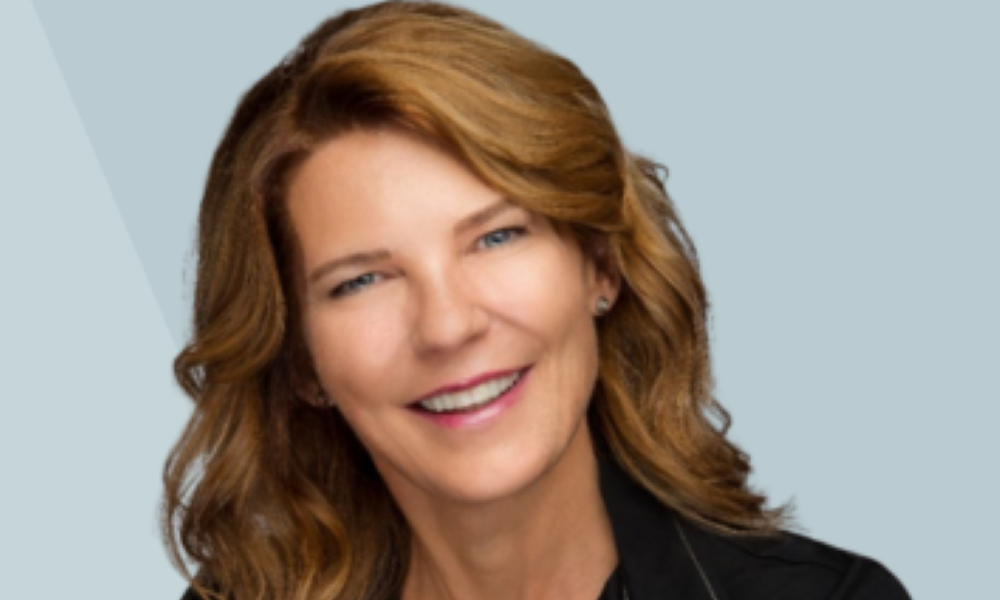
That’s the message Krista Skalde, Operating Partner and Chief Talent Officer at Inovia Capital in Toronto, will bring to HRFest Canada 2026 on Nov. 10 and 11, where she joins a panel for a session titled "The Caregiving Crunch: The Quiet Workforce Crisis Hitting Canadian Employers." The session – which is part of the Vault program that aims to be sharp, specific, and built for practitioners who want the real story – is designed to move the conversation past awareness and toward practical action, according to Skalde.
The scale of the issue is significant. A national survey by the Canadian Centre for Caregiving Excellence, Caring in Canada 2026, found that almost six in 10 caregiving Canadians are working and also providing care, averaging 5.1 hours of caregiving per day on top of their paid work – the equivalent of 36 extra hours every week. Caregivers are twice as likely to fall ill as their non-caregiving colleagues, and they spend an average of $1,000 per month out of pocket on care-related expenses – a financial pressure layered on top of an already high cost of living.
Despite those numbers, most employers continue to treat this as a personal matter rather than a people management issue, which will have a cost such as disengagement, absenteeism, and workforce exits, says Skalde.
“If you think about it, they're doing their caregiving on top of their jobs, and in environments where they have small children, take them to kindergarten and you're in that germ fest, right?” she says. “So they're exposed to a lot more and all of a sudden that’s impacting productivity – if their mental or physical well-being is suffering, that's also impacting productivity.”
Why the conversation has taken this long
Skalde believes that the onus is partly being placed on employers due to a lack of governmental support for caregiving needs.
"I’m starting to feel like there's a lot of things that are being passed on to companies because we don't have the infrastructure in place at the federal or provincial levels to really truly manage these," says Skalde. “None of us, and that includes government, have been prepared for the caregiving crisis and the aging population crisis that was in front of us, and what we needed to put in place years ago to account for where we are now.”
The result has been a gradual transfer of responsibility to employers who were neither funded nor designed to absorb it, according to Skalde. She believes a genuine response requires collaboration between government, employers, and health benefits providers. "It’s going to cost more in healthcare as people burn out from these two roles that they're being asked to play," she says.
Flexible personal leave
Flexible personal leave is the intervention Skalde considers most immediately within HR's reach – one that typically requires only leadership team approval rather than a full benefits redesign.
She says the shift involves reframing sick leave as personal leave: broader in scope, explicit in purpose, and less demanding of documentation for short absences. Requiring proof for brief caregiving-related absences undermines the trust that a thoughtful leave policy is meant to build, she says.
"As soon as someone feels like they have to justify, 'I'm going to take my mother to doctor's appointments today,' and need some kind of proof to call it a sick day or a personal leave day, you're entering into that employer-employee trust,” says Skalde. “That just doesn't make sense."
Benefits and employee resource groups
Lifestyle spending accounts (LSAs) – introduced during the COVID-19 pandemic as wellbeing supplements – are increasingly being extended to cover elder care costs and family-related expenses, according to Skalde. Many smaller Canadian employers can’t negotiate flexible group benefits plans with major insurers, whose underwriting models don't accommodate smaller employee populations, so an LSA provides targeted financial flexibility within those constraints, she says.
Skalde also points to employee resource groups (ERGs) focused on caregiving that are gaining traction. She describes one large organization that has established separate ERGs – one for elder care, one for extended family care – recognizing the distinct nature of each experience. She notes the approach also reaches a long-overlooked group: employees caring for children with disabilities or chronic conditions, who have historically navigated these challenges without formal workplace support.
Remote work flexibility rounds out the toolkit. Even organizations with firm return-to-office policies have typically created room for discretion. Skalde points to her own example – working remotely from her mother's retirement residence – as one of her most productive days of the working week. “I will go down there, I get to have lunch with her, and she's happy,” she says. “She takes a lot of naps, and it's the quietest place to get work done.”
Those building the internal business case to shape their benefits strategy can start with workforce signals and data already at hand, says Skalde. Anonymized benefits renewal reports can surface patterns – elevated medication claims, high short-term sick leave, unusual paramedical usage – pointing to a caregiving load employees may not have named aloud. Skalde also flags a provision many employees may not know exists. "There's a line item called ‘social worker’ in the paramedical bucket in all benefits plans, and all providers have a certain amount, a maximum amount per year, that employees can use," she says. "But I don't think anyone really knows what that's for."
The workplace cost of employee caregiving duties
The competitive gap between employers who act on caregiving and those who wait is already opening. Gallagher's 2026 Enterprise Workforce Well-Being Report found that more than half of employees are now actively seeking caregiving support from their employers – a figure that points directly to what organizations stand to lose in talent attraction and retention when candidates are increasingly prioritizing benefits over salary.
"If they're not even having the conversation about it, it will impact their ability to attract and retain talent," Skalde says.
She also points to a subtler risk: the employee who stays, but disengages. "People stay, but they're not necessarily going to be as productive. They're just going to be mailing it in," she says – a dynamic she describes as "job hugging." Disengagement is difficult to measure until its cost has already been absorbed, she says.
Skalde’s advice to employers who haven't started is straightforward: go for the low-hanging fruit. Review your personal leave policy and make caregiving an explicitly named reason for leave. Challenge your benefits provider during annual renewals. And investigate the social worker provision already embedded in most paramedical plans that employees simply don't know to ask for.
"Take a look at what are the easy things, shifts that can be made," she says. "I also don't think we've spent enough time challenging the benefits providers around some of those buckets, especially in the paramedical gap."
The HRFest Canada 2026 full agenda details, including the caregiving session, are available at the HRFest Canada 2026 event website. Registration is open now.