A strong core with layered flexibility beats a different program for each generation, say senior HR leaders
Canadian workplaces now routinely span four generations simultaneously – Baby Boomers, Generation X, Millennials, and Generation Z – each with different health needs, financial priorities, and expectations of their employer. The instinct may be to build a different benefits program for each cohort, but that leads organizations in exactly the wrong direction, say two senior HR leaders.
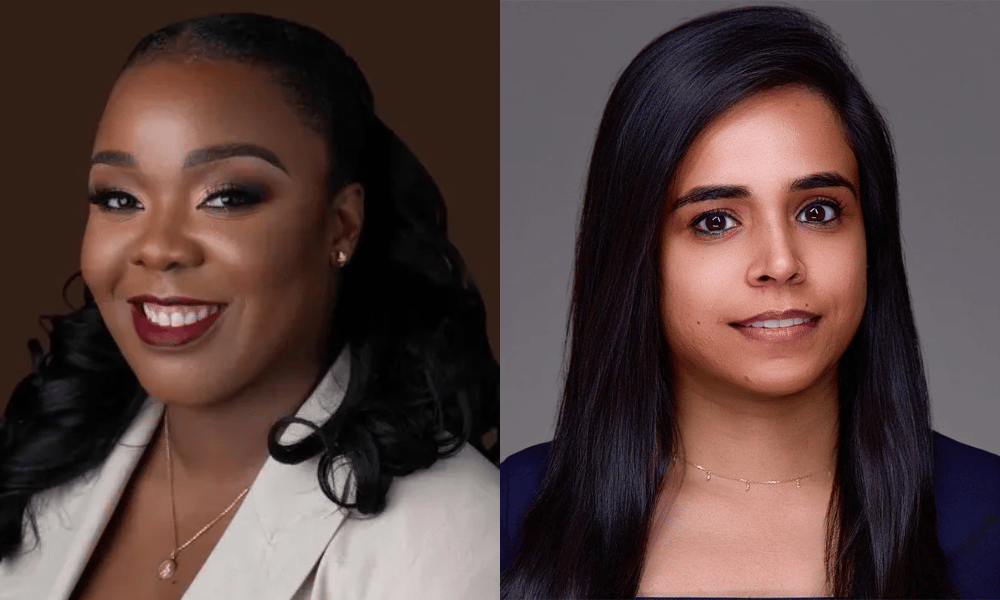
The answer is not more programs – it is a stronger core plan with smarter flexibility layered on top, anchored to employee feedback rather than the nearest industry benchmark, according to Isioma Coker, Human Resources Director at SaskTel in Regina, Sask., and Aman Malhi, Director of People and Culture at Refrigerative Supply Limited (RSL) in Burnaby, B.C.
Build a strong core first, then layer flexibility on top
Coker says her team's approach to managing benefits across a multigenerational workplace starts with a discipline most HR teams find counterintuitive: leaving what works alone.
"If we find a benefit, we've created it, we know that it's good, and we know that our employees like it, we leave that one alone," says Coker. "So, if we know that we've got the pension puzzle fixed out, we're not trying to go back at it to tweak it. We're now focused on the other parts."
Freeing up attention this way allows the team to direct energy toward the parts of the plan that still need work, she says, adding that flexibility is introduced as a layer on top of that stable core. At SaskTel, the health spending account carries that function – giving employees the ability to direct funds toward what matters most at their current life stage without requiring a fundamentally different plan for each generation.
"While we may not necessarily be able to do a lot to our health plan, we have a health spending account, and so you use your health spending account to be able to offer more flexibility to people,” says Coker. “It's really thinking strategically through what sort of offerings allow you to introduce flexibility, so that people can then choose what options are relevant to them depending on what stage they are in their lives, and where you then find a sweet spot where everyone's happy."
The core comes first, and flexibility follows only once it is solid, says Malhi. "Once you have a strong core offering, I think then introducing flexibility makes sense."
Let employee feedback lead – not the benchmark
The growth of flexible benefits and health spending accounts across Canadian workplaces has introduced new design decisions for HR teams to navigate. Those decisions should be driven by what employees are actually saying, not by what competitors are doing, according to Malhi.
"Just following a benchmark blindly, I think, is where a department, any department, might actually fail to be strategic," she says. “If you really want to make an impact, I think it has to be looked at from a holistic point of view.”
Malhi describes how RSL's pension matching was redesigned based on exactly that principle. The original plan offered a fixed employer contribution regardless of what an employee wanted to put in. The feedback, over time, led to the realization that some flexibility was in order, she says.
"Over the years, employee feedback was we would like to have a range [for the employer contribution]," says Malhi. "’We would love to see one-to-six or one-to-seven, so we can pick a number that works best for us’ – we would have never even looked at it if it wasn't from the employee feedback that we received."
The change required no new coverage and no additional budget, but it made the same underlying benefit feel meaningfully different to employees at different career stages, according to Malhi.
HOOP’s 2026 Canadian Retirement Survey on pension priorities by generation found that nine in 10 Canadians would choose to pay nine per cent of their salary into a defined benefit plan in exchange for a secure lifetime income in retirement.
Benefits as part of the employee value proposition
Both leaders agree that building a benefits strategy that attracts and retains multi-generational talent requires a frame broader than benefits design alone. For Coker, the benefits plan cannot be built in isolation from the organization's employee value proposition (EVP) and its long-term talent direction.
"In addition to your EVP, what's the talent that you're trying to attract? Where are you trying to go long-term?” says Coker. “It's also future-looking in terms of what kind of organization are you wanting to be, what kind of people are you trying to attract, and what type of people are you trying to retain within your organization? And then design with that holistic view in mind, which should of course tie to your EVP."
Geography shapes that answer differently depending on where the organization operates. Labour markets in different provinces and cities carry different employee expectations – and a benefits offering that positions an employer strongly in one market may be unremarkable in another, says Coker.
Same plan, different conversations
Malhi says the starting point for the design question is consistent: begin with the people currently in the organization, and listen to what they are saying.
"I think it has to be based on the employee feedback, and it also has to be looked at as a part of the whole total compensation package rather than just in isolation," she says.
The design challenge in a four-generation workforce, as younger workers make up a growing segment, according to Statistics Canada’s employment data by age group, is not complexity. It is clarity – about the core that holds the plan together, the flexibility that makes it personally meaningful, and the conversations that connect both to the people who rely on them. And that comes through adopting different approaches in communication for each generation in the workforce, says Malhi.
“In addition to having flexibility built on a strong core, communication is the missing piece –you have to tweak it based on who you're talking to and make sure it appeals to them in their situation,” she says.