VP Total Rewards, HR Operations and Effectiveness on total rewards design for a younger generation and why the people equation never changes
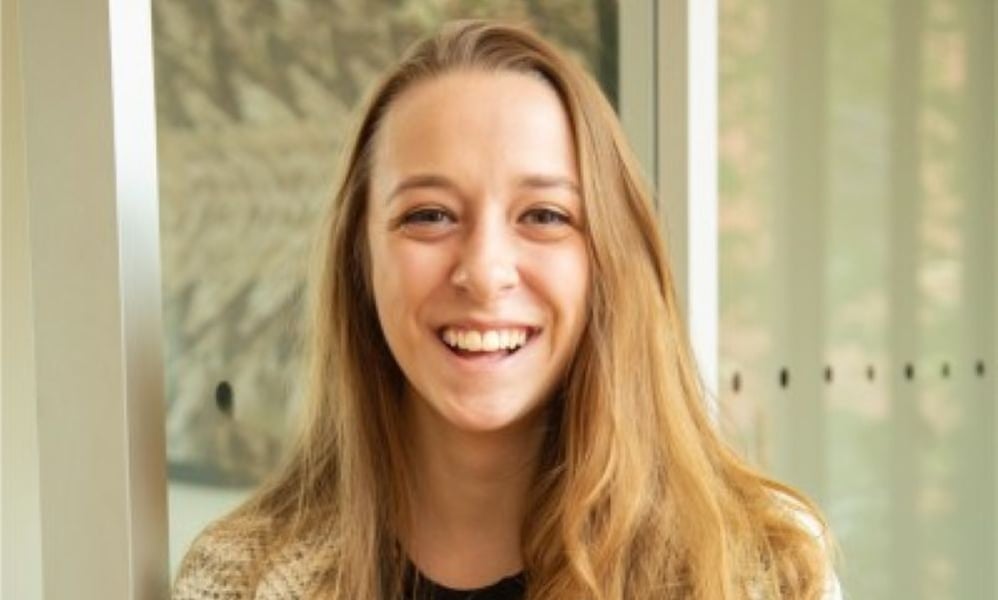
The conversation about total rewards begins not with compensation benchmarks but with a single question: what does this workforce actually need right now, according to Tessa Deschenes, Vice President of Total Rewards, HR Operations and Effectiveness at dentsu Canada in Montreal.
It is a deceptively basic starting point. But at dentsu Canada – the Canadian arm of one of the world's largest global advertising and marketing networks, with offices in Toronto, Vancouver, Calgary, and Montreal – the average employee age sits between 32 and 35, says Deschenes, so that question leads to some unconventional answers. Including, as it turns out, selling a registered retirement savings plan (RRSP) not as a retirement account, but as a pathway to homeownership.
"I'm not going to sell it as a retirement program," Deschenes says. "I'm mostly going to sell it as a first-time home buyer program."
Designing for who's actually in the workforce
The logic is generational, according to Deschenes, who spoke with HRD Canada at HRFest Canada 2026. When a workforce skews toward its early thirties, financial priorities look different from those of an older cohort. Maternal and parental leave top-ups become central, not supplemental, and healthcare spending accounts – even modest ones – carry real weight for professionals navigating their first years in a full-time role, she says.
"A $200 healthcare spending account may seem like little for some people, but actually it's going to change a lot of people's lives if they're on their first job," Deschenes says. "And the cost of it is not significant for the employer, so I think we just have to rethink how we think about total rewards and not just focus on compensation and what are we delivering on."
The principle Deschenes says underpins her approach is that total rewards design cannot happen in the abstract. It must follow the demographic reality of the workforce it serves – if an organization's average employee age is 60, the right benefits package looks fundamentally different from one built for a 35-year-old, she says. As HR and total rewards leaders face mounting disruption pressures across the industry, Deschenes argues the solution lies not in adding complexity but in asking more precise questions about who, exactly, is in the room.
Pay transparency: a long-overdue leveller
One development Deschenes welcomes without reservation is the spread of pay transparency legislation across Canada. British Columbia has required salary disclosure in public job postings since November 2023. Ontario followed on Jan. 1, 2026, with new job posting rules requiring employers with 25 or more employees to include a salary or wage range in publicly advertised roles. Quebec – where Deschenes is based – does not yet have equivalent requirements in force.
"I love the pay transparency," she says. "When you're applying for a role, a VP of one place can be a different salary for another place. So I think that was the best evolution, to be honest."
Deschenes says pay transparency forces a discipline around compensation architecture that benefits candidates and employers alike. Undisclosed salary ranges breed inconsistency and erode candidate trust, while disclosed ones encourage attention to detail, she says.
AI as task-shifter, not job eliminator
Deschenes is optimistic about the AI disruption now reshaping HR functions across Canada – though not because she thinks its impact will be minor. She believes the conversation should be framed differently.
"Instead of focusing on the role, we have to focus on the task that people are doing," she says. "Some things will always need a human – other things we might not just as much, but I think it's just going to transfer the role instead of eliminating 100 per cent of the role."
She draws a direct parallel to earlier waves of workplace technology, such as the computerization of the 1980s and the digital revolution of the early 2000s. Each time, she says, HR's core mandate was not eliminated. It was redirected. As new evidence underscores why AI across the employee lifecycle demands strategy rather than just tools, Deschenes places the emphasis firmly on the human judgment required to accompany any technological shift.
“People are scared, which to be fair, we should all be scared, but I honestly don't think that it's going to be much different than when we had other technology come in,” she says. “Everyone's roles just evolved and changed.”
Deschenes adds that much of the uncertainty around AI is fear of the unknown and she points out that no one is fully an expert because it’s still brand new. "So when we're hiring for AI, these people have, what, a year or two? And they're also kind of figuring it out," she says.
What technology cannot replicate, in her view, is the emotional and relational dimension of people management. "AI doesn't really have emotions, and we work with people,” says Deschenes. “Whether we were in the '80s, '90s, 2000s, it's the people – back then we had to rethink the rules as well… but every single time we also come back to the source, which is how can we make it better for the employees."
HR's enduring obligation
As transformation continues to reshape people strategy across Canada, Deschenes is firm about where HR's obligations ultimately lie. Technology and economic pressures will continue to generate difficult messages – restructurings, role changes, workforce transformations – and HR will, as always, be the function responsible for delivering them, she says.
The challenge is resisting the temptation to optimize for HR's own operational convenience rather than for employee experience, according to Deschenes.
"Yes, we work for the company, but we work for the people," she says. "Instead of trying to always make our lives easier, we have to see from an employee experience what is the best way for them to experience it."
It is a posture that will make HR's job harder before it makes it easier, but Deschenes says she accepts the trade-off.
"I think this is an exciting time," she says. "I think it's scary, but I really see it as an opportunity – we just have to be there for everyone and we have to help support them, but also we don't have the answers."