Workers are turning to outside AI tools as employer training and oversight fail to keep pace
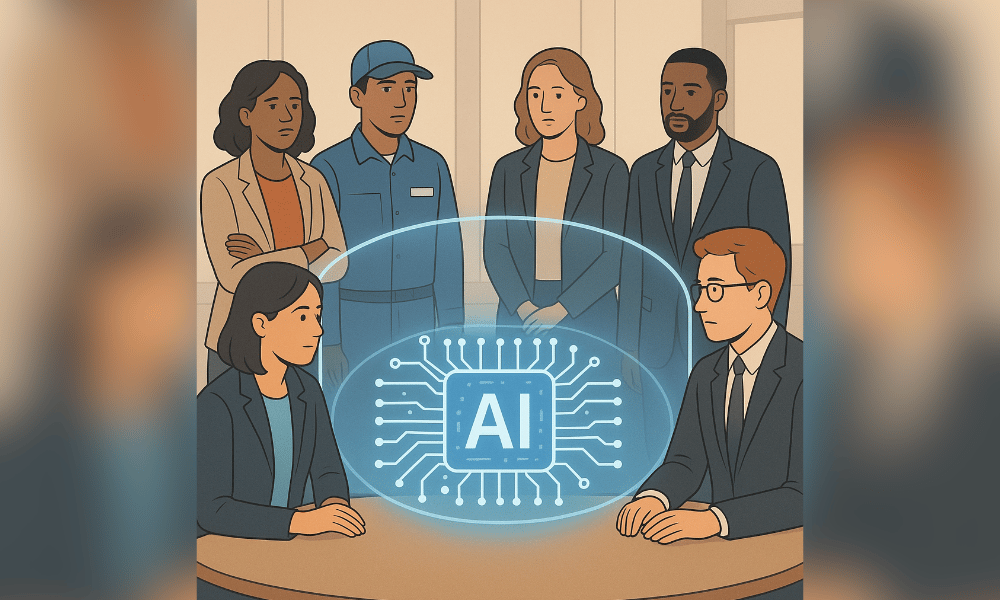
Forty-one percent of workers say their employer has given them no tools, training or guidance for using artificial intelligence on the job. That's according to a new survey from career platform Resume Now. Most of those workers are not waiting for direction. They are finding and adopting AI tools on their own, a pattern researchers have labeled "bring your own AI," or BYOAI.
The survey of 1,020 employees, conducted using Pollfish in May 2026, found 76% used personally sourced AI tools for work. Only 21% said their employer has given them clear AI guidelines tailored to their specific role. The remaining majority have no role-specific direction, the survey found.
More than half of workers, 52%, say their employer supplies no AI tools at all or only free, publicly available ones, the survey found. Just 19% report receiving comprehensive training with dedicated time and resources to build AI skills. Without that structure, the report concluded, responsibility for learning to use AI safely shifts from the organization to individual employees.
Sensitive data flows into unapproved tools
Separate research commissioned by identity firm Okta found related risks tied to unapproved AI use. More than half of businesses had an AI-related security incident or close call in the past year. Most executives voiced confidence in their own oversight despite that, the research found.
Harish Peri, senior vice president and general manager for AI security at Okta, said 52% of workers use AI tools their employer hasn't approved. He said many of those workers had also shared confidential business records with outside systems. In some cases, Peri said, that included employee data.
“Security and compliance teams can’t govern the usage of AI tools they don’t know are being used. Organisations must implement an effective AI governance framework that prioritizes identity-centric controls, automated discovery, and secure sandboxes to test drive AI tools safely,” noted Peri.
A separate 2026 survey of office professionals by Wakefield Research for PagerDuty found 43% had entered work correspondence into public AI tools outside company systems. Roughly a third had shared customer or financial data with those same tools, the survey found.
HR often left out of AI governance
SHRM's 2026 research examined which functions lead AI governance inside organisations. It found legal and compliance teams primarily lead AI governance, while HR functions are involved less often. Over half of organizations, 52%, do not involve HR directly or collaboratively in their overall AI strategy, the report found. 57% of HR professionals working in states with AI employment laws said they were not aware those laws existed.
Peri said outright bans on AI tools tend to backfire, driving employee use further out of view rather than stopping it. SHRM has called on Congress to create a single national framework for workplace AI rules in place of a state-by-state patchwork. The group is also pushing for greater investment in workforce training.