Less than 9% of federal payments now issued by paper cheque, but more than 10 million remain uncashed over past 4 years
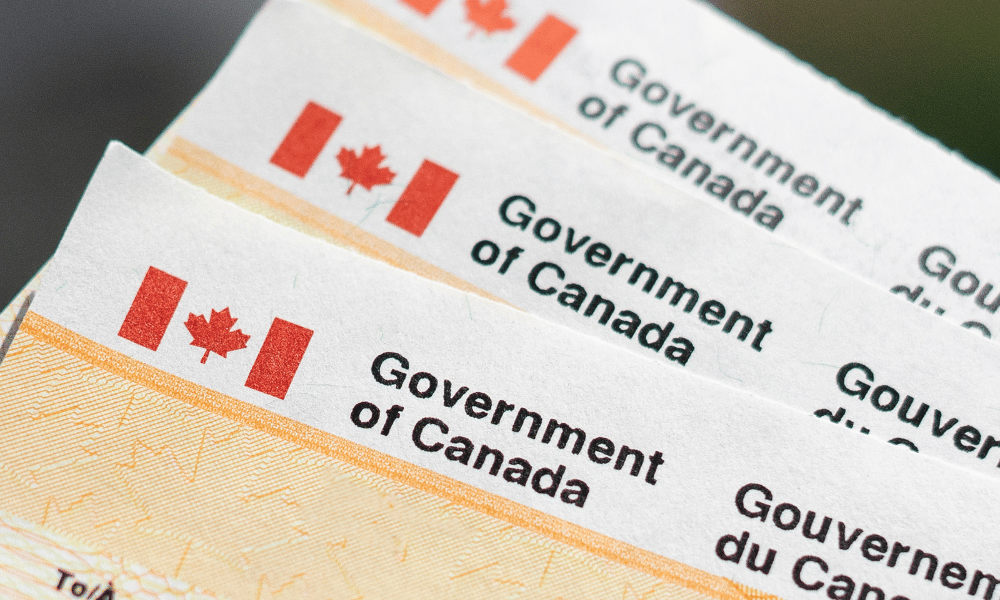
Canadians have left more than $2 billion in federal payments unclaimed over the past four years, according to the federal goverment.
Documents recently tabled in Parliament show roughly 3.9 million federal paper cheques issued in the last four fiscal years were never deposited, totalling about $2.16 billion in unpaid tax refunds, pensions, and benefits from the Canada Revenue Agency (CRA) and other departments, reported the Canadian Press.
The uncashed cheques cover a wide range of payments that typically form part of employees’ financial safety net, including income tax refunds, pension payments and benefit entitlements.
According to the data prepared by Public Services and Procurement Canada in a response to a research question posed in Parliament, more than 725,000 former Canada Carbon Rebate cheques worth over $141 million weren’t deposited, alongside about $50 million in unpaid Climate Action Tax Credit amounts for residents of British Columbia. Roughly $42.8 million in cheques issued through the Canada Child Benefit, a tax‑free monthly payment to help with the cost of raising children, also went uncollected.
Separate CRA data show the agency is tracking more than 10.2 million uncashed cheques worth about $1.75 billion as of October 2025, including payments dating back many years.
Paper cheques persist despite government’s push to direct deposit
The federal government has steered most payments toward direct deposit, but cheques remain common for some benefits and for people who have not enrolled in electronic payment. Only about 8.5 per cent of total federal payments are now made by cheque, yet many agencies still issue large volumes of paper, according to the parliamentary documents.
Those cheques are not small change for the public purse either. Ottawa estimates it costs about $1.83 in administration to issue a single cheque, meaning the 121 million cheques mailed between April 1, 2022 and Sept. 30, 2025, carried an estimated price tag of about $222 million.
The numbers contrast sharply with most private‑sector employers in Canada, where direct deposit is standard and many HR teams have invested heavily in digital payroll and self‑service portals.
But the public system still relies on employees taking additional steps to modernize their own information with the CRA and other departments. If workers move, fail to update banking details or misplace paper cheques, federal payments can easily fall through the cracks.
Cheques never expire
One key detail that may be unfamiliar to some is that federal cheques never expire and can be replaced if lost or damaged, according to the Canadian Press.
The CRA operates an online feature in “My Account” that lets individuals see whether they have uncashed cheques going back many years and request replacements. The agency also provides phone support for individuals and businesses that need cheques reissued, including for corporate tax and GST/HST credits.
Despite those options, the updated parliamentary data suggest a rising balance of unpaid cheques in circulation, even after past campaigns to reunite taxpayers with old payments. A 2020 CRA notice, for example, noted about $1 billion in uncashed cheques at that time, tied to roughly 7.6 million cheques dating back to 1998.
The latest tally is roughly double that amount, pointing to a persistent challenge in closing the loop between government systems and individual recipients.
The parliamentary response notes that it’s up to individual federal departments and agencies to manage their transition away from paper cheques. A previous exploration of prepaid cards for certain payments was ultimately shelved, in part because of cost concerns and low public support compared with direct deposit, reported the Canadian Press.