Six weeks after politically charged layoffs, Stelco reinstates its full Hamilton finishing workforce, citing customer-driven demand
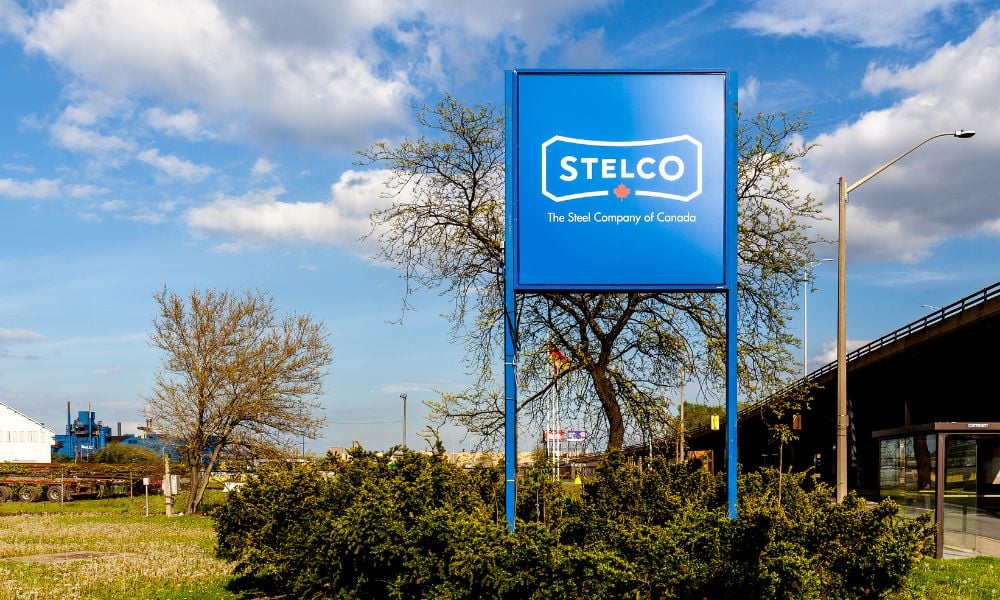
Stelco, the Canadian steelmaker owned by U.S.-based Cleveland-Cliffs Inc., is recalling all 175 of its temporarily laid-off workers at its Hamilton, Ont., finishing plant effective Dec. 1 and will pay them retroactively for the full period of the plant’s shutdown, according to a Cleveland-Cliffs news release Friday.
The company’s announcement closes one of the most politically charged workforce disputes in recent Canadian industrial history. It followed weeks of confrontation between Cleveland-Cliffs and the federal government over whether the company had violated binding employment undertakings made under the Investment Canada Act (ICA) when it acquired Stelco in 2024. The workforce is not returning as a result of government intervention – it is returning because customers committed to buying Stelco’s steel, the company said.
Stelco said it reached agreement with a sufficient volume of customers to restart its Hamilton finishing operations, which had been idled on Oct. 9 after the company cited unsustainable market conditions for cold-rolled and coated steel products and U.S. tariffs. During the intervening period, the company said it remained in constant communication with customers who expressed strong interest in continuing to source from the Hamilton facility.
“I would like to thank our valued customers for the faith they have placed in us, and our workers for the patience and resilience they have continued to demonstrate during this challenging period,” said Paul Simon, President of Stelco, in the company’s official news release.
Retroactive wages for recalled workers
In what Stelco called a measure of good faith, the company is recalling its workforce effective Dec. 1 even though full operations are expected to take several weeks to come back online. All 175 impacted workers will receive retroactive wages at their standard rate for the period in which they were stood down – a provision that extends beyond most collective agreement minimums and directly addresses the financial hardship faced by Hamilton’s steelworking community during the six-week shutdown.
Stelco’s statement took direct aim at Ottawa, noting that customers had committed to supporting Hamilton operations “despite the lack of response from the federal government to address the shortfalls in their tariff response program and the continued flood of offshore imports of galvanized products that have eroded our domestic market.” The company did not publicly attribute any part of the recall decision to government action.
An unresolved dispute with Ottawa
The Sept. 28 layoff announcement triggered an immediate federal response. Prime Minister Mark Carney publicly accused Cleveland-Cliffs of betraying its Ontario workforce. Industry Minister Mélanie Joly warned on multiple occasions that the company could be forced to divest Stelco if it violated the workforce undertakings made as a condition of its 2024 ICA acquisition approval. Before the recall announcement, Joly said she would be pursuing a court order for Cleveland-Cliffs to sell the Hamilton plant if the company didn’t respond to her by the end of the day, CBC News reported.
Cleveland-Cliffs pushed back. In a letter obtained by CBC News, Simon wrote that “the undertakings do not stipulate a commitment to avoid layoffs, nor do they include a requirement that employment levels be above a certain amount on each day of the five years of the undertakings.” The company maintained it would remain compliant with its annual employment obligations under the ICA.
As HRD Canada’s coverage of the federal trade data complicating Stelco’s case for Hamilton layoffs showed earlier, Global Affairs Canada’s steel import monitoring program indicated that approximately 54.1 per cent of Canada’s galvanized and coated steel sheet imports in the first nine months of 2026 came from the United States – not from the offshore markets Cleveland-Cliffs had pointed to as the primary driver of its competitive pressures.
In late October, Cleveland-Cliffs CEO Lourenco Goncalves told CBC News that he bought Stelco because it was hurting is U.S. business.
What this means for HR leaders
The Stelco situation crystallizes a question that HR leaders across Canada’s industrial sectors are increasingly confronting: when a foreign acquirer makes workforce commitments as a condition of regulatory approval, what happens when market conditions make those commitments commercially difficult to maintain?
The retroactive pay provision is a rare and consequential policy signal. It is unusual for employers to voluntarily extend retroactive wages beyond what is contractually required following a temporary layoff attributed to commercial pressures. For HR leaders watching how tariff-driven disruptions are reshaping workforce obligations, this case – alongside how tariff-driven layoffs raised the stakes for HR and labour representatives at other Ontario manufacturers – illustrates the reputational cost of eroding worker trust during prolonged trade uncertainty.
Canada’s steel sector remains under significant strain. Algoma Steel, based in Sault Ste. Marie, Ont., laid off approximately 1,000 workers in early 2026 as part of a production restructuring accelerated in part by U.S. tariffs, according to The Canadian Press.