Two LaGuardia Airport controllers face dismissal amid a wider federal timecard fraud probe tied to the deadly March runway collision
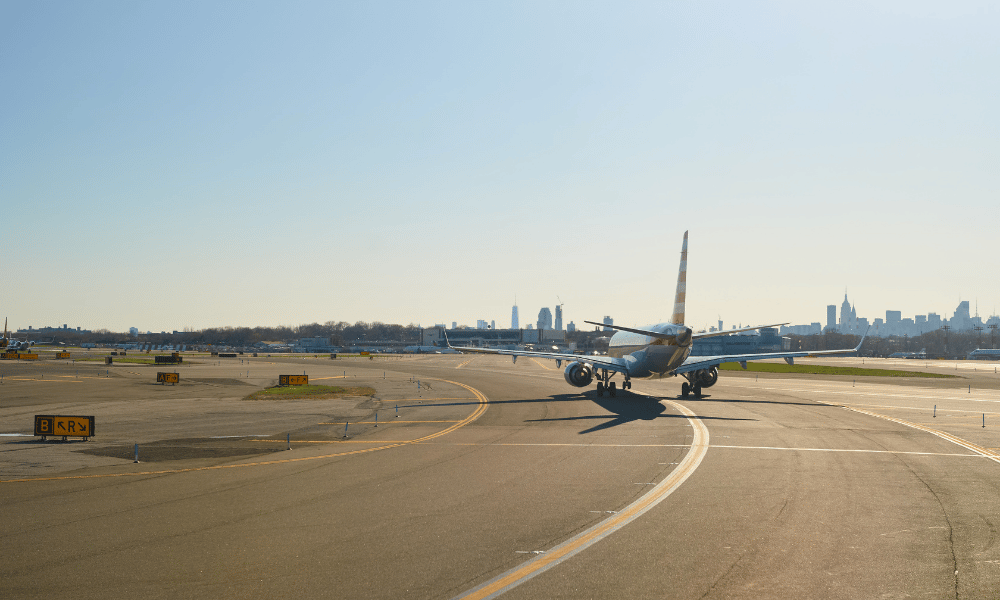
The Federal Aviation Administration (FAA) is moving to fire two air traffic controllers who allegedly left their posts early on the night an Air Canada Express regional jet collided with a fire truck at LaGuardia Airport in Queens, New York, killing both pilots, according to people familiar with the matter cited by The New York Times.
The two controllers are among a dozen nationwide the FAA is taking steps to dismiss as part of a broader inquiry into timecard fraud, unrecorded early departures that the agency treats as falsified attendance records, the Times reported. It's still unclear whether the early departure at LaGuardia played a direct role in the March 22, 2026 crash, or when the controllers involved were scheduled to finish their shifts.
What happened the night of the crash
Shortly after 11:30 p.m. ET on March 22, 2026, an air traffic controller cleared the Air Canada Express jet, operated by Jazz Aviation, to land before clearing a fire truck to cross the same runway less than two minutes later, according to the National Transportation Safety Board's preliminary report. The collision killed both pilots, Quebec-based Antoine Forest and Ontario-based MacKenzie Gunther, and sent more than 40 people to hospital.
After clearing the truck to cross the runway just 12 seconds before the jet touched down, the controller began radioing for it to stop about eight seconds later, with a final call roughly four seconds before impact, according to the NTSB's preliminary report. The same report found that communication failures and the absence of transponders on ground vehicles contributed to the crash. The board's final report, which will determine a probable cause, isn't expected for another 12 to 24 months.
A spokesman for the National Transportation Safety Board declined to comment on the FAA's staffing findings, telling The New York Times the board was still working to determine a cause of the collision.
FAA and employer response
The Wall Street Journal first reported Thursday that the FAA was pursuing disciplinary action against the two LaGuardia controllers. In a statement provided to The New York Times, Sean Duffy, U.S. secretary of transportation, defended the crackdown.
“But when a small percentage of individuals take advantage of the American taxpayer, unfairly add additional work to their fellow controllers and impact the airspace, we have no choice but to act,” Duffy said. “We will not tolerate fraud, and we are taking appropriate action to hold folks accountable and prevent unlawful practices from disrupting the traveling public.”
The FAA hasn't addressed the specific allegations involving the two LaGuardia controllers but told The Canadian Press it is “committed to holding employees accountable.”
“We will not compromise the safety or efficiency of the National Airspace System,” the FAA said in the same statement.
Union pushback and a staffing debate
The National Air Traffic Controllers Association, the union representing the U.S. controller workforce, confirmed the allegations in an emailed statement.
“NATCA is actively discussing these allegations with FAA leadership,” the union said. “We believe those discussions are the appropriate forum for addressing the matter.”
Some veteran controllers are questioning why the agency is acting now against a practice shift supervisors have used for years to relieve overtaxed staff, many of whom work six days a week to cover shortages, the Times reported.
“The FAA has known for years that controllers were leaving early,” said Harvey Scolnick, a retired radar approach controller who worked at John F. Kennedy International Airport in New York. “They just never did anything about it.”
The dispute lands amid an unresolved staffing debate between the FAA and the union. The agency said in April 2026 that its controller workforce had reached a six-year high of nearly 11,000, with 4,000 more in training, still more than 3,600 short of what the union and the agency had previously considered full staffing. In May 2026, the FAA revised that target down to 12,563 controllers, concluding it could close remaining gaps through more efficient scheduling. NATCA called the revised estimate the product of a “flawed transportation review.”