Full-time jobs grew in October, but 66,000 part-time roles disappeared and 1.5 million part-timers say they want more work

One in five Australians in the workforce either can't find a job or can't get enough hours, and new Roy Morgan figures suggest part-time workers are taking most of the pain.
In October, 3.31 million people, or 21% of the workforce, were unemployed or under-employed, up 271,000 in a month, according to Roy Morgan's latest employment estimates, released today. It is the 23rd month in a row the figure has sat above 3 million.
The pollster's "real unemployment" rate rose 0.7 percentage points to 11.3%, or 1.78 million people. Under-employment, meaning people in part-time work or freelancing who want more hours, rose 0.9 points to 9.7%, or 1.53 million.
Part-time work takes the hit
Full-time employment rose 44,000 to just over 9 million, while part-time employment fell 66,000 to 4.98 million. Net, the country had 22,000 fewer people in work than in September, even as 95,000 more joined the workforce.
Over a full year the gap is even wider. Compared with October 2025, part-time employment is down 247,000 while full-time employment is up 10,000, according to Roy Morgan's detailed tables.
More of the people looking for work want part-time hours than full-time ones. Of the 1.78 million Roy Morgan counts as unemployed, 1.04 million want part-time work, up 67,000 in a month, compared with 742,000 seeking full-time roles.
That echoes the official September figures, when the ABS reported employers shed 73,700 part-time jobs and the jobless rate climbed to a near five-year high.
For HR teams, the 154,000 jump in under-employment means more part-timers, some of them already on the payroll, are now looking for extra hours.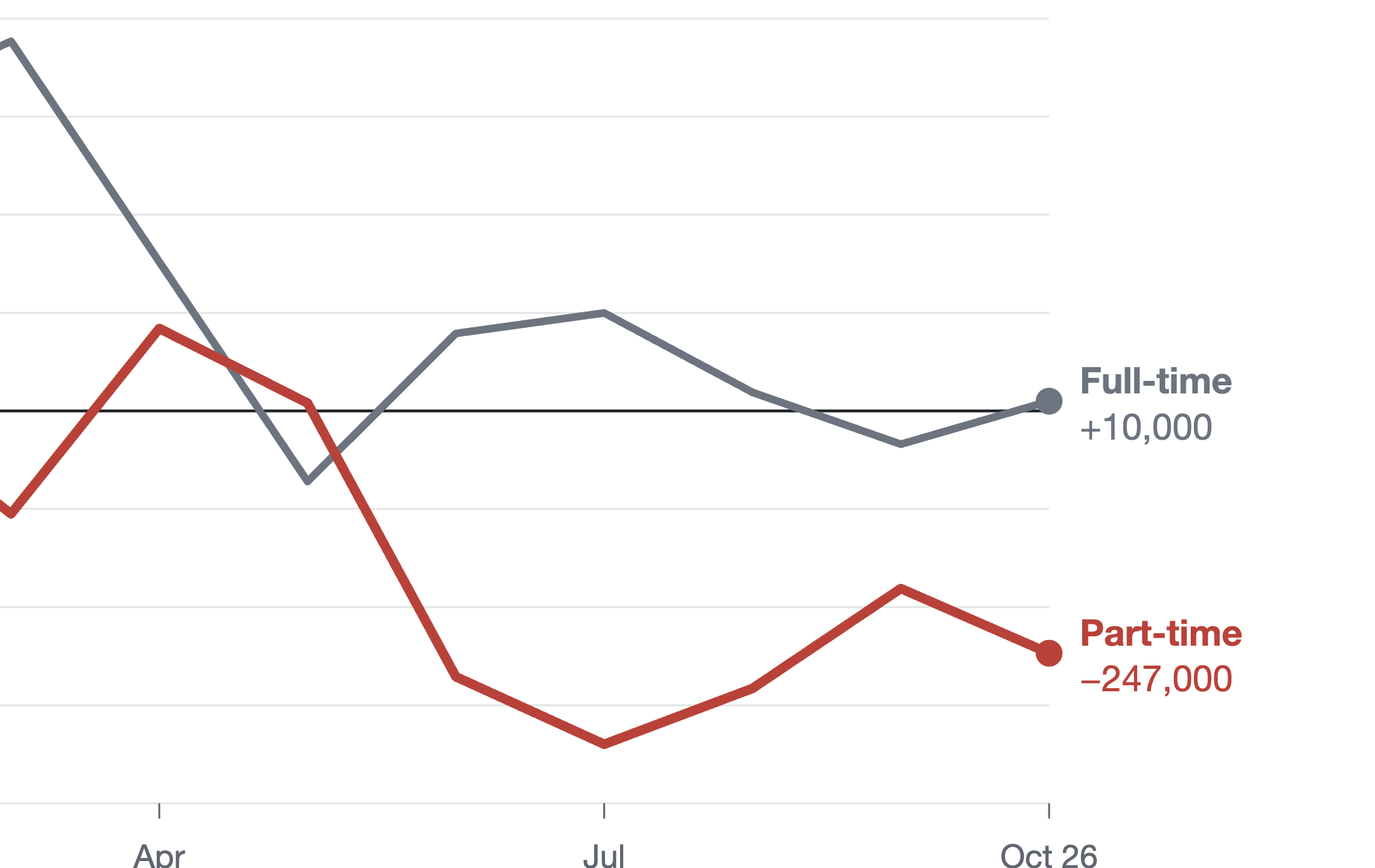
Read next: Women are giving up part-time jobs as more shift into full-time work
Why Roy Morgan's number is so much higher
Roy Morgan's jobless rate is more than double the official one. The ABS put seasonally adjusted unemployment at 4.7% in September, and its October figures are due on Thursday.
The gap is mostly about definitions. The ABS counts someone as unemployed only if they actively looked for work in the previous four weeks and were available to start, and anyone who worked an hour or more for pay in the survey week counts as employed. Roy Morgan counts anyone not working who is looking for work, no matter when they last looked, and does not seasonally adjust its figures.
Roy Morgan argues its count lines up with a broader official measure. The ABS potential workers survey found 1.7 million people were not working but wanted to work in February 2026, close to Roy Morgan's 1.78 million.
Monthly swings should still be read with care. The October estimate draws on 7,398 interviews, and Roy Morgan's own published margin of error for an estimate around 10% is roughly plus or minus 0.8 points on a 5,000-person sample. October's 0.7-point rise sits inside that range.
Read next: Out of work and staying there: jobseekers find it harder to get back in
Rates add to the squeeze
The Reserve Bank lifted the cash rate to 4.85% on 3 November, its fifth rise of 2026 and the highest level since 2008. Annual inflation reached 4.3% in the 12 months to September, well above the RBA's 2–3% target band.
Westpac economist Ryan Wells has argued that cost-of-living pressure is pulling more people into the job market. If that keeps up, he wrote in a note covered by HRD in October, spare capacity in the labour market "could emerge more quickly than its forecasts imply". RBA governor Michele Bullock had earlier indicated that unemployment somewhere between 4.5% and 5% would be needed to take pressure off inflation.
Roy Morgan chief executive Michele Levine warned that another rise would add to the strain. "If the Reserve Bank decides to increase interest rates again in December this will add further pressure to an already weak labour market which has been struggling to grow during the last 12 months," she said.
Read next: Get ready for higher unemployment as Chalmers flags weaker growth
What it means for HR
Employers still hiring should find a bigger pool of people wanting part-time work. Holding on to the part-timers they already have may be harder.
Staff who want more hours and can't get them are a retention risk, and many have already found a workaround. In the June quarter, 6.9% of employed Australians held more than one job, the highest since the ABS series began in 1994. HRD has looked at what that second-job boom means for HR.
Pay is unlikely to close the gap on its own, with Australian salary budgets holding at 3.6% for 2027, below the latest inflation figure.
One low-cost step is to offer spare shifts to existing part-timers before advertising a role. Some of them may be working a second job elsewhere to make up the hours, and would rather get them from their main employer.
The ABS releases its October figures on Thursday, and the RBA meets again in December. With Deloitte tipping unemployment to peak at 4.9% in 2027-28, workforce plans for 2027 should probably assume a softer market than this one.