Westpac says more people are hunting for work and a record share of staff are holding down two jobs
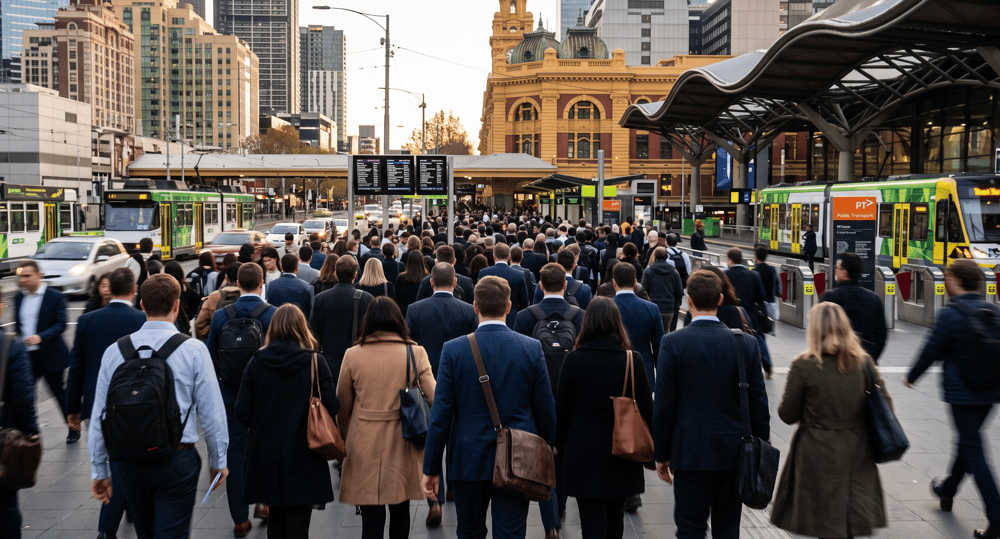
The jobless rate is at its highest since late 2021, and a record share of people with a job are working a second one.
When the Australian Bureau of Statistics publishes September's Labour Force figures next Thursday 15 October, Westpac economist Ryan Wells expects the unemployment rate to hold at 4.6 per cent. His forecast has employment rising by about 20,000 and the participation rate easing a touch, to 67.0 per cent.
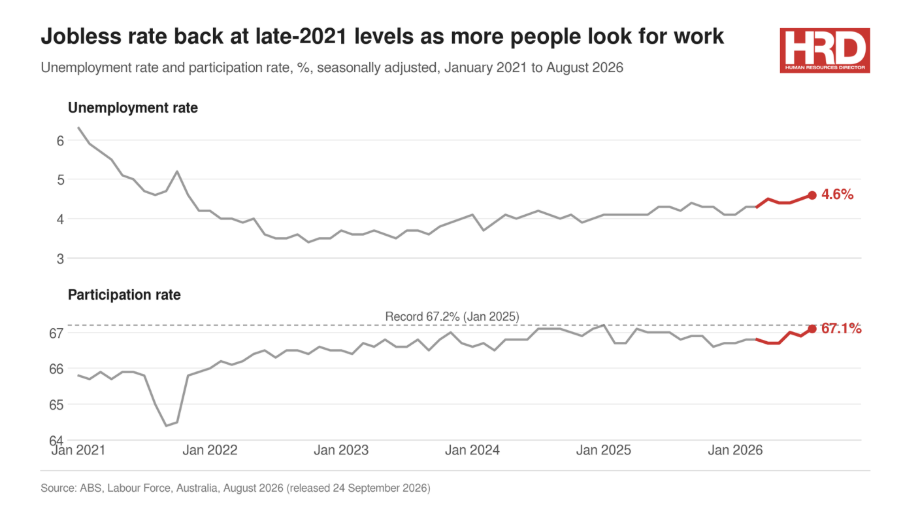
An unchanged result would mean a second month at that level after the rate climbed to 4.6 per cent in August.
The ABS counted 39,000 more people in work in August and 28,000 more out of work and looking. With employment still growing, the rise in unemployment came from new job seekers.
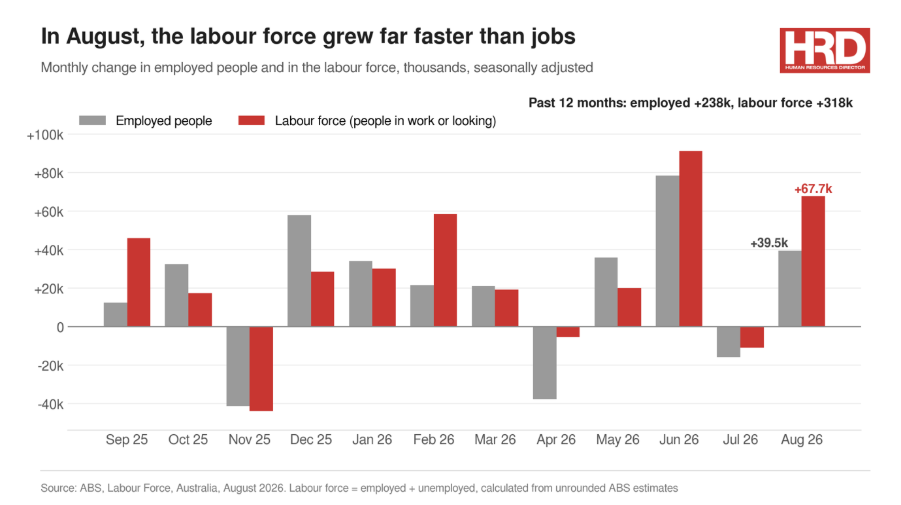
"This August we recorded a higher proportion of people who were previously not in the labour force moving to being unemployed, compared to recent years," ABS head of labour statistics Sean Crick said when the data was released.
That inflow pushed participation up to 67.1 per cent, a whisker below the record 67.2 per cent set in January 2025.
Wells puts it down to household budgets. In his view, cost-of-living pressure and higher interest rates are pulling people into the job market, more than offsetting the usual tendency for a softer economy to discourage job seekers. If participation keeps running hotter than the Reserve Bank expects, he wrote, spare capacity in the labour market "could emerge more quickly than its forecasts imply".
Recruiters should expect bigger applicant pools, though many candidates may be chasing extra hours as much as a particular role. Part-time employment rose by 46,000 in August while full-time employment fell by 6,000, according to the ABS, and the underemployment rate sat at 6.2 per cent.
Read next: Nearly 1 million Australians are juggling multiple jobs
The second-job boom
The ABS's quarterly Labour Account shows how far that strain has spread. In the June quarter, the multiple job-holding rate rose to 6.9 per cent, the highest since the series began in 1994. That works out to around one in 14 working Australians.
Some 1,049,100 people now hold more than one job, which is 103,700 more than a year earlier. Secondary jobs grew 11.7 per cent over the year, while main jobs grew 1.9 per cent.
Women and younger workers are the most likely to hold more than one job. ABS figures on multiple job-holders show 7.7 per cent of employed women had more than one job in June, compared with 6.2 per cent of men. Among workers aged 20 to 24 the rate was 11.2 per cent.
Second jobs also help explain why two ABS measures of employment have drifted apart. Westpac notes that jobs growth in the Labour Account is running at 2.6 per cent a year, well ahead of the monthly employment figures. Roughly half that gap comes from existing workers adding second jobs. The rest comes from short-term visa holders, who fill jobs but sit outside the population the monthly survey covers.
Staff with a second job can bring rostering clashes, fatigue and potential conflicts of interest, and for many the reason is money. In a Reward Gateway | Edenred survey covered by HRD, 61 per cent of Australian employees said financial stress had affected their productivity at work.
Before advertising a role, it may be worth asking part-time staff whether they want more hours. Some of those working a second job elsewhere could well prefer the extra shifts at their main employer.
Read next: The underemployment puzzle: Why the workers you need may already be on your payroll
Rates up, hiring cautious
The Reserve Bank is still tightening. On 29 September its board lifted the cash rate to 4.60 per cent, the fourth rise this year and the highest since late 2011. The board said labour market conditions "have eased broadly as expected in recent months".
Days earlier, at a Committee for Economic Development of Australia event, Governor Michele Bullock had indicated that an unemployment rate somewhere between 4.5 and 5 per cent would be needed to take pressure off inflation.
Employers are already hiring cautiously. Jobs and Skills Australia's Recruitment Insights Report for August found 59 per cent of recruiting employers were only replacing people who had left. Just 20 per cent expected to increase staff numbers.
Westpac's read of other indicators is similarly mixed. Job ad measures are heading in different directions, with ANZ-Indeed firming, SEEK still trending down, and the JSA and ABS vacancy measures closer to flat. In NAB's September quarter business survey, firms' three-month hiring expectations softened further even as the year-ahead outlook partly recovered.
Read next: ABS u-series exposes true scale of Australia's workforce underutilisation
Read the September numbers with care
The ABS has changed how it runs the supplementary questions in its monthly survey, and it flagged that August's seasonally adjusted figures may carry some leftover seasonality as a result.
The bureau says the effect is likely smaller than normal sampling variability. Even so, Westpac warns some of August's strength could reverse in September. The ABS continues to recommend its trend series as the best guide to the underlying labour market.
On 15 October, HR teams will learn more from the detail than from the headline rate. The split between full-time and part-time jobs, hours worked and underemployment will say more about whether candidates are chasing extra income or a better job. Next quarter's Labour Account, due in December, will show whether the second-job boom kept growing.