Australia's jobless rate climbs to 4.7%, the highest since October 2021, as Deputy data shows shift workers' hours cut again
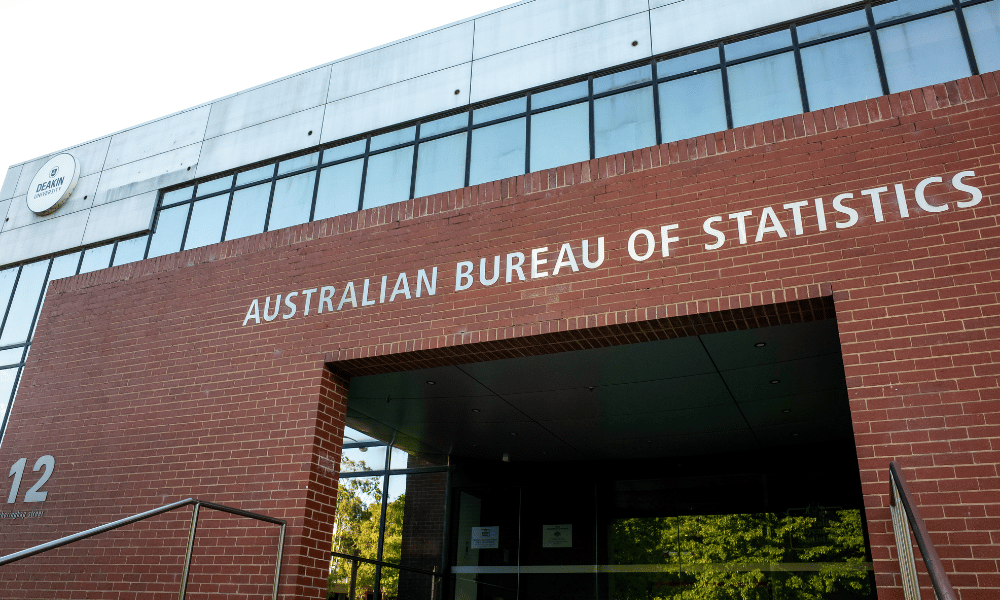
Australia's unemployment rate rose to 4.7 per cent in September 2026 as employers shed 73,700 part-time jobs, according to Labour Force figures released by the Australian Bureau of Statistics (ABS) today (15 October).
Separate data from workforce management platform Deputy shows frontline businesses in hospitality, retail and services cut workers' hours for a second consecutive month over the same period.
Total employment fell by 39,300 to 14,782,700 people in seasonally adjusted terms, while the number of unemployed Australians climbed by 8,900 to 732,000. Full-time employment grew by 34,400, meaning the net loss sat entirely in part-time work.
Sean Crick, head of labour statistics at the ABS, pointed to a labour market that is holding on to its jobless for longer.
"This September a higher proportion of people remained unemployed compared to recent years," Crick said.
"This follows from last month when a higher proportion of people who were previously not in the labour force moved to being unemployed."
Sunny Nguyen, head of Australia economics at Moody's Analytics, said the figures point to a genuine slowdown in hiring
"Labour demand is now weakening in its own right," Nguyen said. "Of the people who were unemployed in August, a higher proportion were still unemployed in September than in the same month of recent years. That suggests August's wave of new jobseekers has struggled to land positions."
The participation rate slipped 0.2 percentage points to 66.8 per cent and the employment-to-population ratio fell 0.3 points to 63.6 per cent, the ABS reported.
"The pullback in participation likely includes discouraged workers, so the headline rate may understate the slack now building," Nguyen said.
Part-time hours fall as underemployment edges higher
The divide between full-time and part-time workers also showed up in hours. Total monthly hours worked rose just 0.1 per cent to 2,011 million, masking a sharp divergence underneath.
"The number of part-time hours worked fell 1.5 per cent this month, with full-time hours worked rising by 0.4 per cent," Crick said.
Moody's Analytics sees that split as an early warning sign for employers.
"Firms are cutting shifts and casual hours first while holding onto full-time staff, a pattern typical of an early hiring downturn," Nguyen said.
The underemployment rate – the share of the labour force who have a job but want, and are available for, more hours – rose 0.1 points to 6.3 per cent. The broader underutilisation rate, which combines unemployment and underemployment, increased 0.2 points to 11.0 per cent. Youth unemployment rose 0.3 points to 11.1 per cent.
Over the year to September 2026, the number of unemployed people increased by 55,200, or 8.2 per cent, according to the ABS. New South Wales recorded the sharpest monthly deterioration of any state, with its unemployment rate up 0.4 points to 4.7 per cent and employment down 0.8 per cent. Western Australia moved the other way, lifting employment by 1.3 per cent.
The ABS cautioned that recent changes to its supplementary survey collection may leave a small residual effect on September's seasonally adjusted figures, and it continues to recommend trend data as the best guide to underlying conditions. In trend terms, unemployment held at 4.6 per cent.
The softer data also feeds into the interest rate outlook for the Reserve Bank of Australia (RBA), which will weigh the next quarterly Consumer Price Index (CPI) result.
"For the RBA, this is the cooling the Board has sought, with the latest hike yet to register," Nguyen said. "Unless the upcoming quarterly CPI surprises sharply to the upside, we expect a hold in November, with the risk tilting toward an overshoot in unemployment next year."
For employers, rising underemployment can signal untapped capacity already on the books – a theme explored in HRD's analysis of underemployed workers already on your payroll.
Shift work hours cut for a second month
Deputy's September 2026 Hourly Work Index, which tracks anonymised and aggregated data from businesses using its platform, points to the same pressure in frontline industries. Total hours worked across healthcare, hospitality, retail and services fell 1.3 per cent to 34.8 million in September, following a 2.7 per cent fall in August. It is the first back-to-back monthly decline since the Index began in January 2026.
Hospitality saw the steepest pullback, with hours per employee down 3.2 per cent and shifts per employee down 3.0 per cent. Retail hours per employee fell 1.9 per cent and services 1.0 per cent. Healthcare was the only sector to increase, up 2.1 per cent.
Average monthly hours per employee ranged from about 63 to 67 across the four sectors, well short of the roughly 164 hours Deputy uses as a comparable full-time workload. Deputy's figures are drawn from its own customer base and are not directly comparable with ABS survey estimates.
The Index also showed churn picking up. Retail new hires rose 9.4 per cent even as hours per worker fell, a pattern Deputy said was consistent with an early build towards Christmas trading. In healthcare, terminations jumped 43.1 per cent while hiring was effectively flat.
Deputy said fewer hours in a main job are pushing more Australians into multiple jobs, citing ABS figures showing 6.9 per cent of employed people now hold more than one. The pressure falls heavily on younger workers, who now account for the largest share of shift work hours – a trend HRD reported when Gen Z overtook Millennials in Australia's shift workforce.
What does uneven roster notice mean for HR leaders?
One measure did improve. Workers received an average of 8.5 days' notice of their shifts in September, the most recorded this year and up from 5.7 days in January 2026.
That notice was not shared evenly. Baby Boomers received 11.3 days on average compared with 7.9 days for Gen Z workers – a gap that widened from 2.6 days in August to 3.4 days. By sector, healthcare workers received 14.3 days' notice, while hospitality staff received 6.7.
Emma Seymour, chief financial officer at Deputy, said the disparity lands hardest on those with the least room to absorb it.
"That matters because Gen Z are the generation most likely to be juggling multiple jobs, often with the least financial buffer. When someone is coordinating two or three rosters to make rent, advance notice is not simply convenient. It is what allows them to make the week work. Giving younger workers greater certainty does not add to a business's wage bill. It is one of the simplest, most practical ways to support retention."
With part-time hours shrinking and underemployment rising, roster predictability may be one of the few retention levers HR leaders can pull without adding to labour costs. The link between unpredictable rostering and stress among workers juggling several jobs is explored in HRD's report on why shift workers are happy and stressed.